
Introduction

Have you ever taken a medicine and felt better almost immediately, only to find out later that it was just a sugar pill? If not, have you ever heard of patients feeling better after taking such sugar pill? This phenomenon is called the placebo effect which is a powerful psychological response where people experience real improvements in their health simply because they believe they are receiving a real treatment.
But how does this happen? Why does belief have such a strong influence on the body? The placebo has significant implications in psychology, medicine, and human behavior.
In this WebQuest, you will explore the science behind the placebo effect, its biological and psychological mechanisms, some real-world applications, and the ethical concerns surrounding its use.
Task
Your task is to conduct a detailed research on the placebo effect and present your findings in a powerpoint presentation.
Your project must include:
-A clear explanation of the placebo effect.
-Scientific mechanisms behind it.
-Real-world examples of placebo studies.
-Ethical considerations and arguments for/against its use.
-At least 3 credible sources cited in APA format.
Process
Step 1: Explanation of the Placebo Effect
-
Before Researching, write down what you think the placebo effect is and how you believe it works.
-
Take Notes: Focus on key terms such as placebo, placebo effect, nocebo effect, expectation theory, and classical conditioning.
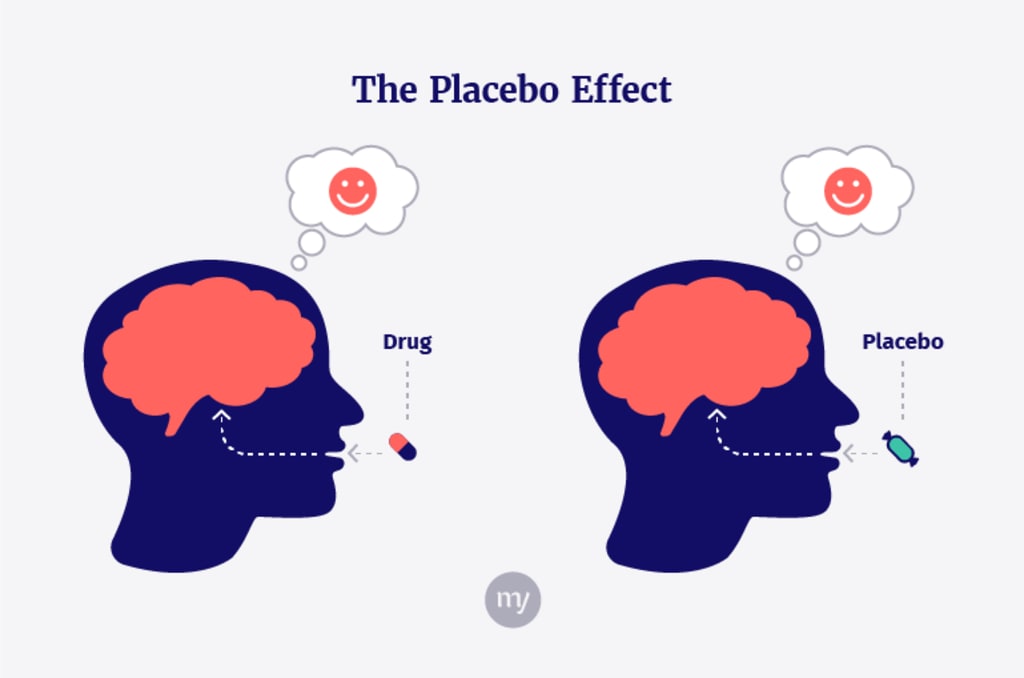
Step 2: The Mechanism Behind Placebos
-
Brain Experiment: close your eyes and imagine eating a sour lemon. Focus on the taste, texture, and sour sensation. Did your mouth water? If yes, your brain created a real reaction from just an idea->similar to how placebos work!
-
Read: The Neuroscience Behind the Placebo Effect | BrainFacts.org
-
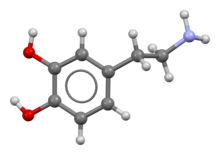
When people take a placebo, their brains release real chemicals that affect how they feel. Research the following neurotransmitters and their roles:
-
Dopamine – Involved in reward and motivation
-
Endorphins – The body’s natural painkillers
-
Serotonin – Helps regulate mood and well-being.
Step 3: Real-World Examples & Studies
Match these famous placebo studies with what they tested:
Henry Beecher’s WWII study
Placebo knee surgery study
Antidepressant placebo trials
A) Pain relief using placebo injections in wounded soldiers.
B) Patients underwent fake knee surgery but still felt better.
C) Some placebo pills worked as well as real antidepressants.
Use these sources to research:
Placebo Effect: A Cure in the Mind
Study Finds Common Knee Surgery No Better Than Placebo
Editorial: Demystifying the Placebo Effect
Step 4: Ethical Issues & Controversies
-
Debate and Discuss:
-
Should doctors prescribe placebos if they work without real medicine?
-
Is it ethical or deceptive to give patients a placebo without telling them?
-
How do placebos impact trust between doctors and patients?
-
Write a short argument explaining which side you agree with pro placebo or anti placebo.

Step 5: Create Your Project
-Organize your findings clearly in a PowerPoint presentation.
Include:
-Definition of the placebo effect
-Scientific mechanisms (psychological & biological)
-Real-world examples
-Ethical arguments for and against placebos
-At least 3 credible sources in APA format
-Use images, charts, and real studies to support your points.
->Present your work to the class!
Evaluation
Your work will be graded based on the following rubric:
| Category | Excellent (10 pts) | Good (7 pts) | Needs Improvement (4 pts) | Incomplete (0 pts) |
|---|---|---|---|---|
| Content Accuracy | Information is well-researched, accurate, and clearly explained. | Some minor errors or missing details. | Several inaccuracies or lack of clarity. | Incomplete or incorrect information. |
| Scientific Depth | Explains biological and psychological mechanisms in detail. | Includes some biological/psychological details but lacks depth. | Mentions the science but does not explain it fully. | Does not include scientific explanations. |
| Real-World Examples | Uses at least 3 case studies or real-world examples. | Uses 1-2 examples but lacks variety. | Mentions examples but does not explain them well. | No real-world examples included. |
| Ethical Analysis | Thoughtful discussion of ethical debates with strong examples. | Discusses ethical issues but lacks depth. | Mentions ethics but without detailed explanation. | Does not address ethical concerns. |
| Presentation & Creativity | Engaging format with visuals, examples, and clear organization. | Some visuals but could be more engaging. | Few visuals, lacks creativity. | No visuals, poorly presented. |
| Citations & Sources | Uses at least 3 credible sources with proper APA citations. | Uses sources but with minor citation errors. | Few sources, improperly cited. | No sources or citations. |
Total Score: /60 pts
Conclusion
The placebo effect is a powerful demonstration of how the mind and body are deeply connected.
Through this WebQuest, you have explored the biological and psychological mechanisms behind placebos, analyzed brain imaging studies that show real changes in brain activity, and examined famous experiments that prove the placebo effect can be just as effective as actual treatments in some cases. You have also engaged with the ethical dilemmas surrounding the use of placebos in medicine. The discussion on placebos challenges our understanding of medicine and the role of perception in health.
Next time you feel better after taking a pill, ask yourself: Was it the medicine, or was it my mind at work?
❌ Photo unavailable
Credits
References:
Brown, R. L. (2019). The neuroscience behind the placebo effect. BrainFacts.org. Retrieved February 17, 2025, from https://www.brainfacts.org
Editorial. (2020, February 10). Demystifying the placebo effect. The Lancet. Retrieved February 17, 2025, from https://www.thelancet.com
Harvard Health Publishing. (2020, May 1). The power of the placebo effect. Harvard Health. Retrieved February 17, 2025, from https://www.health.harvard.edu
Price, D. D., & Barrell, J. (2015). Placebo effects in the clinical trials. Scientific American. Retrieved February 17, 2025, from https://www.scientificamerican.com
Scientific American. (n.d.). Placebo effect: A cure in the mind. Scientific American. Retrieved February 17, 2025, from https://www.scientificamerican.com
Study Finds Common Knee Surgery No Better Than Placebo. (2015, March 17). Science Daily. Retrieved February 17, 2025, fromhttps://www.sciencedaily.com/releases/2015/03/150317133301.htm
TED-Ed. (n.d.). Should doctors prescribe placebos? [Video]. TED. Retrieved February 17, 2025, from https://www.ted.com/ted-ed
TED-Ed. (n.d.). The power of the placebo effect [Video]. TED. Retrieved February 17, 2025, from https://www.ted.com/ted-ed
Images:
Brein in Actie. (2017, November). Placebo effect [Image]. Brein in Actie. https://breininactie.com/wp-content/uploads/2017/11/ill_2017_20_v.2_placebo-1004x592.jpg
Jerrick, D. (n.d.). [Image of a colorful design with abstract shapes]. Cloudinary. https://res.cloudinary.com/jerrick/image/upload/d_642250b563292b35f27461a7.png,f_jpg,fl_progressive,q_auto,w_1024/64c8fd41403403001d6c1a68.png
PacePharm. (2024, May). Placebo effect concept [Image]. PacePharm. https://pacepharm.com/wp-content/uploads/2024/05/placebo-effect-concept.jpg
Vox. (2017, July 7). The placebo effect, explained [Image]. Vox. https://www.vox.com/science-and-health/2017/7/7/15792188/placebo-effect-explained
Wikimedia Commons. (n.d.). Dopamine molecule structure [Image]. Wikimedia Commons. https://upload.wikimedia.org/wikipedia/commons/thumb/5/5c/Dopamine-based-on-xtal-3D-bs-17.png/220px-Dopamine-based-on-xtal-3D-bs-17.png