
Introduction
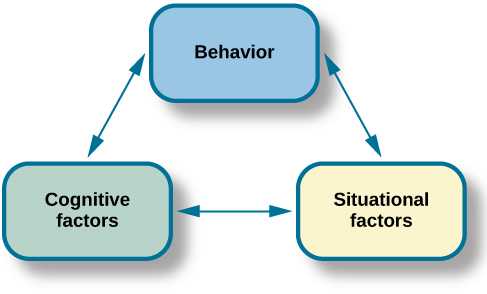
Imagine you are a team of researchers hired by a university to develop a compelling presentation that teaches others about three influential learning theories: Cognitive Psychology, Behaviorism, and Social Cognitive Theory. You will explore each theory’s unique features, real-world applications, and how they impact learning. By the end of this WebQuest, you will create an engaging infographic that compares these theories to help others understand their differences.
Your Mission: You are about to embark on an intellectual journey to uncover the secrets behind how people learn. Let’s dive into these theories and discover how they shape education and human behavior!

Task
Your task is to create an infographic that visually represents the key elements of Cognitive Psychology, Behaviorism, and Social Cognitive Theory. This infographic should:
-
Define each theory and its core principles.
-
Highlight key figures associated with each theory (Jean Piaget, B.F. Skinner, Albert Bandura).
-
Provide real-life examples or applications for each theory.
-
Compare and contrast the theories, identifying their similarities and differences.
This is a group project where each member will take on a specific role (details in the "Process" section). Your final product will be evaluated based on accuracy, creativity, and clarity using the rubric provided.
Process
Step 1: Group Roles
Divide your group into the following roles:
-
Researcher: Investigates and summarizes the main ideas of one of the theories.
-
Designer: Creates the layout and design of the infographic.
-
Presenter: Prepares and delivers the group’s findings to the class.
-
Editor: Reviews the infographic for accuracy and clarity.
Step 2: Research
Use the provided resources and conduct additional research to gather information on Cognitive Psychology, Behaviorism, and Social Cognitive Theory. Focus on:
-
Definitions and key principles.
-
Key figures and their contributions.
-
Real-life examples or applications in education and psychology.
Step 3: Design the Infographic
Collaboratively design an infographic that includes:
-
A title and visual theme.
-
Sections for each theory with images, charts, or diagrams.
-
A comparison table to highlight similarities and differences.
Step 4: Present Your Work
Each group will present their infographic to the class, explaining their findings and answering questions from peers.
Step 5: Reflection
After the presentations, write a one-paragraph reflection discussing what you learned about the theories and how they apply to real-world scenarios.
Evaluation
|
|
|
|
|
|||||
|---|---|---|---|---|---|---|---|---|---|
|
|
|
|
|
|||||
|
|
|
|
|
|||||
|
|
|
|
|
|||||
|
|
|
|
|
Conclusion
To conclude this WebQuest, consider the following questions:
-
Which theory do you believe is most relevant in today’s education system, and why?
-
How might these theories shape your future teaching or career practices?
-
How can understanding these theories help improve learning outcomes in diverse settings?
Use these questions to guide your reflection and class discussion. We look forward to seeing your creative infographics and thoughtful insights!
Credits
This WebQuest was developed using a collaborative approach. Special thanks to:
- Instructor Resources: For guiding the design of this WebQuest.
- Online Educational Tools: For providing templates and platforms to create engaging infographics.
- Class Participants: For their enthusiasm and collaboration in group activities.
Teacher Page
By completing this WebQuest, students will:
-
Understand and articulate the key principles of Cognitive Psychology, Behaviorism, and Social Cognitive Theory.
-
Analyze the similarities and differences between these learning theories.
-
Develop collaborative skills by working in groups with assigned roles.
-
Create an informative and visually appealing infographic.
-
Reflect on how learning theories apply to real-world contexts and their future careers.