
Introduction
At the end of this lesson, you will be able to:
- Understand the meaning of natural disaster
- Recognize the kinds of natural disaster
- Explain the effects of natural disasters on human lives and property
- learn the ways how to survive when a natural disaster comes.
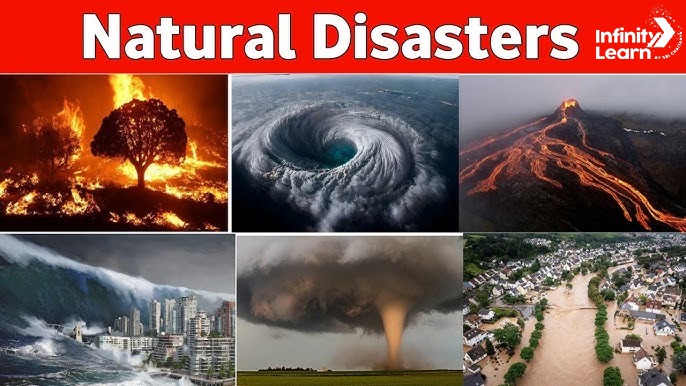
Natural Disaster means: A natural disaster refers to an event caused by natural processes of the Earth that result in significant damage, destruction, or disruption to human lives, property, and the environment. These events can take various forms and include earthquakes, tsunamis, hurricanes, tornadoes, floods, wildfires, volcanic eruptions, droughts, and landslides, among others. Natural disasters often have severe consequences, leading to loss of life, displacement of populations, economic hardships, and long-term environmental impacts.
Are you ready?
Task
[DAY1]

Subject: Typhoon
Objective:
(1) Students are able to describe concepts related to typhoons in English.
(2) Students are able to identify the effects of typhoons on people and environment.
(3) Students are able to communicate through activities related to typhoons.
Activity1: Understanding Typhoon Formation and Structure
Activity2: Typhoon Simulation Role- play
Activity3: Create Typoon Safety Poster
[DAY2]

Subject: Earthquake
Objective:
(1) Students can understand the concept of earthquakes and phenomena related to earthquakes.
(2) Students can look up earthquake phenomena in different countries and tell the impact of earthquakes.
(3) Students can express safety rules related to earthquakes in English.
Activity1: Understanding earthquakes and earthquake-related phenomena
Activity2: Making a map of earthquake-affected areas
Activity3: Thinking about earthquake evacuation methods and simulate evacuation situations
[DAY3]
Subject: Flood
Objective:
(1) Students can understand the flood and explain its causes and consequences.
(2) Students can find out about the damage to the world and their villages about the floods and think and practice ways to prevent and cope with them.
(3) Students can develop an attitude to actively cope with flood-related natural disasters.
Activity1: Understanding flood
Activity2: Find the flood around us
Activity3: Making a campaign for safety from flood
[DAY4]

Subject: Volcano
Objective:
(1) Students can understand the Volcano and explain its causes and consequences in English.
(2) Students can learn about the damage to the world and their villages.
(3) Students can express safety rules related to volcanoes in English.
Activity1: Understanding flood
Activity2: Find the Volcano around us and Make a map of Volcano-affected areas
Activity3: Create a code of conduct poster in the event of a volcano
[DAY5]
Subject: How to deal with natural disasters
Objective:
(1) Students can explain about natural disasters in English.
(2) Students know the dangers of natural disasters and can explain prevention and action tips in English.
(3) Students can make campaigns to prepare for natural disasters.
Activity 1: Quiz Maker! Natural Disasters!
Activity 2: Know how to act natural disasters
Activity 3: Creating a Campaign to Prepare for Natural Disasters
Process
[DAY1] - Typhoon
[Activity1]: Understanding Typhoon Formation and Structure
1. Understanding Typhoon using this video
2. Typhoon Vocabulary Matching game
(1) Introduce students to key vocabulary related to typhoon (eg. storm, wind, rain, flood etc.)
(2) Hand out worksheets with pictures of these words and their corresponding English terms.
(3) Students will match the words with the correct pictures.
[Activity2]: Typhoon Simulation Role- play
(1) Learn how to respond appropriately at school, at home, and outdoors during a typhoon.
(2) Divide students into small groups, assigning each group a different role.
(3) Using the website, Each group will prepare a short dialogue about how they are preparing for a typhoon.
(4) Groups will perform their dialogues in front of the class.
[Activity3]: Create Typoon Safety Poster
(1) Provide students with materials (paper, markers, etc.) to create a safety poster about what to do during a typhoon.
(2) Encourage them to use both pictures and simple English sentences (e.g., "Stay indoors," "Prepare emergency supplies").
(3) After completing the posters, students will present their safety tips to the class using padlet website.
https://padlet.com/guminji08/typoon-safety-poster-32nvwdk49eqpl70z
for example.)

[DAY2] - Earthquake
[Activity1]: Understanding earthquakes and earthquake-related phenomena
1. Understanding earthquakes through videos
2.Quiz about video content
(1) Why do earthquakes occur?
(2) What are some other natural disasters that could be caused by an earthquake?
(3) How do earthquakes affect our lives?
3. Drawing an earthquake-related picture
(1) Each group draws a picture related to the phenomenon and damage of earthquakes.
(2) Write an English sentence describing the picture.
(3) After drawing, post the drawn picture and writing on the padlet.
(4) Each group comes forward and explains the picture.
for example.)
*
[Activity2]: Making a map of earthquake-affected areas
(1) Students find out the countries around the world that are suffering from earthquakes at the following site.
Major Earthquake Zones Worldwide (thoughtco.com)
(2) Mark the country on a map in Padlet and write down what damage the country is suffering.
(3)Students explain the country they found and the earthquake damage.
[Activity3]: Thinking about earthquake evacuation methods and simulate evacuation situations
1. Thinking about earthquake safety tips
(1) Students understand how to evacuate earthquakes through the following video.
(2) Each group selects one of the places presented by the teacher.
ex) school, home, bus ..
(3)Students think about safety tips at the selected places and write them down in English.
2. Simulating Earthquake Evacuation
(1) Each group simulates evacuation situations based on the safety tips.
(2) Other groups give feedback on the simulation through a jamboard.
3. Earthquake Safety Tips ox Quiz
[DAY3] - Flood
[Activity1]: Understanding Flood
1. Watch Video
(1) Talk about what we could see about climate crisis.
(2) Only Heavy rain causes flood? Let's have a discussion with a friend.
2. Find out the causes and consequences of flooding
(1) Watch video and Talking about Why Flooding Happens
(2) Look at google maps and find where could be causing the flood(areas around rivers, without dams, downstream of rivers, etc)
(3) Watch video and talk about the possible damage as a result of the flood
3. Quiz about flood
(1) Enter this website
(2) Read and answer the question.
(3) Find the wrong answer and check what the answer is
[Activity2]: Find the flood around us
1. Find flood-related incidents
(1) Find out about the world's flood-related accidents.
(2) Find out about flood-related accidents in South Korea and Our village.
(3) Organize and upload the found data to the padlet
2.Search for Flood Risk Map and Check shelters.
(1) Enter this website about flood risk map
https://www.floodmap.go.kr/natreg/natregList.do
(2) Search for flood risk in our area
(3) Check the shelter in our village
https://www.safekorea.go.kr/idsiSFK/neo/sfk/cs/contents/civil_defense/SDIJKM1402.html?menuSeq=57
(4) Using the padlet map, let's mark the dangerous and evacuation areas of our village.
https://padlet.com/site/templates/map-general-v1?audience=general&name=map-general-v1
[Activity3]: Making a campaign for safety from flood
1. Learn how to survive flood
(1) Watch Video
(2) Use a mind map to organize the opinions from the group.
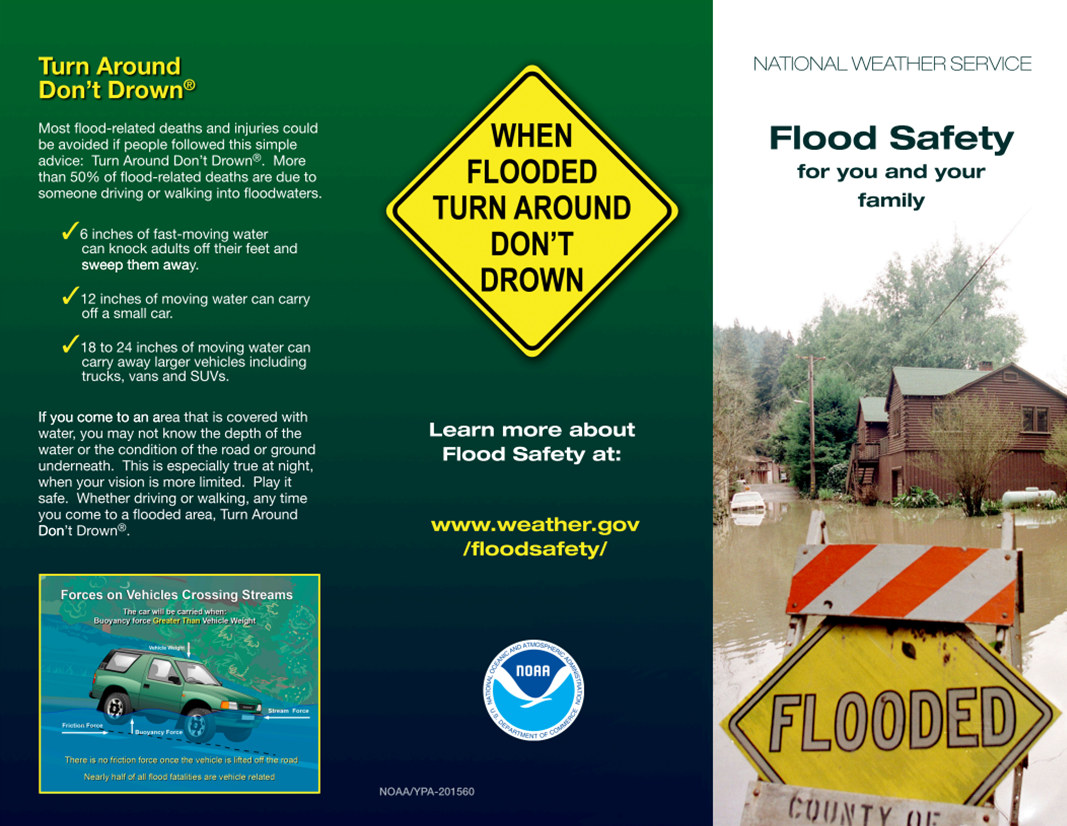
2. Create a campaign to keep you safe from flooding
(1) Each group talks about safety tips from flooding.
(2) Create a flood safety campaign using programs such as Canva.
e.g.
(3) Upload the completed campaign to the class padlet.
[DAY4] - Volcano
[Activity1]: Understanding Volcano
1. Understanding Volcano through videos
2. Quiz about video content
(1) Why do volcanoes occur?
(2) What are the keywords related to volcanoes in the video?
(3) How many kinds of volcanoes are there?
3. Find out the type of Volcanoes.
(1) It displays pictures of each type of volcano on the screen.
(2) Students will match the words with the correct type of Volcano.
[Activity2]: Find the Volcano around us and Make a map of Volcano-affected areas.
(1) Students find out the countries around the world that are suffering from Volcanoes at the following site.
https://www.thoughtco.com/map-of-world-hotspots-1441100
(2) Mark the country on a map in Padlet and
https://padlet.com/choijinah02/volcanic-wonders-a-map-of-earth-s-fiery-mountains-a0vjtiricbb6inoj
(3) Students explain the country they found and the earthquake damage using the Padlet.
[Activity3]: Create a code of conduct poster in the event of a volcano
1. Learn how to survive a Volcano by watching the video.
(1) Write the contents of the video freely on the activity sheet.
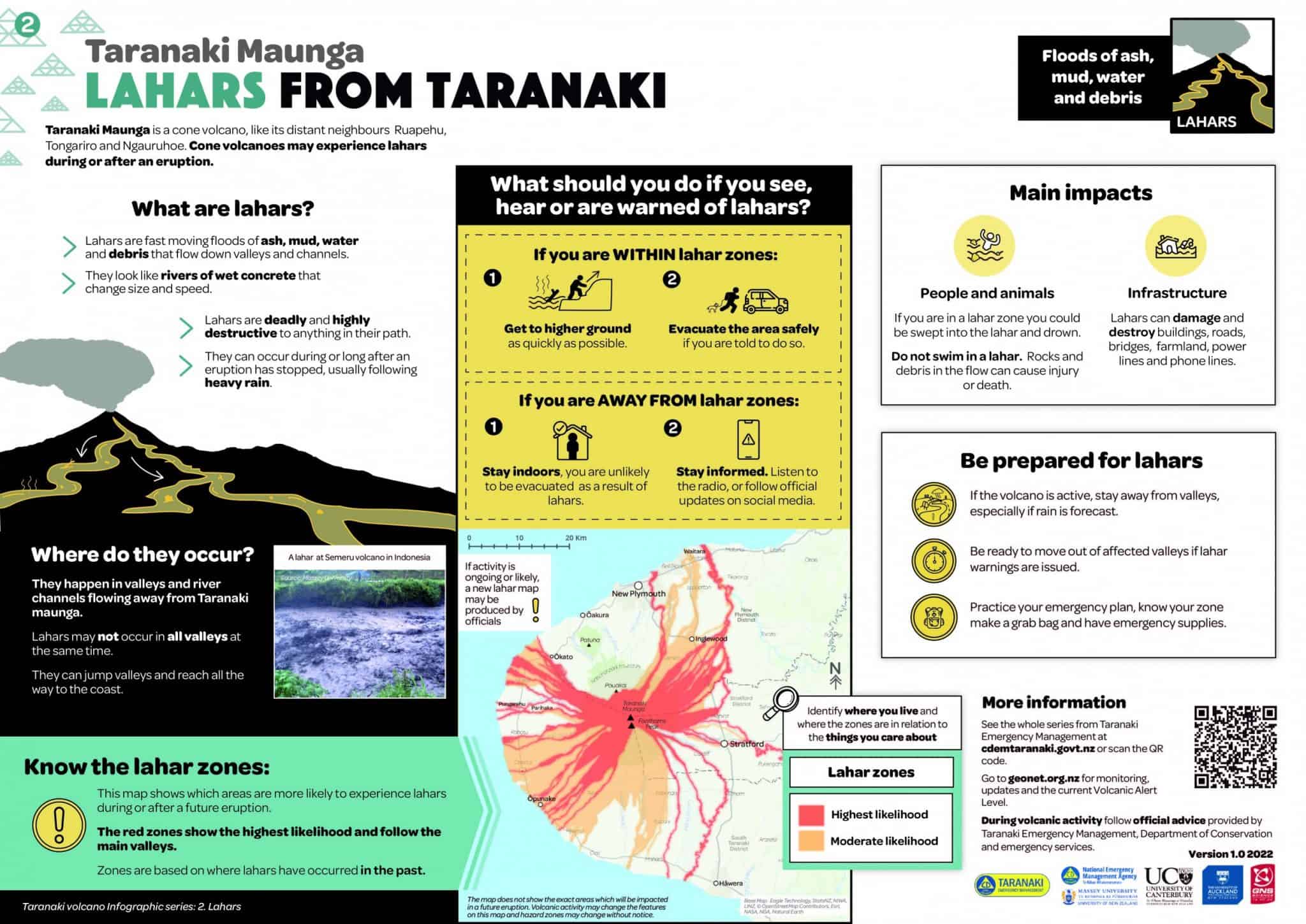
2. Making posters for each group
(1) Present your sheet to the group members, and discuss the new code of conduct that is not in the video.
(2) Create a code of conduct poster in the event of a volcano using Canva.
e.g
3. Upload the completed poster to the class Padlet.
https://padlet.com/choijinah02/a-code-of-conduct-poster-volcano-nuxsomhyphf9awrs
[DAY5] - How to deal with natural disasters
[Activity 1]: Quiz Maker! Natural Disasters!
1. Typhoon, Earthquake Master
(1) Typhoon Master
- Write down about typhoon.
- Write down about acts in typhoon.
(2) Earthquake Master
- Write down about Earthquake.
- Write down about acts in Earthquake.
2. Flood, Volcano Master
(1) Flood Master
- Write down about Flood.
- Write down about acts in Flood.
(2) Volcano Master
- Write down about Volcano.
- Write down about acts in Volcano.
3. I'm a quiz Maker!
(1) Choose a natural disaster you are most interested in and are confident in explaining.
(2) Create a question about the characteristics of natural disasters and how to deal with them.
(3) Uploading a problem you created in your padlet.
https://padlet.com/guminji08/padlet-j0i9gz3cagpnsa2f
[Activity 2]: Know how to act natural disasters
1. Know how to act in typhoons and earthquakes
(1) Write how to act in typhoons.
(2) Write how to act in earthquakes.
2. Know how to act in floods and volcano
(1) Write how to act in floods.
(2) Write how to act in volcano.
3. Write a letter to your friend that introduces act in nautural disasters
(1) Choose a natural disaster you want to introduce.
(2) Writing letters informing you of how to prevent natural disasters.
(3) Read letters together after randomly selecting them.
[Activity 3]: Creating a Campaign to Prepare for Natural Disasters
1. Take a look at campaigns to prevent natural disasters
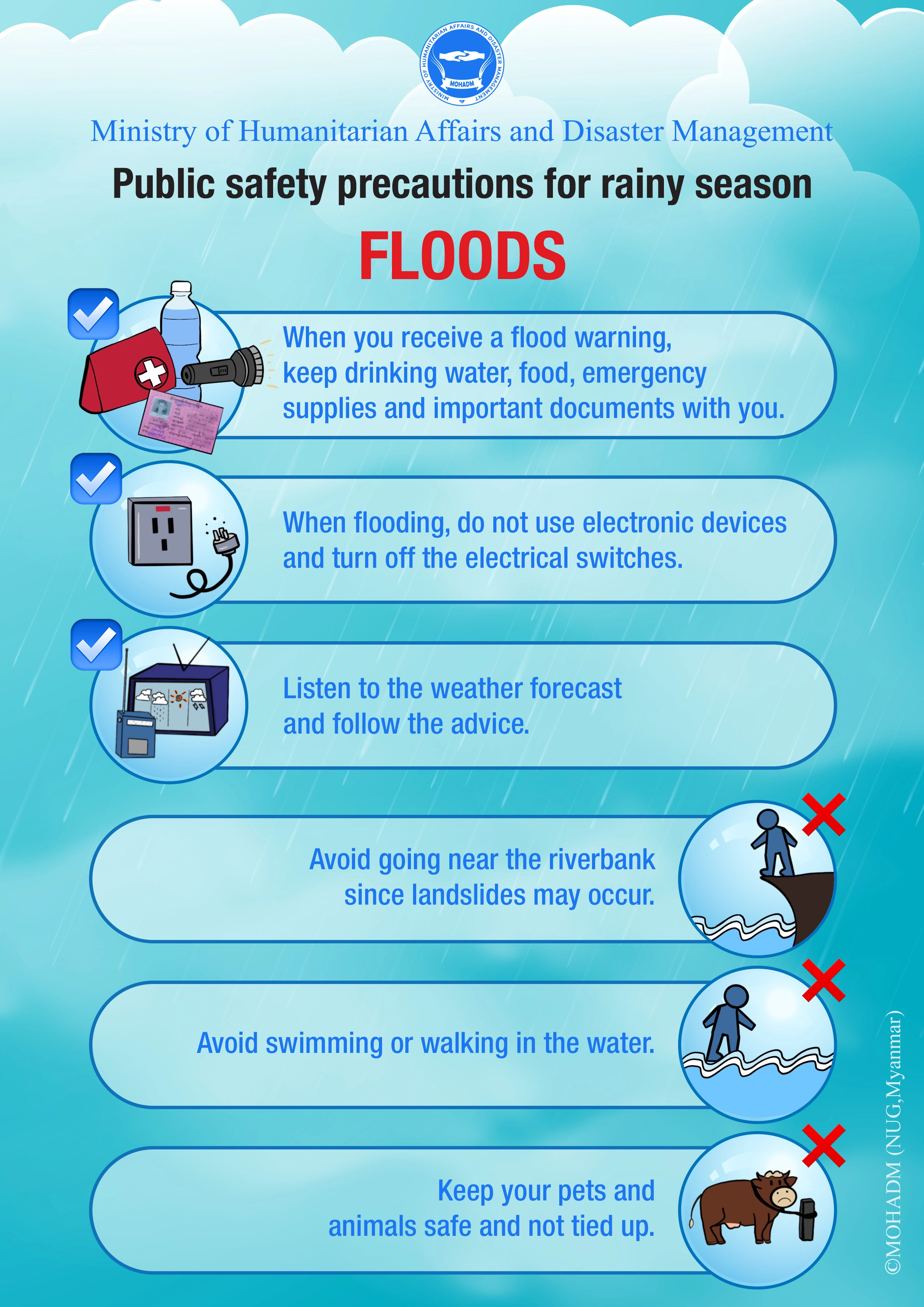
2. Creating campaigns to prevent natural disasters.
(1) Brainstorming ways to prevent natural disasters.
(2) Making phrases to prevent natural disasters. (in 30 spelling words)
(3) Create a campaign using Canva.
3. Share your commnets
(1) Uploading the campaign to Padlet.
(2) Watching other friends' campaign works and writing comments.
(3) Pick the best campaign work.
https://padlet.com/guminji08/campaigns-to-prevent-natural-disasters-p7dp9skpwykras5u
Evaluation
| Criteria | Excellent (4) | Good (3) | Satisfactory (2) | Needs Improvement (1) |
| Content | Understood the four natural disasters presented and can clearly explain the code of conduct and the reasons for their occurrence. | Understood three natural disasters and can explain the code of conduct for them. | Know the meaning for natural disasters and can explain what kinds there are, but I don't know the exact codee of conduct. | Know the meaning of natural disasters, but I don't know what kind they are. |
|
Campaign Paper Design |
Creative well-organized, and visually appealing | Well-organized but lacking creativity | Some organization, could be improved | Disorganized and unappealing |
| Use of Resources | Effectively uses all provided resources | Uses most resources effectively | Uses only some resources | Dose not utilize rescources effectively |
Conclusion
Congratulations ! You did a great job students. You completed the tasked given to you. You arleady have the knowledge about:
- Natural disaster is a sudden and terrible event in nature that usually results in serious damage and many deaths
- Types of Natural Disasters:
-
Typhoons
-
Earthquake
-
Floods
-
Volcano
Naturals disasters gives great effect to human lives and properties
-
The ways on how how to survive in the midst of this phenomenon.