
Introduction
In this WebQuest, you will engage in a series of interactive online language activities that are designed to improve different aspects of your oral communication skills, including pronunciation, fluency, vocabulary usage, and cultural appropriateness. These activities will actively involve you in practicing and developing your oral communication abilities.

Task
Activity 1: Pronunciation Practice.
Part A: Repeat the letter sounds and the word that starts with that sound. Click on the each letter icon and go through the alphabet.
https://www.starfall.com/h/abcs/

Part B: Use the following website to review letter sounds and then engage in online pronunciation exercises that focus on minimal pairs.
https://www.liveworksheets.com/dg990623jf
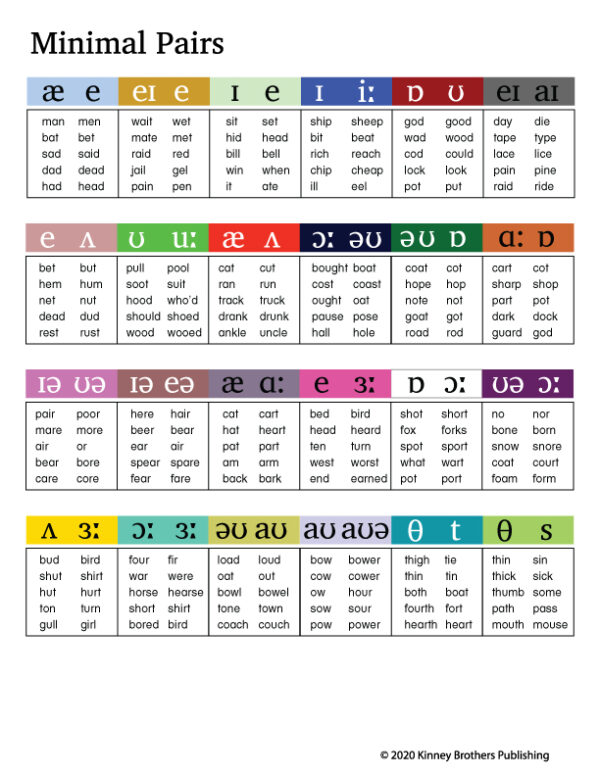
Minimal Pairs - i or I
Pronunciation. Minimal pairs. Short and long vowels /i/ /I/

| Minimal Pairs - ɛ or æ Pronunciation. Minimal pairs. Short and long vowels /ɛ/ /æ/ |

Activity 2: Fluency and Conversation Practice. Focus on maintaining a smooth flow of speech and developing your conversational skills.
Part A: Daily English Practice Conversation Video
Contents: 1. Let's Make Breakfast 2. What Did You Do for Spring Break? 3. Do You Live Here? 4. Spending Habits and Saving Money 5. Plans for the Weekend 6. Comparing Two Countries 7. Talking about Life History 8. Different Lifestyles
https://www.youtube.com/watch?v=GAuqgOC6eKY
Part B: Pre-primer sight word fluency practice.
Read each sight word and then check yourself by clicking on the speaker to hear it. Sight words play a crucial role in a child's reading and writing development, enabling them to read with fluency and write with ease. Mastery of sight words allows a child to understand up to 50% of written text without the need to stop and decode familiar words. Sight words can also be thought of as the "glue" that holds sentences together.

Activity 3: Vocabulary Usage. Explore online resources, language learning apps, or interactive games that facilitate vocabulary development. Engage in activities that encourage you to use and incorporate target vocabulary words into your speaking. Practice using new words and phrases in context to enhance your expressive abilities.
Part A: English Vocabulary (100 Basic Word List) Simple Common Words for English Beginners
These are the most important 100 basic English words to learn – they as so common as to account for 50% of speaking, reading, and writing. This basic vocabulary list provides the foundation for speaking English.
Repeat the sentences below to help you understand the meaning all these terms.
https://123bien.com/vocabulary/ 
Part B: Fast vocabulary-drag the images to match the words and then click on the words to match the images.
https://www.gamestolearnenglish.com/fast-vocab/

Activity 4: Cultural Appropriateness. Explore online cultural resources, authentic materials, or multimedia platforms that provide insights into the cultural norms, gestures, and communication styles associated with the target language.
Part A: In this video, you will learn everyday English all about the USA. Where's it located, the population, culture, food, famous landmarks, and some American fun facts. Practical English to talk about culture and countries around the world. A great way to learn about the United States of America.
https://www.youtube.com/watch?v=OdigP3FVZBE

Part B: Explore what it means to be a U.S. citizen while maintaining one's own ethnic identity using this video from the PBS KIDS series ARTHUR.
https://dptv.pbslearningmedia.org/resource/ac20-citizencheikh/becoming-a-citizen-arthur/

Evaluation
Assessment for the WebQuest: Module 9 - Oral Communication Skills
Objective: The objective of this assessment is to evaluate learners' oral communication skills, including pronunciation, fluency, vocabulary usage, and cultural appropriateness, as developed through the activities in Module 9 WebQuest. Adult support is permitted.
Assessment Task: Conduct an Oral Presentation
Instructions for Learners:
-
Choose a topic related to the theme of the WebQuest.
-
Prepare a short oral presentation (3-5 minutes) on the chosen topic.
-
Use the vocabulary and language structures learned throughout the WebQuest.
-
Focus on clear pronunciation, fluency, appropriate vocabulary usage, and cultural sensitivity.
-
Provide examples or anecdotes to support your points.
-
Be prepared to answer questions or engage in a brief discussion related to your presentation.
Assessment Criteria: The assessment will be based on the following criteria:
1. Pronunciation: Clear pronunciation of words, correct intonation, and appropriate stress.
Fluency: Smooth and natural flow of speech, without excessive pauses or hesitations.
Vocabulary Usage: Effective and appropriate use of vocabulary related to the topic.
Cultural Appropriateness: Sensitivity to cultural norms and appropriate use of language in the given cultural context.
Content and Organization: Coherent and organized presentation with a clear introduction, main points, and conclusion.
Engagement and Interaction: Ability to engage the audience and respond to questions or engage in a discussion related to the presentation.
Scoring Rubric: Each criterion will be scored on a scale of 1-5, with 1 being the lowest and 5 being the highest.
-
Pronunciation: 1 2 3 4 5
-
Fluency: 1 2 3 4 5
-
Vocabulary Usage: 1 2 3 4 5
-
Cultural Appropriateness: 1 2 3 4 5
-
Content and Organization: 1 2 3 4 5
-
Engagement and Interaction: 1 2 3 4 5
Overall Assessment: The overall assessment will be based on the total score out of 25.