
Introduction
Welcome to the WebQuest "Planet Earth".
Greenhouse gases, global warming, sustainability - terms that are familiar to us all and always around us. Now, it is up to you to use your knowledge and deepen it. In this WebQuest different tasks will await you; some require your listening skills, some your speaking and writing skills, but all require your opinion and creativity to face problems.
After this WebQuest you should:
- can think critically about the way we live on a daily basis.
- have gained some additional knowledge about the causes of global warming.
- have gained knowledge on the recycling system, especially in Austria.
- have learned new words regarding the climate change.
- have hopefully trained your English skills. :)
LET'S GET CRACKING
Task
Task 1

First of all, you should reflect on your own behaviour and discuss it with you neighbour. What do you already do to minimise your ecological footprint? What do you think can be optimised? Be sincere, nobody wants you to carry the burdens of climate change on your shoulders, use it instead as a chance to exchange helpful tips with your partner.
Now check out the link and calculate your ecological footprint: https://www.footprintcalculator.org/home/en
After you've done the test, interview your partner and record - and in next turn they interview you. Please discuss the following questions:
- Where did/do you learn the most about climate change? (at home, at school, from peers, social media, etc.)
- Are you afraid of climate change? If yes, what threatens you the most? If no, what makes you think so?
- What you think would be a major help in general to stop climate change?
The interview should be about two minutes. Upload it to our learning platform under the section <webquest “climate change” < interviews>. Don’t forget to add your name.
Task 2
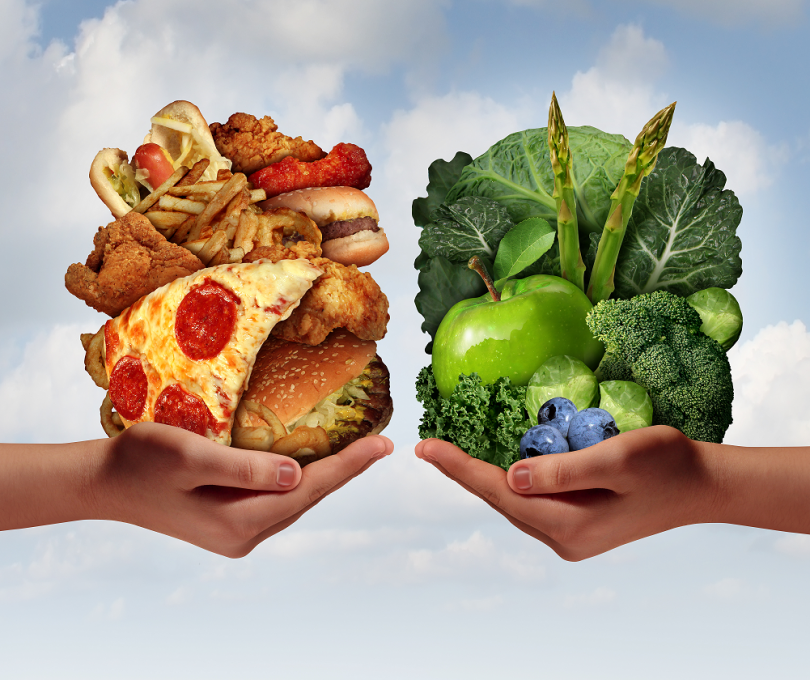
After you’ve finished successfully your interviews, please go to Youtube and watch the video “What if the world went vegetarian?”.
Please listen carefully and note down what positive and negative effects it would have. You can watch it more than once because after all you should write an article about it.
In your article you should
- give a brief overview on how climate change affects humanity.
- explain how the world would change if everybody was vegetarian.
- argue if turning vegetarian would be a realistic solution for you and for the world.
Your article should be about 250 words (+/- 10%). You can either scan a sheet of paper or hand it in as a word-file. I recommend you to use a draft beforehand to design your ideas. Upload it on our learning platform under the section <webquest “climate change” < articles>. Don’t forget to add your name.
Task 3

Now it is time to concern ourselves with the recycling process. As you know it is vital to recycle as much materials as possible because otherwise those valuable materials get just burned. Go to Youtube and watch the video “Recycling around the home” and learn what can be recycled in your home.
After watching the video research on how the recycling system works in Austria. Illustrate your research by using the website Canva (https://www.canva.com//) and create a flyer that explains how to recycle materials properly in Austria. (please include the respective containers)
Upload your graphic to our learning platform under the section <webquest “climate change” <how to recycle properly>
Task 4

Now, we move to a more creative part. I want you to choose a project about sustainability. Please get together in groups (max. of 4 people) and divide the workload respectively. Present your project at the end of the month to the whole class. (date is to be announced)
Some proposals:
- a podcast that offers tips how to live more sustainably
- to prepare a workshop for your classmates that teaches about different recycling symbols (https://www.recyclenow.com/how-to-recycle/recycling-symbols)
- to upcycle old materials which you find at home (a bag made from crisps bags: https://youtu.be/yfWzhOyRqSY)
- to design a creative poster that should motivate to live sustainably and that gives concrete tips how to do so
- to prepare a sustainable meal and present the recipe; explain where your ingredients come from
- …
I invite you to come up with your own ideas but ask your teacher beforehand.
Enjoy yourself!
Evaluation
You will be assessed based on the following criteria:

Task 1:
- linguistic correctness (20%)
- fluent speaking (20%)
- answering the questions adequately (60%)
Task 2:
- fulfilment of the task (25%)
- layout and organisation (25%)
- language use (25%)
- accuracy of language (25%)
Task 3:
- fulfilment of the task (75%)
- adaptation (25%)
Task 4:
- presentation (25%)
- creativity (25%)
- value of information (50%)