
Introduction
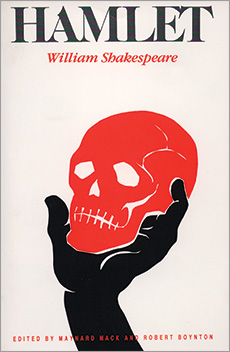
You are about to begin reading Shakespeare's first tragedy, Hamlet. Although the play is centuries old, it remains one of Shakespeare's most popular works.
In the play, Shakespeare weaves a tale of love, death, betrayal, and revenge. Throughout the play, you will question the sanity and stability of Hamlet. Moreover, Shakespeare's use of the supernatural and anguished lamentation will leave you wondering what is real versus what is a rant of a madman.
Task

Objective:
Deepen your understanding of both Shakespeare and the elements of the play to enrich your comprehension of this famous work of literature.
Task:
1. Using the provided resources, answer all of the questions in each section of this WebQuest.
Process

Part 1 – Background on William Shakespeare
- When was Shakespeare born?
- When did Shakespeare die?
- What was his primary occupation?
- What documents exist about his life?
- Where did Shakespeare grow up?
- What was his education like?
- Who was his wife?
- What is strange about what Shakespeare left his wife when he died?
- How many children did he have and what are their names?
- What are his “lost years”?
- Describe Shakespeare’s life as an actor. What theatre company did he belong to?
- How many plays did he write?
- Explain the controversy surrounding Shakespeare and his writings. Include specific details.

Part 2 – Shakespeare’s Work: Tragedies
- What is a Shakespearean tragedy?
- Describe the characteristics common to Shakespeare’s four great tragedies—specifically Hamlet.
- What three elements do Shakespearean tragedies contain? Explain them in detail.
- Why is the death of the protagonist important? Explain in detail.

Part 3 – Shakespeare’s Theatre
- What was the name of Shakespeare’s theatre?
- Describe the details of Shakespeare’s original theatre.
- Find a painting or drawing of Shakespeare’s original theatre.
- Who was the architect of the theatre?
- What happened to the original theatre?
- In what year was Hamlet first performed?
- Find a picture of the modern-day rebuild of Shakespeare’s theatre.
- In the modern-day rebuild of the theatre, how many tickets are available for each performance?

Part 4 – To Read or Not to Read—That Is the Question.
- What themes appear in Shakespeare’s Hamlet that are relevant to you today? Identify two themes and explain how they are relevant to you.

Part 5 – Symbolism
Hamlet is rich with symbolism. Developing an understanding of the symbols within the text before you read the play will enhance your understanding of the play. For each of the following, identify and explain the symbolic meaning:
- Yorick’s skull
- Ghost
- Mousetrap
- Flowers
- Graveyard

Part 6 – Quotable Shakespeare
One of the reasons that Shakespeare remains relevant today is that we continue to quote his works in popular literature, television, and sometimes, in daily life. Review the following websites that highlight famous quotes from Hamlet. Pick three and rewrite them in the form of a text to a friend. The meaning should stay intact, but the language should reflect modern vernacular. Include the original quote and your modern-day interpretation for all three. (You may have to use outside sources to determine the context and original meaning of the quotes.)