
Introduction
Today, we will conduct an online investigation to determine the effect of placing transparent, translucent, opaque, and reflective objects in the path of a beam of light. You will explore how a beam of light interacts with various materials through a video and complete a graphic organizer. I want you to think about the amount of light that passes through an object.
Task
With your partner, you will learn more about light and how it is affected by certain kinds of materials. As you read more about the types of materials, you and your partner will be completing a graphic organizer. Make sure you pay close attention to what you are learning and what you are observing with the light. Once your graphic organizer is finished, you will answer questions to test your knowledge.
After you have completed the organizer, I have some questions for you to test your knowledge.
After you answer some questions, you will get the opportunity to choose a material and tell me how you know the light will be affected by that material because of what type of material it is and how you know.
Click here for your graphic organizer! Please make a copy of the organizer.
Process
How is light affected by materials?
When a flashlight is shined through different materials, the way the light shines through the material is not always the same. If a flashlight is shined through a window, its beam of light looks different than when it is shined through a brick wall. Light comes into contact with many materials.
These materials are classified into categories based on how much light they allow to pass through the material. These objects are put into categories called opaque, transparent, translucent, and reflective.
Click the play button to learn about three of these materials!
Opaque objects all NO light to pass through them. An example of this would be a brick wall. ---> 
Translucent objects allow SOME light to pass through them. An example of this would be wax paper. ---> 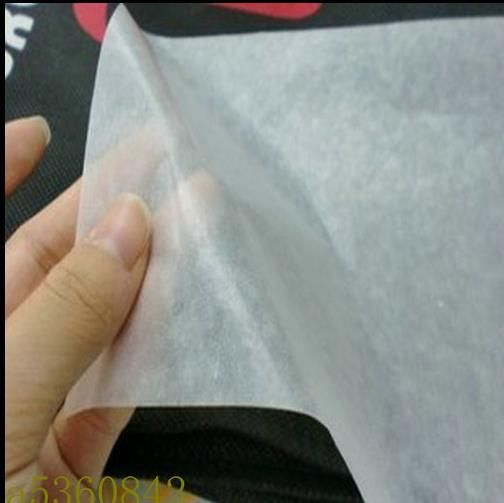
Transparent objects allow ALL light to pass through them. An example of this is glass. ---> 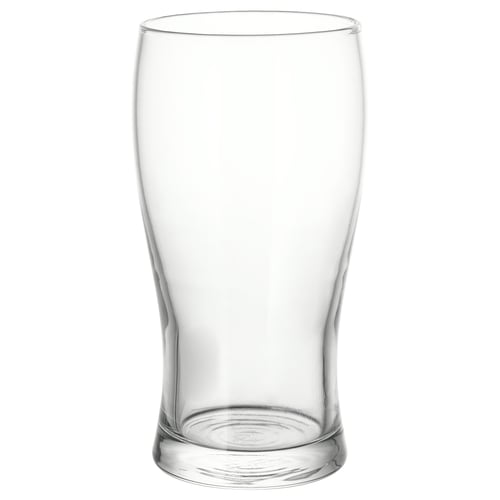
Click here to learn about reflective objects!
Reflective materials bounce the beam of light back! A mirror is an example of this material. -->

Questions! Click here for your questions.
Evaluation
You have learned all about how light interacts with different types of materials. Now it is time to show me all that you have learned! You will show me what an expert you are at science by choosing one material out of the choices that I have given you on your sheet. Then you will tell me whether your material is opaque, transparent, translucent, or reflective. From there, you will tell me whether it will allow some, none, all of the light to pass through or whether it will reflect the light and how you know. You may visit the stations around the room to look at the objects we investigated yesterday, but you may NOT shine a light through them or move them from their station.
Credits
Light reflection & vision: Science lesson for kids: Grades 3-5. Generation Genius. (2021, August 16). Retrieved March 15, 2022, from https://www.generationgenius.com/light-reflection-and-vision-lesson-for…
MooMoo Math and Science. (2020, August 11). Transparent translucent opaque ( with examples ... - youtube. YouTube. Retrieved March 15, 2022, from https://www.youtube.com/watch?v=8rrnMOjIGjI
Teacher Page
|
1-PS4-3 Performance Expectation: Plan and conduct an investigation to determine the effect of placing objects made with different materials in the path of a beam of light. Clarification Statement: Examples of materials could include those that are transparent (such as clear plastic), translucent (such as wax paper), opaque (such as cardboard), or reflective (such as a mirror). DCI: ELECTROMAGNETIC RADIATION: Some materials allow light to pass through them, others allow only some light through and others block all the light and create a dark shadow on any surface beyond them, where the light cannot reach. Mirrors can be used to redirect a light beam. (The idea that light travels from place to place is developed through experiences with light sources, mirrors, and shadows, but no attempt is made to discuss the speed of light.) (LE.PS4B.b).
|