
Introduction
Use Hand Tools
In order to avoid these problems, some principles must be followed. Neglect of these principles opens a doorstep to risk and danger to life and property.
Pretest
Directions: Put a check (√) mark in the appropriate column that best describes your present level of knowledge of each enlisted competency
| Knowledge | I do not know it | I am learning to know it | I want to learn more | I know it very well |
| 1. Know the routine maintenance of Tools | ||||
| 2. Know how to maintain tools | ||||
| 3. Know how to store tools | ||||
| 4. Know the standard operating procedures in storing tools | ||||
| 5. Know the principles and techniques in keeping tools |
Task
At the end of this Lesson, you are expected to do the following:
maintain hand tools
Process
Maintain Hand Tools
Standard operational procedure, principles and techniques in maintaining tools
Tool management is a manifestation of a good serviceman or any person working with tools. A good tool manager is efficient in listing and keeping records. It will only take a matter of one to two hours to maintain tools but sometimes, it takes more than expected time.
OPERATIONAL PROCEDURE IN TOOLS AND EQUIPMENT MAINTENANCE
1. SAFE USE
Assurance of safe use is expected. This can be done by knowing the purpose, application, and requirement of tools and equipment. Without this knowhow, the user will only be guessing and wrong use is expected. Risk of injury is more likely to happen. Shop / industry owners are expected to train their workers. This will build morale and reduce danger.
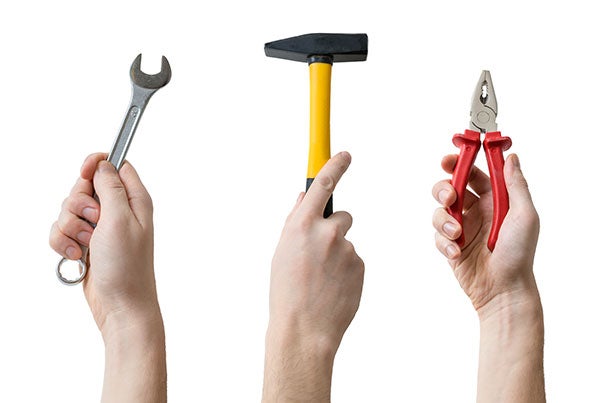
2. SAFEKEEPING. Regular maintenance of tools and equipment through safekeeping must be a part of the health and safety of users and owners. Dangers to theft and exposure to moisture is avoided, property is taken care of, and risk is evaded. Putting the tools, equipment and paper documents such as manual of specifications in a very protected but easy to retrieve place is a good habit of safekeeping. Storage room must be properly locked and ventilated.

3. SAFETY SIGNS AND SYMBOLS. By putting safety signs and symbols, users are informed and warned of what to do and what not to do. Risk is limited and put in control. Specific safety signs for mechanical, electrical, pneumatic, and hydraulic must be clearly defined and placed in a visible area.

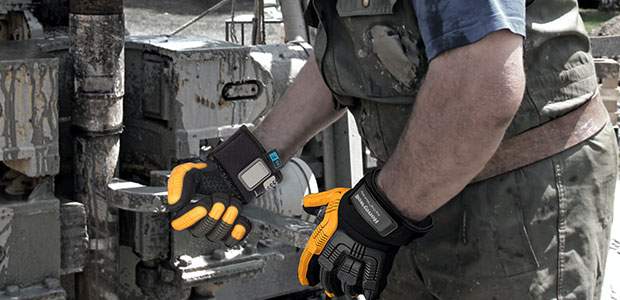
4. SAFETY PROTECTION. The use of Personal Protective Equipment (PPE) is necessary. Safety gears must be worn properly. Suitability of PPE to the workplace must conform with the work being done. It must be comfortable so that user will not be irritated. The PPE can control health risk and decrease possibility of threat or injury. For face protection, eye wear, goggles, and safety shield used in welding are used. The body protection such as aprons or coverall garment serves as protection for the frontal body. High grade, heat and chemical resistant hand gloves protect the hands and a simple dust mask or respirator can ward off chemical fumes and dust for the respiratory system. Appropriate shoes can also protect from accidental fall of metallic parts. Not only that, safety in the workplace is also included. Fire extinguishers play a vital role in reducing and totally putting out the fire. Saw dust is a good cleaner for spilled oil on the floor.
Evaluation
How Do You Apply What You Have Learned?
Directions: Get a partner. Choose one of the competencies you would like to demonstrate.
1. Safe use of hand tools.
2. Proper safekeeping and storage of hand tools.
3. Interpreting safety signs and symbols.
4. Using safety Personal Protective Equipment (PPE)
Self-Check
Directions: On your activity notebook, answer the following self-reflection and discuss it in the class.
1. Today, I have learned that:
2. But, I'm a little bit confused with:
3. I still want to learn more on:
Show that you have learned something by doing this activity
Directions: Reflect on the following questions. Write your answers in your Activity Notebook.
1.Which of the following safety requirements of hand tools do you find the easiest? Which one do you find the most difficult? State your reason.
1.1 I Like best…
1.2 I Do not like…
1.3 I suggest some requirements…
Credits
Swing Crispin, Frederic, Dictionary of Technical TermsThe Bruce Publishing Co.: 1948.
Chilton‟s Easy Car Care. Chilton Book Company. 3rd Ed. Chilton Way, Radnor, PA 19089
Stockel, Martin W. Auto mechanics Fundamentals. The Goodheart - Willcox Company, Inc. 1978
The Oxford Dictionary of Current English. New Revised Ed. Oxford University Press, 1998.
Popular Mechanics Guide To Auto Basic Repair and Maintenance. Book Division The Hearst Corporation, New York, NY
en.wikipedia.org
Maintain Hand Tools
TOOLS AND EQUIPMENT MAINTENANCE
Teacher Page
This WebQuest materials was prepared for Performance Task3 (Webquest-IBL) on MJTIC207 by Prof. Anabel Sta Cuz- Sollano of CSTC Sariaya, Quezon.
Prepared by: Aeron Jude Cueto Bayran (BTVTED-AT2)