
Introduction
Zero Waste is an aim referred to the need of guiding people in changing their lifestyles and practices to emulate sustainable natural cycles, where all discarded materials are designed to become resources for others to use.
It's actually a philosophy grounded in ecological theory, that promotes the four Rs - Rethink, Reuse, Reduce, Recycle - as a lifestyle for a sustainable future and emphasizes on designing and managing products and processes so as to avoid the volume or/and toxicity of waste and conserve natural resources.
Task
Your goal for this webQuest is to develop as much information as possible so that you can describe that concept; analyze the benefits of harmonizing our lifestyle with four Rs - Review, Reuse, Reduction, Recycling - for the planet, human, animal, and plant health; link the environmental and health affects of food waste with agricultural production and food processing; give suggestions for dishes that could be cooked with food leftovers.
Thus you are called to create a presentation with general info and some traditional recipes or/and cooking ideas bon on your mind.
That could later be presented as a cookbook so as to spread awareness to your school, family or/and society so as all together to manage to achieve zero waste ambitious goals.
Process
Step one
Look at the followig picture:
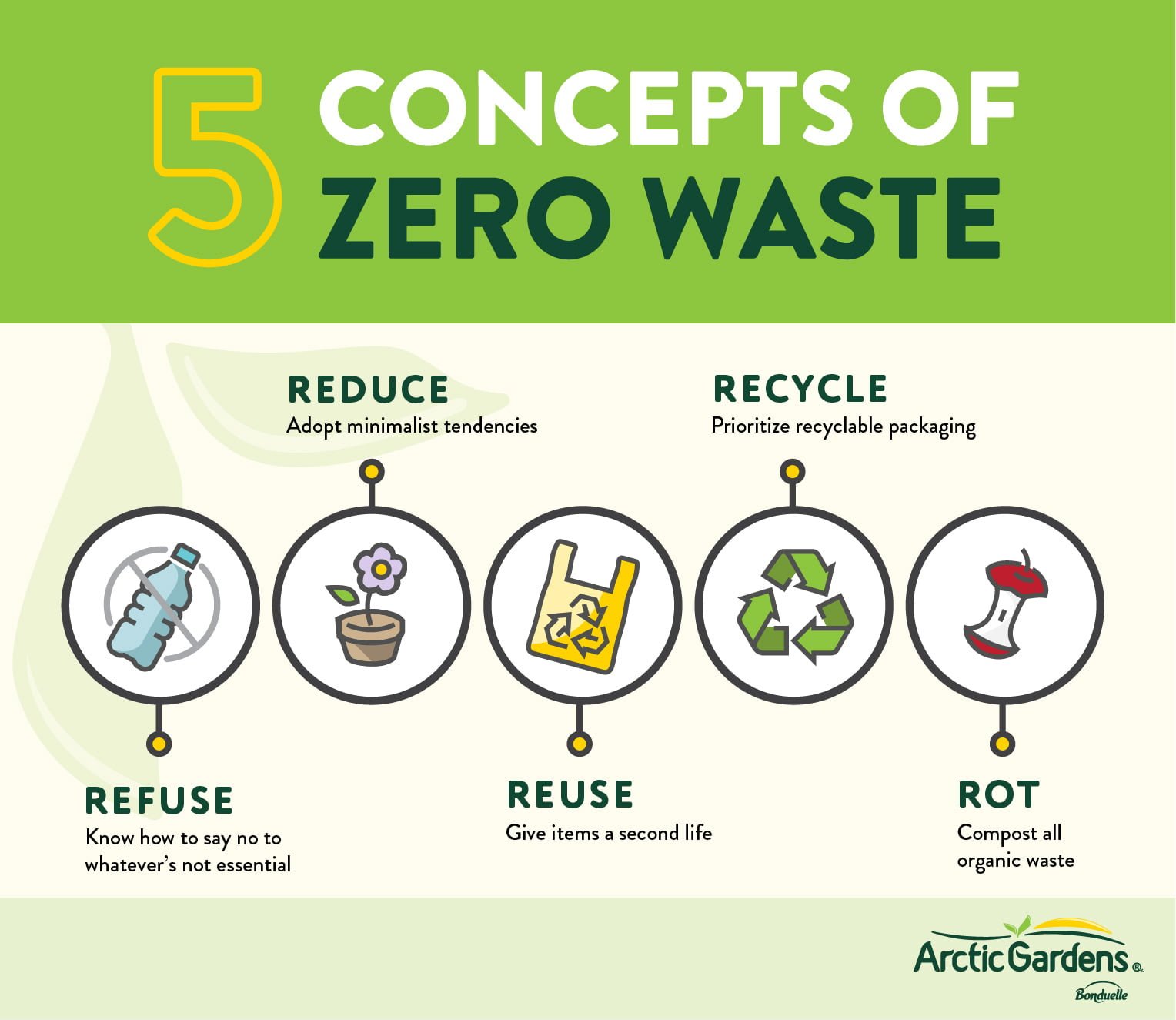

Can you understand what zero waste concept is about? Can you imagine why is that so important? Brainstorm with your peers and then read the following article so as to identify the key words, and some facts.
https://zerowasteeurope.eu/about/why-a-zero-waste-vision/
Step two
Make use of the following links so as to develop some more facts but also some suggestion on how we could manage to achieve the zero waste goals.
https://www.sciencedirect.com/science/article/pii/B9780128153574000122
https://www.sustainablejungle.com/zero-waste/what-is-zero-waste/
Keep notes so as to be used in your common presentation.
Step three
Make use of all these developed so far but also of the following links so as to focus on food zero waste in the kitchen
https://www.goingzerowaste.com/food/
https://www.sustainablejungle.com/zero-waste/zero-waste-kitchen/
and develop some tips and some recipes made out of leftovers.
All your findings and the recipes have to be transferred to the following common presentation:
https://docs.google.com/presentation/d/1RjpsWG0cIQfFudU0lq9O8U-uzy2TMakCu2U8XXvv7Zo/edit?usp=sharing
Evaluation
This is how your work will be evaluated.
|
|
Beginning 1 |
Developing 2 |
Qualified 3 |
Exemplary 5 |
Score /20
|
|
Teamwork |
There is one person doing all the work, and the team is NOT working together. |
The team is working individually on their own role, and discuss with others in a group |
Team is working together, but not using all the given resources to connect with one another. |
The whole team is working together, helping each other out, and connecting information with one another. |
|
|
Research / Understanding
|
Don't use sources given & information is not factual.Student lacked knowledge |
Use sources were given.Students understood information but couldn't apply those to their projects |
Use sources given, and students understood information but lacked creativity and informational facts |
Use sources, get all information asked, and goes beyond to get and applied extra information to give to their classmates a better idea on the subject |
|
|
Presentations |
No creativity to their presentation, such a little information that classmates aren't able to understand |
Students created a presentation with only text and nothing else. |
Students were able to create a good presentation. |
Great creativity, students are able to understand |
|
Credits
This WebQuest was created by a team of teachers, within the co-funded Erasmus plus KA229 partnership “Eat Smart Save Your Land” (ESSAY LAND), project number: 2020-1-EL01-KA229-078815.
The European Commission support for the production of this publication does not constitute an endorsement of the contents which reflects the views only of the authors, and the Commission cannot be held responsible for any use which may be made of the information contained therein.