Introduction
WELCOME
I am very excited to be venturing into literature with you all. This is a very important sub-discipline of English. It happens to be my favorite one too. Growing up I loved reading a lot, it shaped my life choices, my perspective and broaden my imagination and also possibilities in the world. I feel one of the reason a young child, more especially a boy child, gets swallowed by life in the informal settlement; it is not because they are not dreamers. We all are dreamers but you can only dream as big as your imagination. I knew places I have never been to, places I still haven’t been too and I realized life is bigger than what I am surrounded by here. And I quote one of the greatest poets to ever do it,William Shakespeare, "The world is your oyster kids and you are pearls," myself included. I still want to see the world I read about. I want you to see the world that you will read about in books, you will travel back to historical times, travel into the future, the present and other dimensions.
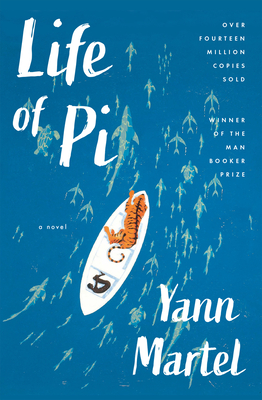
Life of Pi is a life changing book within the story are themes of spirituality and religion, self-perception, the definition of family, and the nature of animals. Life of Pi is a rich and dynamic text full of discussion of morality, faith, and the ambivalence of what constitutes truth. This book is an elevator.
Task
Now that you have finished reading the book and have already discussed it in class you will write a literary analysis essay on the following themes that are covered in the book namely:
The Nature of Storytelling
Identity / The Hero’s Journey
Religion and Faith
Belief
Survival
Process
Revise your knowledge of the structure of the Literary Essay
The structure of the literary essay is the same as any other essay as it has an introduction, body and
conclusion. However, this essay differs from creative writing in that you are required to have read the
literature text (which is your drama or novel) and present an argument about what you have read. The
tone of the literary essay is formal.
The PEEL method explained:
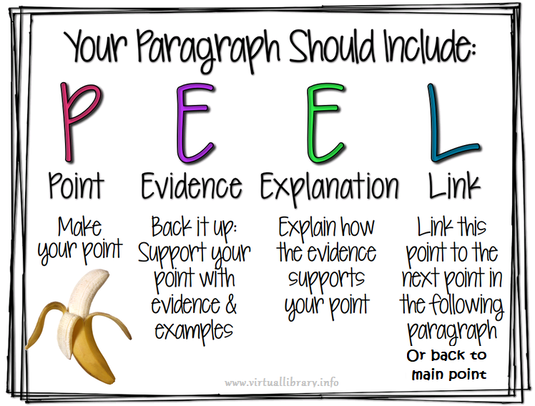
The PEEL method essentially focuses on the format and structure when formulating a written piece.
Each element helps to strengthen your argument by allowing you to produce overall effective paragraphs
that complement and connect to one another.
POINT – Your topic sentence is extremely important for providing variability and unity within your paper.
Therefore the first sentence of each paragraph should clearly state the point of the paragraph which
should be directly connected to the argument of the essay. Essentially keep it short and straight to the
point.
EVIDENCE – The evidence presented should be in line with your point of view, meaning the evidence
provided should be credible and verifiable such as examples from the text.
EXPLAIN – This portion of your paragraph may be the largest one as it involves interpreting, evaluating
as well as providing additional details to accompany your main idea. Similarly this section may also include
a verdict or claim being made in which you clearly state a supposition based on the evidence provided.
LINK – When providing the link sentence at the end of your paragraph, you are not only linking back to
the bulk of the paragraph and the topic, but you are also allowing for a transition to the next topic or
paragraph. In some cases, the candidate may consider the link sentence actually to be the first sentence
of the next paragraph. This may provide unity and coherence to the work.
Evaluation
| outstanding | exceeds expectation (7-6) | meets expectation (5) | approaching expectation (4-3) | unacceptable (1-2) | |
| Intro/conclusion | o Introduction grabs attention and provides meaningful context to a persuasive argument o Conclusion effectively restates the argument, but fresh language and meaningful insight leaves reader wanting more | o Introduction sparks some interest and effectively introduces reasonable argument o Conclusion restates arguments, but uses new language and shows understanding of the big picture | o Introduction provides context for the argument but is obvious and/or basic o Conclusion restates arguments, but recycles previous statements verbatim | o Introduction or conclusion does not flow with the argument of the paper o Introduction or conclusion contains blanket or vague statements; needs development to be effective | o No introduction and/or conclusion |
| thesis | o Argument is clearly articulated and persuasive, contains an original opinion | o Thesis presents a reasonable opinion, argument is clear and focused | o Thesis is a plausible argument; contains a legitimate opinion, but somewhat broad and basic | o Thesis demonstrates misunderstanding of the prompt or text | o Thesis not evident; thesis is a fact or plot summary; thesis not in correct position |
| topic sentences and transitions | o Topic sentences contribute to the highly persuasive nature of the argument | o Topic sentences articulate precise argument; logically linked to thesis | o Topic sentences are present and make an argument connected to the thesis; however, ideas are obvious and basic | o Topic sentences are not linked to the thesis o Topic sentences show misunderstanding or prompt or text | o Topic sentences not evident o Topic sentences are facts or summaries |
| evidence | o You have chosen, for the most part, the best evidence to support your point o Evidence is highly persuasive and effective in supporting your argument | o Your evidence is believable and convincing and supports your argument | o Evidence is present, but superficial | o Evidence chosen does not support thesis/topic sentences o Textual evidence is irrelevant | o Little or no evidence; |
| commentary | o Creative/original ideas and insights; extensive commentary, refreshing; goes beyond obvious and basic commentary | o Analysis is believable and convincing, a few assertions may lack specific examples, but assertions are still clearly connected to the argument | o Analysis supports your argument, but ideas are obvious and basic | o Ideas lack development; misunderstanding of prompt or text; illogical argument; | o Analysis not present simply plot summary o Analysis does not address the prompt |
| Style, Vocabulary, Sentence Structure | o Sophisticated vocabulary; sentence variety; quotations are smoothly blended | o Effectively blends direct quotation with explanatory words and phrases to introduce the quotation and facilitate narrative flow; still attempting advanced vocabulary | o Blend quoted material smoothly; but sentence structure lack variety- basic and obvious; attempts to incorporate more advanced vocabulary | o Problems with sentence clarity, redundancy; some quotes stand alone; some vague sentences; little use of class vocabulary or sentence variety | o Serious problems with coherence and sentence clarity; most sentences need revision; most quotes stand alone and lack introduction/ connection to the paper |
| Mechanics and Coherence | o Perfect! (or 1 or 2 minor errors) | o Effective punctuation; close to perfect | o Minor problems with coherence, grammar, spelling, punctuation, but does not interfere with the understanding of paper | o Several distracting problems with spelling, grammar, punctuation, coherence; citations incorrect | o Major spelling, grammar, punctuation errors; distracts and interferes with understanding of paper; citations nonexistent |
Conclusion
The End.

THANK YOU!!!
Credits
Teacher Page
The main aim is to nurture the curious minds and for them to learn to appreciate literature, not to sweat it. Stay safe & awesome, Agent of change!