
Introduction
What Are Participles?
Participles are words that originate from a verb but are used in different ways, and understanding participles are essential because adjectives, verb tense, and the passive voice are language essentials.
A verb + -ing is usually referred to as the present participle. A verb + -ed, like wanted, walked, and lived, is referred to as a regular past participle, while forms like cut, broken, and gone are referred to as irregular past participles.
a participle is a verb form that can be used (1) as an adjective (2) to create verb tense or (3) to create the passive voice
There are two types of participles:
- present participle (ending -ing)
- past participle (usually ending -ed, -d, -t, -en, or -n).

It might not be clear as yet, however, with the link provided you will use it as a visual aid to provide you with more insight into the basics of English particles.
Task
|
This is an individual task. each one is expected to answer all questions from 1 - 10 and send them back for marking.
Q1 Select the correct version. |
|
Q2 True or false? All past participles end in "-ing." A: True B: False |
|
Q3 Select the participle: Before I refuse to take your questions, I have an opening statement. |
|
Q4 True or false? This quotation contains a participle: A: True B: False |
|
Q5 Select the participle: Always be wary of any helpful item that weighs less than its operating manual. |
|
Q6 True or false? All present participles end in "-ing." A: True B: False |
|
Q7 A participle is a verb form that can be used to form: A: tenses B: interjections C: conjunctions |
|
Q8 Select the correct version: |
|
Q9 Select the participle: I drank some boiling water because I wanted to whistle. |
|
Q10 Select the participle: The most exciting phrase to hear in science, the one that heralds new discoveries, is not 'Eureka!' but 'That's funny.' |
Process
Explaining the basics of English Participles. Various forms of tenses attached, along with the parts of speech to form a structure.
Along with watching a video through the provided link: https://www.youtube.com/watch?v=kDzij-gglIQ
.

A non-marked activity will be provided for the learners as they gain more knowledge on English participles. This activity will be at their discretion if they'd like to utilize it before the task will be handed to them. specifically on tenses.
the link to the extra aid activity : https://www.ereadingworksheets.com/free-grammar-worksheets/verb-tense-analysis.pdf
Complete the activity provided from Question 1-10
A rubric will be provided to the assessor
Complete the answers on a clean page and send in your answers
Include name, surname, and grade
learners need to provide their answers through email: cwamalethuhalam@gmail.com, alternatively through the WhatsApp function on 0738801470 however, they'll need to specify correctly as the last option is not legitimate and submitting through WhatsApp at their own accountablity.
Evaluation

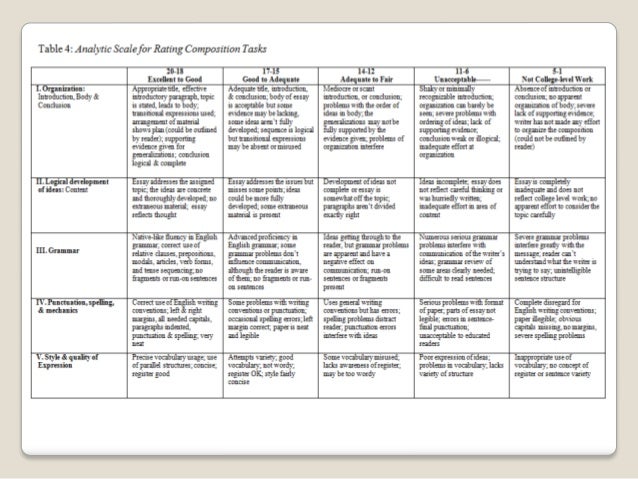
learners will be marked on a 2 point system, where each correct point is awarded 2 points and the incorrect answer is 0.
however, there is a rubric attached that will determine the learners scoring. see below
Conclusion

Teaching English participals to learners doesn’t have to be intimidating, nor does it have to be boring for your students.
By breaking up grammar topics like this one into small lessons and accepting all of the exceptions to the rules as a necessary evil, both you and your students can have a satisfying and successful lesson together!
Present and past participles are key building blocks in any language.
Using a participle phrase upfront allows you to cram more information into a sentence.
we can learn how to form passive sentences because there are some great benefits to it too.
We covered the basics of what participants are and how they can be used in our everyday life.