
Introduction
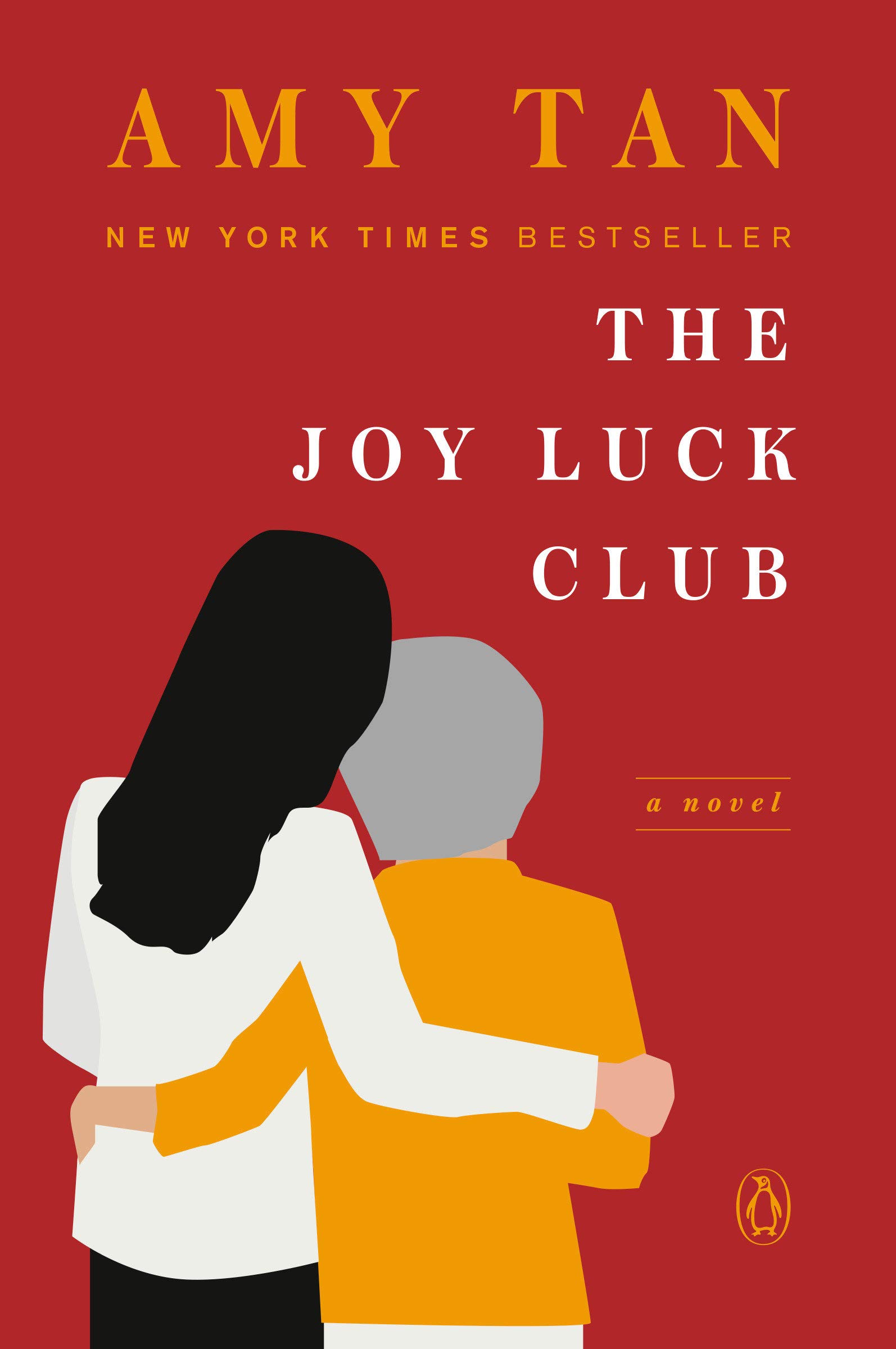
We will be exploring the relationship developments from the four mothers and daughters from the novel The Joy Luck Club! Including going through the cultural differences between both mother and daughter and the ways they accept each other towards the end. As well as discussing themes, symbols, and plots of the novel.
Task
We will be observing each of the relationships between mother and daughter throughout the novel as well as answering the following:
- How does the relationship change throughout the novel
- How the pairs learn to overcome their differences
- How each character learns to fight through their obstacles
- How each character learns to value the culture of both mother and daughter
- Observing the themes, symbols, and plots of the novel
Process
Themes of the Novel:
Challenges of Cultural Translation: Throughout the novel The Joy Luck Club we see the narrators struggle when it comes to the inability to translate both concepts and sentiments from one culture to another (Chinese to English). The incomplete cultural understanding of both mother and daughter shows the struggle of knowledge of the English and Chinese language. Including, the barriers that exist between the two often occur due to their inability to communicate with one another, although each of the daughters knows some Chinese words and the mothers speak somewhat English their ability to communicate with each other is often misinterpreted which leads to subtle misunderstandings. The first time we witness this difficulty with translation occurred when Jing-mei tells the story of her mother who had founded the Joy Luck Club. But after attempting to explain the club's name, she realizes that that concept can not be translated, she also points out that each of the daughters thinks that their mothers are foolish for being unable to speak English properly and on the other hand the mothers are very impatient with their daughters because they don't understand the cultural purpose of their language and feel like they don't intend to pass along their heritage to their own children in the future

Problems of Immigrant Identity: During the novel, each of the characters expresses anxiety over their inability to reconcile their Chinese heritage with their surroundings. While the daughters are genetically Chinese but were raised in American culture Waverly, Rose, and Lena disregard their mother's customs and tastes and consider them to be ¨old-fashioned¨ or ¨ridiculous¨. Many of them had tried to drift away from their Chinese heritage and identities throughout their childhoods, one example is Jing-mei, who during her adolescent years would constantly deny that she had any internal Chinese aspects and instead was limited only to her external features. Although as the girls mature, they begin to feel incomplete with themselves and finally become interested in their Chinese heritage. For many immigrants as well as their families, the contrasts within their culture at times can bring particular pain.
❌ Photo unavailable
Symbols throughout the novel:
The Swan & the Swan Feather: In the novel, a woman had bought a swan that once was a duck-also known as “a creature that became more than what was hoped for”. Later in the story, we find out that the swan gets taken away from her by the immigration officials and the woman is left with only a swan feather and she hoped that one day gives that feather to her daughter. This moment in the story meant that Tan was making a strong case when it came to the swan/swan feather which represented all the wishes and hopes for a better life in a new world.
Queen Mother of the Western Skies: A grandmother believes that her granddaughter must have been the “Queen Mother of the Western Skies”- a mother reincarnated many times over and therefore holding much wisdom about life. The grandmother realizes that she had lived an aspect of her own life, this had shown that mothers aren't always right in what they teach their children at times. It also implies that wisdom can come from age and can learn throughout their lifetime.

The Jade Pendant, Jing-mei's “Life's Importance”: The jade pendant was a gift from Suyuan to Jing-mei, the pendant itself doesn't necessarily have just one meaning. Suyuan had given her the pendant during the time were Jing-mei was feeling terrible about herself and the pendant had something to do with her self-worth and a lot to do with her life's importance. When Jing-mei was given the pendant she saw it as a tacky necklace but after the death of her mother, she starts to wear it and finally understands the importance of the pendant. As Jing-mei learns more about both herself and her mother, the meaning of the pendant becomes deeper as well as the color of the pendant.

Evaluation
Jing-mei (June) Woo & Suyuan Woo
For Suyuan's generation of immigrants, the United States was a land of boundless opportunities. Jing-mei states, ¨My mother believed you could be anything you wanted to be in America.¨ That exact mentality is what drove Jing-mei's mother to push Jing-mei so hard: she believed that as long as Jing-mei works hard and strived to reach her full potential, then she will be able to achieve anything. The difference between Jing-mei and her mother (Suyuan) is that she was born and raised in the United States and rather than sharing her mother's belief in the value of hard work, instead she embodies a sense of American individualism. Jing-mei had vowed that she won't be what she is not, even if that means going against her mother's values that children should obey their parents. That is considered to be in direct defiance of traditional Chinese values regarding the relationship between parents and their children, Jing-mei had struggled to understand her mother's perspectives, she was vaguely aware of what her mother had gone through in order to live in the United States. However, the topic is not openly discussed in their household which leads to a lack of clear understanding between both mother and daughter. The lack of transparency between the two of them as well as the somewhat authoritarian parenting style which caused Jing-mei to feel resentful and unfairly burdened by her mother's expectations. Throughout the years Jing-mei became increasingly sure that she is not a genius and began to view her mother's pride and approvals as unattainable, however, Suyuan's confusion at the insinuation that she had wanted Jing-mei to be a genius suggests that perhaps there was a misunderstanding. Jing-mei's mother states that she only ever wanted Jing-mei to ¨be best¨ for her own sake. Even if the end result wasn't perfect, she still wanted her to put the time and effort into whatever it was she did and had wanted her daughter to be successful, and she fully believed that Jing-mei could be successful at anything as long as she tried. Jing-mei and Suyuan both share the value of individuality, Suyuan wants Jing-mei to be special, different, and unique as well as stand out. Suyuan may not believe that she herself has the ability to stand out, but the fact that Suyuan pushes Jing-mei so hard toward that goal shows just how much she believes in that value. But Jing-mei fights back because she wants to be her own person and doesn't want to be who her mom wants her to be.

An-mei Hsu & Rose Hsu Jordan:
When An-mei was a little girl, she had learned from her unhappy mother that you must swallow your tears. In China, An-mei and her mother lived in a society where they couldn't stand up for themselves and had to suffer in silence. One of An-mei's wishes for Rose was that Rose would be able to stand up for herself, something An-mei's mother was sadly unable to do which ended in her living a life of terrible suffering. An-mei was extremely worried about her daughter who despite being in America seemed unable to speak up for herself and let life get to her. She had also wanted Rose to strive for success because she believed that Rose's life was worth fighting for. Rose did not necessarily have a close relationship with her mother but instead a rather avoidant one and they both don't really understand each other. Rose refuses to talk about her divorce from her mother, so her mother never gets a clear understanding as to why Rose and her spouse (Ted) are divorcing. Rose thinks that her mother would be upset when she finds out that she is divorcing but in reality, she only wants to support Rose. This is why there is a lack of communication and is also the root of the problem, so if Rose had communicated with her mother she would have understood that An-mei was supporting her in divorce. An-mei had seen the dangers of an unstable relationship with her mother being a concubine, and she understands what it's like to want to escape a bad man. When An-mei tries to discuss Rose's divorce with her she is resistant. An-mei states ¨Why can you talk about this with a psyche-atric and not with mother?... A mother is best. A mother knows what is inside you¨. This shows how hard An-mei was trying to help Rose with her problems but Rose still refuses and is causing herself more pain. Rose and An-mei begin to resolve their conflicts when Rose finally asks her mother what she should do about her marriage and her mother responds with ¨This is not hope. No reason. This is your fate. This is your life, what you must do¨. This was the moment when Rose begins to think about standing up to Ted and asking for a divorce, and because of the conversation with her mother about the situation the conflict was finally resolved. Rose finally realized that An-mei was encouraging her to work through her divorce but stating ¨I am not telling you to save your marriage¨ ¨I only say you should speak up¨ In this moment, Rose had realized that her mother was supporting her the entire time, not trying to make her stay with Ted.

Lindo Jong & Waverly Jong:
Lindo Jong grew up in China with Chinese culture and Chinese culture. She moved to America and had a daughter, Waverly Jong. Waverly grew up in American with American cultures, unlike her mother. They are both stubborn and independent which puts a strain on their relationship. Waverly's stubbornness leads her mother to try and instill Chinese culture in her daughter so she will still be ¨chinese¨. This is hard for Waverly because she has to assimilate the culture she had not yet experienced. Identity is the root of the mother-daughter conflict, and Waverly tries to balance both conformity and independence. Lindo Jong learns from an early age the powers of ¨invisible strength¨- which is hiding one's thoughts until the time is ripe to reveal them, and of believing in one's inner force even when one finds oneself at a disadvantage. She discovered these values while living in China, caught in a loveless marriage and oppressed by the tyranny of her mother-in-law. Lindo eventually leaves her marriage but at the same time not being dishonoring both her family and her ex-spouses family. She later teaches those skills of invisible strength to her daughter and her lessons nurture Waverly's skills in chess. The relationship between Waverly and her mother is a very complex one. Lindo has a lot of strict, traditional expectations for Waverly, however, her mother feels that her methods of parenting are necessary to help her children given their socioeconomic status. It is not that Lindo doesn't care about Waverly, it's just that her strict expectations escalate into pressure which overwhelms Waverly and it ends up creating tension between the two of them. Tension begins to build when Waverly is considered to be a prodigy in chess. Lindo is so proud of her daughter's success but to the point where she feels used, her mother always feels the need to brag about her daughter to people that she encounters. Lindo experiences a huge crisis when it comes to her cultural identity, she regrets giving Waverly an American name because she believed that the moment she had given her that name both the American and Chinese characteristics would not combine well and also allowed her daughter to become too American and she considered both her and Waverly as being ¨two-facedness¨. Although that situation had occurred, Waverly and Lindo start to have an understanding for one another and this occurs when Lindo gives Waverly her necklace. She passes her necklace down to her before Waverly's first piano recital. Later on, they both go to a salon and the hairdresser tells them both that they look alike. When she walks away the two of them begin to discuss how they have ¨two faces¨. One face is American and the other Chinese, Lindo states ¨You can see your character in your face... You can see your future¨ when she is telling her that she is talking about their facial similarities. They both now realize that deep down, they both have the same idea of morals. She also informs Waverly that her grandmother had told her that the characteristics you have sometimes portray different aspects of your future life and because of that the two of them finally understand each other when they both clarify and confess that one another's ideas are ¨two-facedness¨

Ying-Ying St. Clair & Lena St. Clair
Ying-ying was born in China and gave birth to her daughter Lena in America. The difference between their relationships compared to others is that you can see the differences between each other's traditions, the story is affected by these differences in traditions because Ying-Ying was coming from China where the tradition was “it's not about you it is about your family”. And since Lena is from America where it is more about you rather than your family it becomes a serious issue. As a child, Lena learned important lessons from her neighbors which consisted of constant screaming and arguing. She was shocked by the differences between their relationship and the relationship she had with her mother which consisted of silencing and avoiding conflict. But she realizes that the shouting and weeping she overhears is in fact a sort of deep love between the mother and daughter and realizes the importance of expressing one's feelings, even at the cost of peace. Lena feels a huge lack of love in her own home. When Lena gets married Ying-Ying realizes that she has passed on her passivity and fatalism to her daughter and she decides that she is going to change, Seeing her daughter in such an unhappy marriage and she urges her to take control. She tells Lena her story for the first time and hopes that Lena would learn from her failures so that she can begin to take initiative and instead come to express her thoughts and feelings. The story ends with her and her mother attempting to show Lena the danger that she is currently in and whether Lena learned from her mother's mistakes is unclear. Lena can see disaster coming in her marriage.
Credits
Cites:
Rozakis, Laurie Neu. CliffsNotes on The Joy Luck Club. 27 May 2021
</literature/j/the-joy-luck-club/about-the-joy-luck-club>.
https://dochub.com/37191/gYzM7mBwDr1JaW4KqJ6EoO/the-joy-luck-club-pdf