
Introduction
Students!
You are now the leaders of a campaign so you need to create a slogan for it. A slogan is a creative phrase that summarizes the essence of a product, service or organization. You can focus on whatever issue you are interested in; maybe something you saw on the news or a situation observed around your neighborhood.

Task
First, you need to make groups of 3 of 4 and analyze the following examples of slogans with the questions below.
- What is the role of the images in these advertisements?
- What is the role of the text?
- What response from the audience is each ad trying to obtain?
- Are the ads persuasive? How?


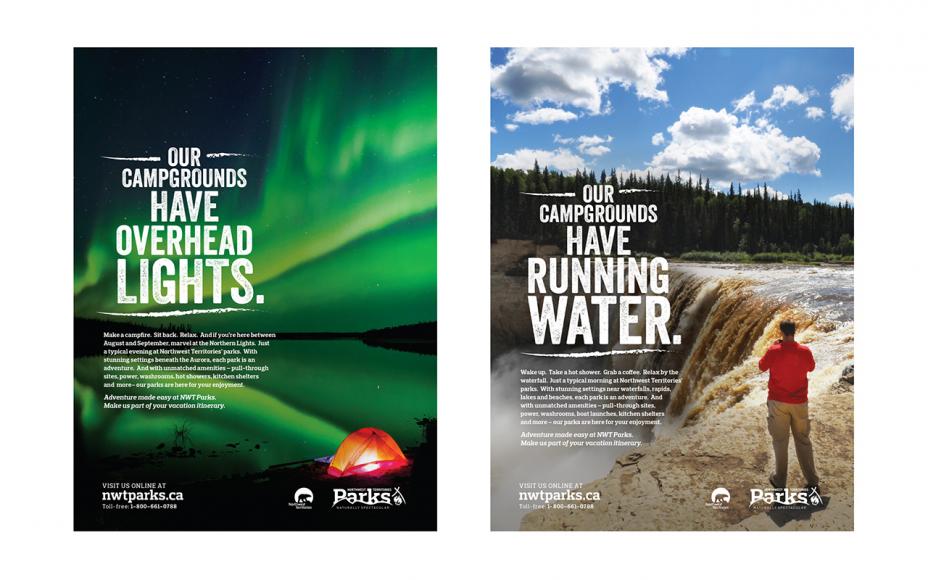
If you want to see the full images, check the following links:
Process
Now it is time for you and your group to create your slogan! As said before, you can choose the topic for your campaign, but if you need help, you can access “Unicef’s global goals for sustainable development” and get some ideas. Here are some examples of rhetorical figures which are commonly used for advertisement.

The following image presents the parts that compose an advertising campaign. Read carefully and focus on the purpose of each part.

You can create a poster on Canvas or draw it on a piece of paper, be creative! Be sure to take a nice picture. At the end of the class, you will explain your advertising campaign.
Evaluation
Here are the main points that will be evaluated on your proyect, number 4 is the highest score and number 1 is the lowest. Full score should be 12 points.
| Criteria | 4 | 3 | 2 | 1 |
| Concept and originality |
Concept surprises and delights the audience. The majority of the content and many ideas are fresh, original, and inventive. |
Concept works even though there are other campaigns that use something very similar. The project shows some evidence of originality and inventiveness. |
Concept feels predictable or obvious. The work is an extensive collection of other people's ideas and images. There is little evidence of new ideas and creativity. |
The work is a minimal collection of other people's ideas, products, and images. There is no evidence of new thought. |
| Explanation of purpose | The message is explained, and several specific, valid reasons are given for each of the propaganda techniques used. | The message is explained, and reasons are given to support the propaganda choices. | The message is explained, but no reasons are given to support the propaganda choices. | The message is merely stated with no explanation; no identification of propaganda used. |
| Language and fluency in oral presentation | Language is accurate, specific, fluent and effective. There are almost no mistakes in language and grammar. | Language is appropriate. There are some mistakes in language and grammar. | Language contains mistakes and hesitations, but it does not hinder meaning completely. | Language contains mistakes and hesitations and message is very difficult to understand. |
Conclusion
Now you have successfully created a slogan for a campaign!

You and your group analyzed different examples of advertisement campaign. Also, you could comprehend the elements and details that compose an ad. All of these steps were helpful for the process of creating an advertisement campaign.
Credits
This webquest was created by Camila Mardones, Constanza Inostroza and Maximiliano Sepulveda for the ICT for EFL teaching course on May 21st, 2021.
https://www.curriculumnacional.cl/614/articles-140131_programa_feb_2021_final_s_disegno.pdf
Teacher Page
Grade: 12th grade
Unit: Unit 1 "The media and the message in today's globalized world"
OA 2: Producir textos orales y escritos claros en contextos relacionados con sus intereses e inquietudes, con el fin de expresar una postura personal crítica que respeta otras posturas
OA 3: Utilizar su conocimiento del inglés en la comprensión y producción de textos orales y escritos claros, con el fin de construir una postura personal crítica en contextos relacionados con sus intereses e inquietudes.
Context: Subsidized school
Ability: Writing and speaking
Modality: Online activity
The corresponding level of English is B1.