
Introduction
Welcome to the world of animal adaptations!
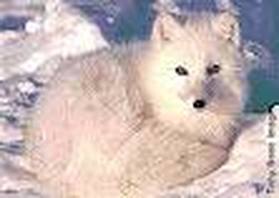
We are going to learn all about the special ways that animals protect themselves from danger over the next week! To do this, we have arranged a few exciting activities meant to challenge you! By the end of this week, you will be able to effectively answer the following questions:
What are animal adaptations?
Why do animals need to adapt to their surroundings?
Why should we learn about animal adaptations?
Be sure to keep these questions in mind as you are learning through doing science!
Process
Day one- Introduction
1. Check out this Study Jam on animal adaptations and complete the guided notetaking form.
2. Animal Adaptation Game: Go travel around to various climates and habitats to document animals and plants and how they adapt.
Day two- Physcial Changes
1. First, let's dive in with an in-depth look at the sea otter.
2. Next, choose one of the following activities:
Discover more about animal feet! Be sure to document your findings in the appropriate worksheet.
Explore the Galapagos! Follow the steps to complete both level one and level two. This site will teach you about the basics of animal adaptation. Be sure to complete the worksheet that goes along with this site.
3. Finally test your knowledge! In this game you will decide how each animal adaptation helps the animal survive. Does it provide protection? Shelter? Oxygen? Food? See if you can identify what need the physcial adaptation is meeting for each animal.
Day three- Behavioral Changes
1. Behavioral adaptations often go along with structural adaptations. Check out this site and be sure to watch the video (located under the heading "What do you Think" heading on the right) to learn about the behavioral adaptations of opossums and beavers. Take notes on the appropriate worksheet. How did the New England Aquarium remind you of the Sea Turtle Hospital we visited during interim?
2. Think you've got behavioral adaptations all figured out? See if you can guess the reason behind these three strange bird behaviors.
3. Finally, check out this list of the top 10 behavioral adaptations. Which, if any, will you bestow upon your made-up creature?
Day four- Life Cycle Changes
1. Are tiger sharks born alive, or do they hatch from eggs. Read here about their unusual life cycle adaptation. How do you think this better suited these sharks for survival? Record your answer.
2. Pick at least one of the following animals to research their life cycle adaptation: impala, luna moth, salmon Take notes on your worksheet.
3. As a final summary, read this passage and take the quiz to find out what you've retained from our studies.
Congratulations! You are now our resident expert on animal adaptations. You are ready for your Final Project!
Evaluation


Welcome Adaptation Expert!
You and your teammates are now apart of a research team of zoologists. A zoologist is a scientist that studies all about animals and how they live. Your research team has recently discovered a new species of animal and it needs to be studied right away! You will work with your teammates to develop a poster presentation to tell the rest of the Professional Zoology Board about your discovery!
Project description:
You will create your own animal. You will determine what your animal looks like, the habitat in which it lives, the food it eats (prey), it's enemies (predators), and 5 ADAPTATIONS that set your animal apart from others in the habitat to help it survive.
To complete this task, your team will go through the daily activities provided to learn all about different animal adaptations. Included in each daily activity is a worksheet to fill out and keep for your research on your own animal. There are specific TEAM activities and INDIVIDUAL activities, be sure to complete both!
After going through all daily activities and included worksheets, your team will begin your project. The final product will be a POSTER including the following:
- Name of your animal
- Picture of your animal (drawn)
- Description of your animal including HABITAT(where your animal lives), WHAT IT EATS, PREDATORS OF YOUR ANIMAL, FIVE INTERESTING FACTS about your animal.
- Adaptations: minimum of five adaptations (including one physcial, behavioral and life-cycle), describe each one and tell how it helps your animal survive
Be prepared to present your final product to the class!