
Introduction
Author: Angela Tuero
This WebQuest is designed for students in grades 3-5, who are exploring the connection that the moon has to the planet earth and how we perceive it! Students will complete a wide arrange of activities to understand the different phases of the moon, what the moon is, and what its connection is to the planet earth.
MS-ESS1-1. |
Develop and use a modelDeveloping and Using ModelsModeling in 6–8 builds on K–5 experiences and progresses to developing, using, and revising models to describe, test, and predict more abstract phenomena and design systems.
of the Earth-sun-moon system to describe the cyclic patterns of lunar phases, eclipses of the sun and moon, and seasons. |
|---|
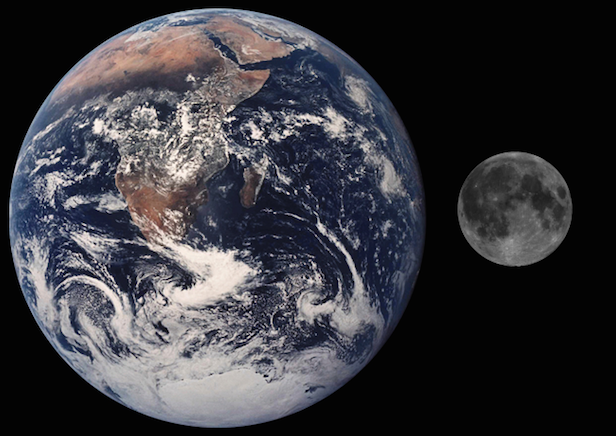
What is the moon? Why does it appear different in the sky? Is the moon important to the planet earth? These are all questions that you researchers will be discovering and finding the answers to within the next week. So strap on your jet-packs and get ready for your journey into space!
Task
Your task in this WebQuest for the following week will include:
- Monday: You will watch a video on what the moon is and what it does in the universe; you will complete the moon fact sheet; you will play a game online about the moon.
- Tuesday: You will complete a moon mini-book that compares the planet earth and the moon, as well as learn facts about the moon.
- Wednesday: You will watch a video on the different phases of the moon; you will cut out phases of the moon flashcards; you will make a spinning moon wheel that shows each phase of the moon.
- Thursday: You will listen to a phases of the moon rap song; you will use Oreos to create the different phases of the moon and place them correctly with their label; you will play another game online about the moon.
- Friday: You will take a quiz on the different phases of the moon, making sure to name each phase correctly, as well as writing one fact at the bottom of your quiz about the moon.

Process
Monday:
Please watch this video:
Complete this worksheet: file:///C:/Users/Angie/Desktop/moon%20fact%20sheet.pdf
Play these games: https://www.legendsoflearning.com/learning-objectives/lunar-phases/
Tuesday:
Please complete this mini-book:file:///C:/Users/Angie/Desktop/moon%20minibook.pdf
Play these games: https://www.legendsoflearning.com/learning-objectives/lunar-phases/
Wednesday:
Please watch this video:
Cut out these flashcards: file:///C:/Users/Angie/Desktop/Teaching%20materials/science%20materials/identifying-moon-phases.pdf
Complete this moon wheel: file:///C:/Users/Angie/Desktop/moon%20wheel.pdf
Thursday:
Please listen to this song:
Use this sheet during the activity: file:///C:/Users/Angie/Desktop/Teaching%20materials/science%20materials/learning-moon-phases.pdf
Play these games: https://www.legendsoflearning.com/learning-objectives/lunar-phases/
Friday:
Please complete this quiz: file:///C:/Users/Angie/Desktop/PhasesoftheMoonAssessment.pdf
Play these games: https://www.legendsoflearning.com/learning-objectives/lunar-phases/
Evaluation
You will be scored throughout this WebQuest on the various assignments given:
|
Grading Rubric |
3- Advance | 2- Passing | 1- Needs Improvement |
|
Participation |
Students actively watched all videos provided, completed all activities, and were fully engaged in the WebQuest. | Students somewhat watched the videos, completed all the activities, and were somewhat engaged in the WebQuest. | Students did not fully watch the videos, did not complete all the activities, and were not engaged in the WebQuest. |
|
Study Tools |
Students successfully created all flashcards, moon wheel, and study worksheets about the moon. | Students attempted to complete the study materials, but did so in a way that does not allow for easy studying tools. | Students did not attempt to create all of the study materials that were readily available to them. |
|
Activities |
Students fully completed the phases of the moon activity and were accurate in labeling the different phases, as well as clean and crisp edges on their Oreos. | Students attempted to create the phases of the moon activity, with somewhat messy edges on their Oreos, and were correct in most of the labeling of the phases. | Students did not complete activity successfully; students did not label any phases correctly or create the phases correctly. |
|
Quiz |
Students received a score of 90% or higher by naming the different phases correctly, placing them in the correct position around the earth, and wrote one interesting fact on the bottom of their quiz. | Students received a score of 70% or higher by naming the different phases correctly, placing them in the correct position around the earth, and wrote one interesting fact on the bottom of their quiz. | Students received a score of 60% or lower by naming the different phases correctly, placing them in the correct position around the earth, and wrote one interesting fact on the bottom of their quiz. |
Conclusion
Congratulations on your journey and what you have now discovered about the moon and its mysteries! You have all worked so hard and are rewarded with the knowledge of understanding the moon and how we see it on earth. I want you all to keep forward on this journey through space and use your mini-telescopes you all received to discover more about the moon each night!

Credits
I would like to give credit to the following videos that helped to further the understanding of the moon!
Videos
Teacher Page
About the Author:
Angela Tuero is a teacher in a therapeutic school setting in Townsend, MA. She works with elementary aged students and has a variety of age groups within her classroom. She is also a full-time student at Franklin Pierce University in a M.Ed. of Elementary Education Program. Besides work and school, she spends most of her time playing teaching her own children at home.
Lesson Plan Outline
Objective: Students will learn what the moon is, what its connection to earth is, and what the different phases are.
Standard: MS-ESS1-1.: Develop and use a model to describe phenomena of the Earth-sun-moon system to describe the cyclic patterns of lunar phases, eclipses of the sun and moon, and seasons.
Intended Audience: 3rd-5th Grrade
Accommodations: Students will be accommodated according to their IEP; students will be given more time for completion based on needs; students will complete assignments in a smaller classroom setting based on needs.
Steps: Students will complete the activities set under each day. Monday students will learn what the moon is and find interesting facts about it. Tuesday students will continue their study of the moon and see how it compares to the planet earth. Wednesday students will begin their study on the different phases of the moon and create study materials. Thursday students will complete an activity using Oreos to create the different phases of the moon, label them accordingly, and place them in their correct place around the earth's position. Friday, students will be tested on what they have learned through the WebQuest and be able to explain their findings.