
Introduction
Connectivism
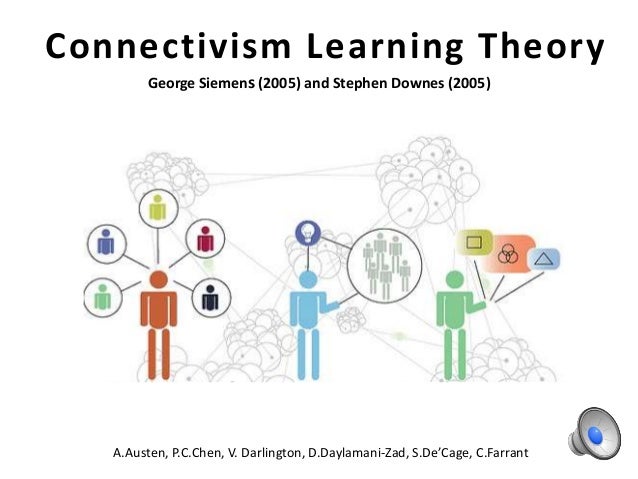
It is a learning theory promoted by Stephen Downes and George Siemens. Called a learning theory for a digital age, it seeks to explain complex learning in a rapidly changing social digital world. In our technological and networked world, educators should consider the work of thinkers like Siemens and Downes.
Design Thinking
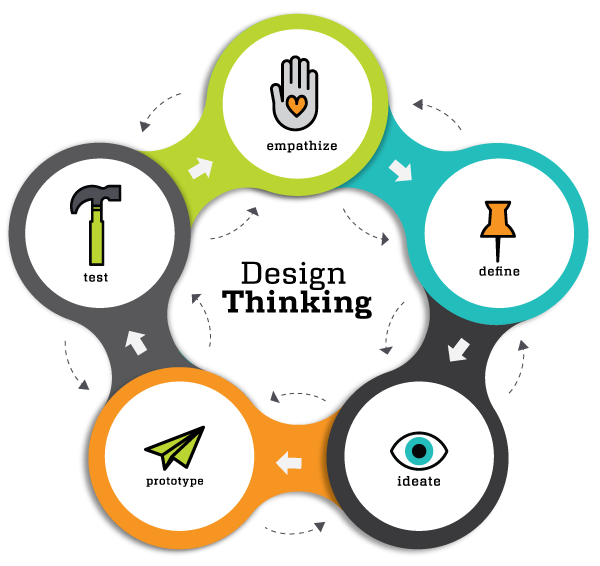
“Design thinking is a human-centered approach to innovation that draws from the designer's toolkit to integrate the needs of people, the possibilities of technology, and the requirements for business success.”
— Tim Brown, CEO of IDEO
Google apps
G Suite (formerly Google Apps for Work and Google Apps for Your Domain) is a brand of cloud computing, productivity and collaboration tools, software and products developed by Google, first launched on August 28, 2006 as "Google Appsfor Your Domain".
Task
Prepare a poster or an infographic with the summarized ideas with each methodology/approach.
Process
Connectivism
Article: https://community.dur.ac.uk/lt.team/?portfolio=connectivism
Definition and videos: http://education-2020.wikispaces.com/Connectivism
Video 1:
Video 2:
Design thinking
Article: https://www.ideou.com/blogs/inspiration/what-is-design-thinking
Article and video: https://www.ideou.com/pages/design-thinking
Video:
Video 2:
Google Apps
Video:
Video about the add ons:
Article: https://www.lifewire.com/google-accounts-apps-differences-1616381
Extensions: https://chrome.google.com/webstore/category/extensions
More: https://support.google.com/chrome_webstore/answer/2664769?hl=en
Evaluation
|
|
CATEGORY |
4 |
3 |
2 |
1 |
|
Graphics -Clarity |
Graphics are all in focus and the content easily viewed and identified from 6 ft. away. |
Most graphics are in focus and the content easily viewed and identified from 6 ft. away. |
Most graphics are in focus and the content is easily viewed and identified from 4 ft. away. |
Many graphics are not clear or are too small. |
|
Use of Class Time |
Used time well during each class period. Focused on getting the project done. Never distracted others. |
Used time well during each class period. Usually focused on getting the project done and never distracted others. |
Used some of the time well during each class period. There was some focus on getting the project done but occasionally distracted others. |
Did not use class time to focus on the project OR often distracted others. |
|
Graphics - Originality |
Several of the graphics used on the poster reflect a exceptional degree of student creativity in their creation and/or display. |
One or two of the graphics used on the poster reflect student creativity in their creation and/or display. |
The graphics are made by the student, but are based on the designs or ideas of others. |
No graphics made by the student are included. |
|
Graphics - Relevance |
All graphics are related to the topic and make it easier to understand. All borrowed graphics have a source citation. |
All graphics are related to the topic and most make it easier to understand. All borrowed graphics have a source citation. |
All graphics relate to the topic. Most borrowed graphics have a source citation. |
Graphics do not relate to the topic OR several borrowed graphics do not have a source citation. |
|
Required Elements |
The poster includes all required elements as well as additional information. |
All required elements are included on the poster. |
All but 1 of the required elements are included on the poster. |
Several required elements were missing. |
|
Content - Accuracy |
At least 7 accurate facts are displayed on the poster. |
5-6 accurate facts are displayed on the poster. |
3-4 accurate facts are displayed on the poster. |
Less than 3 accurate facts are displayed on the poster. |
|
Attractiveness |
The poster is exceptionally attractive in terms of design, layout, and neatness. |
The poster is attractive in terms of design, layout and neatness. |
The poster is acceptably attractive though it may be a bit messy. |
The poster is distractingly messy or very poorly designed. It is not attractive. |
|
Mechanics |
Capitalization and punctuation are correct throughout the poster. |
There is 1 error in capitalization or punctuation. |
There are 2 errors in capitalization or punctuation. |
There are more than 2 errors in capitalization or punctuation. |
|
Grammar |
There are no grammatical mistakes on the poster. |
There is 1 grammatical mistake on the poster. |
There are 2 grammatical mistakes on the poster. |
There are more than 2 grammatical mistakes on the poster. |
|
Knowledge Gained |
Student can accurately answer all questions related to facts in the poster and processes used to create the poster. |
Student can accurately answer most questions related to facts in the poster and processes used to create the poster. |
Student can accurately answer about 75% of questions related to facts in the poster and processes used to create the poster. |
Student appears to have insufficient knowledge about the facts or processes used in the poster. |
Conclusion
Fill out a chart to reflect on the uses of the given technological methodology.
Teacher Page
Lcda. Celeste Lemus