
Introduction

Collaborativism
Collaborative learning is a method of teaching and learning in which students team together to explore a significant question or create a meaningful project. A group of students discussing a lecture or students from different schools working together over the Internet on a shared assignment are both examples of collaborative learning.
Cooperativism
In cooperative learning, students work together in small groups on a structured activity. They are individually accountable for their work, and the work of the group as a whole is also assessed. Cooperative groups work face-to-face and learn to work as a team.

Mobile Learning
Mobile learning, also known as m-learning, is an educational system. Mobile learning supports, with the help of mobile devices, a continuous access to the learning process. This can be on appliances like your phone, laptop or tablet.
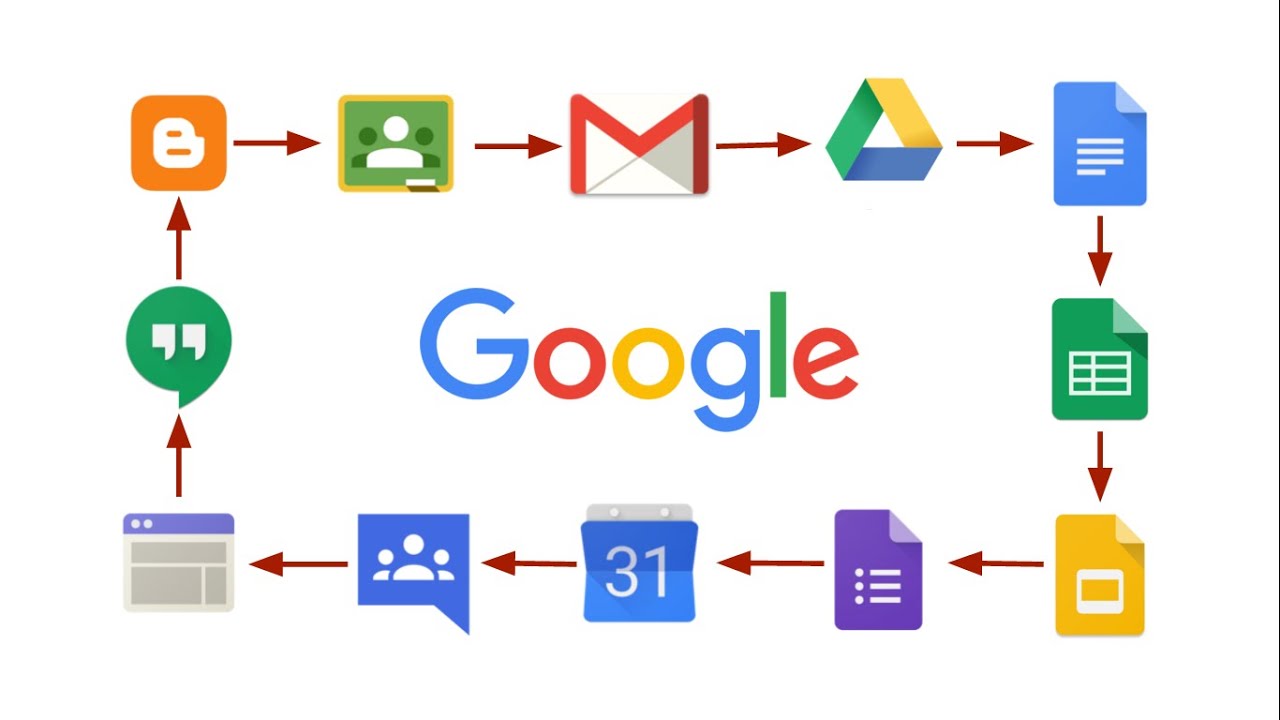
Google apps
G Suite (formerly Google Apps for Work and Google Apps for Your Domain) is a brand of cloud computing, productivity and collaboration tools, software and products developed by Google, first launched on August 28, 2006 as "Google Appsfor Your Domain".
Task
Instructions
- Read each part of this webquest.
- Open each one of the resources of the webquest.
- Explore each site and make decisions for your lesson plan.
- Prepare a lesson plan with your assigned methodology or approach.
- Get ready to present this lesson plan as the practical part for your final test.
Subjects: Technology or English
Grade: Secondary
Time: 30-35 minutes
Process
Cooperativism
Definition: http://www.co-operation.org/what-is-cooperative-learning/
Structures: http://www2.gsu.edu/~mstjrh/cooperative_learning_struc.htm
Video:
Video 2:
Collaborativism
Article: https://edtechnology.co.uk/Article/the-collaborative-approach-to-education
Definition and structures: https://www.cte.cornell.edu/teaching-ideas/engaging-students/collaborative-learning.html
Edutopia: https://www.edutopia.org/blog/deeper-learning-collaboration-key-rebecca-alber
Video
Video 2:
Mobile learning:
Video:
Video 2:
Article: https://www.easy-lms.com/knowledge-center/lms-knowledge-center/mobile-l…
Definition: https://www.emeraldinsight.com/doi/abs/10.1108/S2044-9968%282013%29000006D005
More about it: https://elearningindustry.com/mobile-learning-education-digital-age
Advantages: https://www.talentlms.com/blog/7-awesome-mlearning-benefits/
Google Apps
Video:
Video about the add ons:
Article: https://www.lifewire.com/google-accounts-apps-differences-1616381
Extensions: https://chrome.google.com/webstore/category/extensions
More: https://support.google.com/chrome_webstore/answer/2664769?hl=en
Evaluation
LESSON PLAN RUBRIC
Names: ___________________________________Date:________
Technological Methodology: _______________________
I. Lesson Plan
|
Category |
4-excellent |
3-good |
2-sufficient |
1-in progress |
|
Clarity and organization |
Concise, measurable purpose/objectives embedded in content/context; Tasks achievable in specified timeframe; all parts of the lesson plan are included |
Objectives may lack an essential element; Lesson contains most elements of lesson plan, but order of tasks are in question |
Objectives lack several elements; Lesson was not well organized to ensure maximum learning |
The lesson in general was not effective; lacked several lesson phases |
|
Use of teaching technological methodologies |
Standards reflected, demonstrates clear knowledge and use of a variety of theories and methods appropriately chosen for the class |
Theories are present and effective but a variety is lacking |
Theories are present but not used effectively and are limited in variety |
Theories are sparsely used (if at all) |
|
Lesson inclusive of context applications |
‘real life’ context, meaningful applications, schemata, engaging questions, related to other material/concepts, authentic material |
Context is present, questions are present, but choice in questions/context are not necessarily relatable/memorable |
Some context but little application to real life situations (questions with no purpose-lack of communicative planning) |
Little to no context application |
II. Teaching Activity
|
Category |
4-excellent |
3-good |
2-sufficient |
1-in progress |
|
Engaging students |
Appropriate pace, comprehension checks, relating to students, appropriate for level, interaction between teacher and student/student and student, all modes of communication are used |
Some modes of communication are used, pace or level may be slightly off, comprehension checks are regular but don’t accurately gage learning |
Comprehension checks too few or are not effectively used; interaction and modes of communication are lacking |
Very few (or no) comprehension checks, little to no interaction, no variety in modes of communication |
|
Delivery and Presentation |
Good voice, assertiveness, confidence, eye-contact, ‘with-it-ness’ factor, enthusiasm, good body language, smooth transitions, professional appearance |
Confidence, some eye-contact, may have used L1 occasionally, not entirely ‘with-it’ for entire class, |
Is confident, but may be lacking assertiveness, L1 is present, authentic and meaningful material are not presented, presentation is clearly too short/too long |
Not confident, extensive use of L1, is not assertive for most of the class, non-effective visuals |
|
Instructional Skills |
exclusive L2; authentic visuals; within time limit and uses time effectively; authentic and meaningful material is used; objectives clearly stated; integration of all modes of communication; appropriate assessment; variety of methods and strategies |
Predominant use of L2; some variety of methods; objectives not embedded in content; timing appropriate; May lack some of the items noted in excellent column |
Use of L2 not sustained; lesson not embedded in meaningful tasks or content; objectives do not clearly reflect the lesson; one mode of communication is dominant; lack of variety of methods and approaches |
Little use of L2; Tasks lack context and content; objectives do not drive the tasks; assessment of student comprehension lacking; little if any variety of tasks/methods |
III-Resources
|
Category |
4-excellent |
3-good |
2-sufficient |
1-in progress |
|
Resources |
Lesson plan and other resources to develop the lesson plan |
Missing one of the resources |
Missing several resources |
Supporting materials not provided |
|
Technological resources |
Used a variety of technological resources and online tools. |
Used some technological resources and online tools. |
Used a few technological resources and online tools. |
Not used technological resources and online tools. |
Conclusion
Fill out the assigned graphic organizer to reflect on the way you want to put it into practice.
Teacher Page
By: Lcda. Celeste Lemus