
Introduction
The purpose of this webquest is to introduce the idea of concept-based learning. In connection with the final assessment, which focuses on curriculum development, the use of a concept-based curriculum, especially within the social sciences, is highly trending. However, the ideology behind a concept-based teaching approach and effective implementation is often over looked.
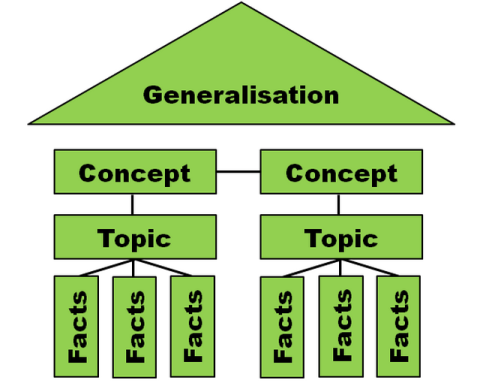
This webquest will guide you through the main purpose and components of a concept-based curriculum. The purpose is to determine the difference between a topic and a concept, provide planning ideas and provide a foundation for creating a concept-based lesson.
Task
The following tasks will help introduce you to the ideology behind a concept-based curriculum and the components that are required for effective implementation.
First, a class padlet will be used to share initial ideas and findings before and after selected lessons.
Second, you will watch a video and look at images to help you better understand the aims of a concept-based curriculum.
Third, you will develop, will a partner, a concept-map in relation to the foundations of a concept-based curriculum.
Fourth, the difference between a topic and a concept will be determined.
Fifth, you will conduct individual research on the components of a concept-based lesson and create a checklist for items that must be included in a concept-based lesson.
Sixth, the padlet will be used to practice forming generalizations in relation to concept-based lessons.
Seventh, and finally, in a small group, you will develop a concept-tree that outlines ideas for an initial concept-based lesson plan.
Process
Day 1
Warm-Up: Use the first column in the following padlet, share your ideas of a concept-based curriculum.
https://padlet.com/shannonlanou/conceptbasedcurriculum
Task: Using the following glogster, use the sources to develop an understanding of a concept-based curriculum. Then, with a partner, create a MindMap (either on paper or on the online generator link below) that outlines the foundations of a concept-based lesson.
https://edu.glogster.com/glog/concept-based-learning/2j6g7r5i2ux
Day 2
Warm-Up: Using the padlet from the previous class, add some topics and concepts you can think of in relation to social studies.
Task: You and your group will create a small lesson planning template that could be used for concept-based curriculums. Use your previous knowledge in combination with new research to create a planning template that you believe includes the necessary components of a concept-based lesson planner.
Day 3
Warm-Up: Using the padlet from previous classes, try to create a generalization using 3-4 of the concepts presented.
Task: Within a small group, create concept-based lesson tree, for a proposed lesson of your choice, that includes the generalizations, concepts, processes, skills and strategies that you would use within the lesson. Start a the bottom with the generalization as the trunk, the concepts as major branches and the processes, skills and strategies as smaller branches or leaves off the larger branches.
Evaluation
As this is meant for teachers, the evaluation will be a self-evaluation on their construction of an outline for a concept-based curriculum.
| 1 | 2 | 3 | 4 | |
| Uses 3-4 concepts with the generalization. | ||||
| The concepts used are abstract, timeless, universal and move students towards higher levels of thinking. | ||||
| The processes, skills and strategies used within the lesson are in alignment with the generalization. | ||||
| The lesson allows for open-ended and personal inquiry. |
Conclusion
The overall webquest will hopefully provide a more solid foundation for developing a concept-based curriculum. This can be used in any discipline and because it focuses on the 'big picture,' it allows for personal drive inquiry and engagement as a way to develop an understanding of idea.