
Introduction
Ngalan Rrupia translates from the Australian Aboriginal language of Galpu Dhungu to Standard Australian English (SAE) as Where is the money? This title was chosen to allow the children to relate to the topic.
This mathematical web quest has been designed specifically for Australian Aboriginal year five students from North East Arnhem Land. Who are collectively referred to as the Yolngu people.
The Yolngu people speak one or more local Aboriginal languages as their first language. These are collectively referred to as Yolngu Matha (YM), which Galpu Dhangu belongs to. Therefore, the Yolngu people consider English to be a foreign language. Mainstream Australia recognises this as English as a second language (ESL).
Ngalan Rrupia will take these year five students on a learning journey through the importance of budgeting. This online resource has been grounded within the Australian Curriculum, 2018.
Task
Nationally, 43% of Australia’s Indigenous peoples are financially excluded (First Nations Foundation, 2018). Financial exclusion occurs when individuals are denied suitable access to financial services and has been linked to social marginalisation and poverty (Connolly, Georgouras, Hems & Wolfson, 2011).
Ngalan Rrupia intends to start the conversation of budgeting with Year five Yolngu students, creating a comfortability around financial literacy and dialogue. Furthermore, it aims to address the national and internationalinterest regarding ESL students failing to engage; from a mathematical perspective (Warren, Harris & Millier, 2014).
Learning Outcomes:
· Estimate and calculate financial figures
· Understand financial and budgeting specific terminology in SAE and YM
· Clarify and process ideas and information to achieve an outcome
· Prepare a budget
(ACARA, 2018).
Process
Lesson One:
Introduction to budgeting, an informal whole class brain storming session.
Resources:
Smart whiteboard, whiteboard, internet, laptop and whiteboard markers.
Lesson Two:
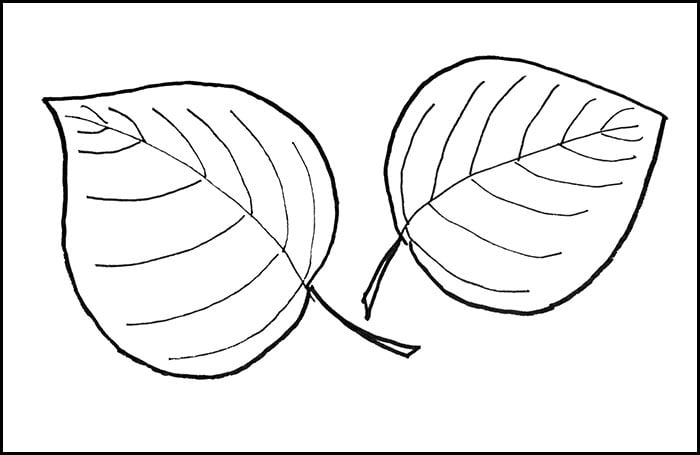
Create a word tree, containing all the new financial words that are being learned. Discuss definitions as you go along.
Resources:
Scissors, coloured pencils, paint, laptop and paper bark.
Leaf template:
https://images.template.net/wp-content/uploads/2015/03/leaf-pattern.jpg
Lesson Three:
Working in pairs, you will complete the online activity.
Resources:
iPad's
https://s3-ap-southeast-2.amazonaws.com/mst-resources/our-big-weekend-adventure/index.html#start
Lesson Four:
A whole class activity - discuss and complete
Resources:
Whiteboard, whiteboard markers, scrap paper and pencils.
http://www.fnf.org.au/uploads/6/3/1/1/6311851/mymoneyplan_pdf.pdf
Lesson Five:
An individual activity - this will form part of your assessment.
Resources:
scrap paper and pencils.
http://www.fnf.org.au/uploads/6/3/1/1/6311851/mymoneyplan_pdf.pdf
Evaluation
|
Assessment Rubrics |
||||
|
Criterion |
A |
B |
C |
D |
|
Participated in group activities and discussions |
Always participate in group activities and discussion |
Mostly participate in group activities and discussion |
Sometimes participate in group activities and discussion |
Did not openly participate in group activities and discussion |
|
Completed Set Tasks |
Always completed set tasks |
Mostly completed set tasks |
Sometimes completed set tasks |
Struggled in completing a set task |
|
Group Budget |
Always contributed towards the group budget |
Mostly contributed towards the group budget |
Sometimes contributed towards the group budget |
Struggled to tribute towards the group budget |
|
Individual Budget |
Budget displays a high level of understanding |
Budget displays a good level of understanding |
Budget displays a satisfactory level of understanding |
Producing a budget was a challenge |
Conclusion
Resources
Knowing, Growing & Sharing - a financial literacy resource for Indigenous Australians
Australian Securities & Investments Commission.
https://www.moneysmart.gov.au/teaching/teaching-resources/knowing-growing-showing
First Nations Foundation - a charity for Indigenous Australians striving for economic freedom
The Australian Mint
Credits
References
Australian Curriculum Assessment and Reporting Authority. (2018). Australian Curriculum – Mathematics. Retrieved from https://www.australiancurriculum.edu.au/f-10-curriculum/mathematics/?ye…’s+Engagement+with+Asia&priority=Sustainability&elaborations=true&elaborations=false&scotterms=false&isFirstPageLoad=false
Connolly C., Georgouras M., Hems L., & Wolfson L. (2011). Measuring Financial Exclusion in Australia, Centre for Social Impact (CSI)– University of New South Wales. Retrieved from http://www.financialliteracy.gov.au/media/465150/nab-financial-exclusio…
First Nations Foundation. (2018). A Charity seeking economic freedom for First Australians. Retrieved from http://www.fnf.org.au
Warren, E., Harris, K., & Miller, J. (2014). Supporting young ESL students from disadvantaged contexts in their engagement with mathematics: Teachers’ pedagogical challenges. International Journal of Pedagogies and Learning,9(1), 10-25.
Teacher Page
Learning Outcomes
Budgeting and finance can be complex and intimidating for ESL student. However, this web quest has been designed to introduce the topic subtly through group work and with the inclusion of information technology. Lessons are specifically for year five Yolngu students inclusive of learning and cognitive development.
Australian Curriculum Links
ACMNA099 - Use estimation and rounding to check the reasonableness of answers to calculations
ACMNA291 - Use efficient mental and written strategies and apply appropriate digital technologies to solve problems
ACMNA106 - Create simple financial plans
(ACARA, 2018).
Proficiency Strands
Problem-solving and reasoning
Students will investigate the cost of everyday items, through group discussions in order to produce an educated estimation. Working through essential and non-essential items in order to maintain their budget (ACARA, 2018).
Prior Knowledge
Grade Three
The expectation is that students can recognise Australian currency and become aware that different nations have different currencies.
ACMNA059 Represent money values in multiple ways and count the change required for simple transactions to the nearest five cents (ACARA, 2018).
Grade Four
Students will have sound knowledge in recognising the dollars and cents in financial equations.
ACMNA080 Solve problems involving purchases and the calculation of change to the nearest five cents with and without digital technologies (ACARA, 2018).