Introduction
Topic: Revisions in Public School Education
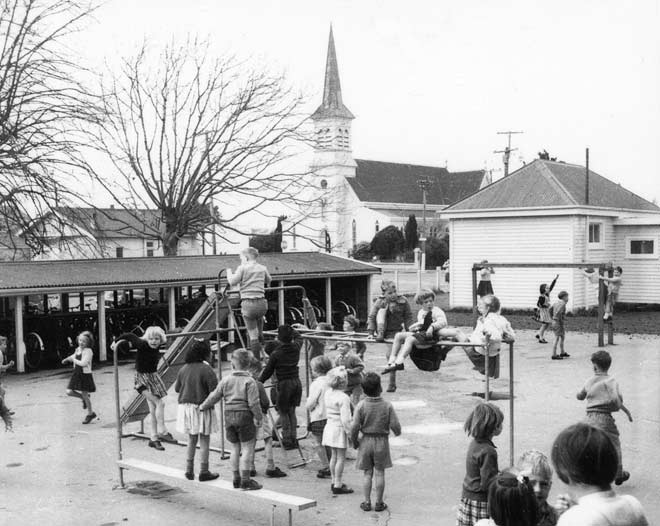
Starting with John Dewey in the 20th century public schools began to change the ways their students were taught. The idea of a hands-on environment was introduced and many more secondary schools started opening and outnumbering the private schools. The credit for our modern schooling system goes to Horace Mann. Our K-12 schools exist based off of funding from the states and the families that attend. However at the time many schools in the south and north were segregated. Public schools became known as a lower form of education since the students attending were once that could not afford private schools. In this webquest you will be able to answer questions regarding the start, principles, and evolution of public schooling.
What was Dewey’s central ethical imperative for education?
What types of occupations reflected the life of the larger society, permeated and how did education help to fulfill these roles?
What was Dewey’s concept of education?


Task
Students will learn about John Dewey's philosophy and the introduction of a hands-on public classroom. The goal is to be able to understand how reformations of schooling in the 20th century plays a big role on education today.
1.) What was the main principle of Dewey's philosophy? Is it still used today? (1 paragraph)
2.) Who were admitted into these schools? Who was qualified to teach? (1 paragraph)
3.) What are some differences and similarities in public school then and now? (T chart)
4.) What was considered "hands-on"? (List 5 things)
5.) When did public schools start to open up nationally? (1-2 sentences)


Process
1. Use the video above "John Dewey on Education" to answer #1. It will explain what was the main principle of Dewey's philosophy, and how education became what it is today through him. This video will make it easier for you to understand it. It shows you it in a visual way.
2. In the video "John Dewey's Theories on Education and Learning " which identifies the time era and how it is relevant to today . It will also explain Dewey's theories of democratic behavior. Democratic behavior is is members of the group take a more participative role in the decision-making process. Use this video above to help you answer #1 and #3.
3. https://www.raceforward.org/research/reports/historical-timeline-public-education-us
Use this link about to help you answer #5. It shows a historical timeline of public school education in the U.S. Go to the time around the late 1800's and early 1900's to identify your answer. You can see the dates of the first public school. Also it describes what they were like back then in the 20th century.
4. http://www.hand2mind.com/programs/hands-on-learning
In this link you will find information about "hands- on" learning. It will show you the outcomes of students also how it benefit you. Use this link to help you answer #4. Hands on learning is a great way for kids to understand what they are learning. They can see it right in front of them and can see more on what they are learning.
5.http://info.thinkfun.com/stem-education/the-importance-of-hands-on-learning
Above is the link to also continue helping you answer #4. This will help explain more about the history of hands- on learning in school. Hands - on learning is a part of every subject. It is a common name for experimental learning.
6. https://www.americanboard.org/blog/11-facts-about-the-history-of-education-in-america/
This link will help you answer #2 for who was qualified to teach back then in the late 1800's and early 1900's. It explains John Dewey's movement that became wide spread by the 1930's. Also you will be able to find how teachers taught students. Schooling has evolved very much since the late 1800's and early 1900's of course , and this gives you much details on how it did.
7. http://www.pbs.org/onlyateacher/john.html
In the link above you will find a brief description of John Dewey and his contribution to the public schooling concept. These quick facts can help you answer #1 in the task. At the bottom of the page there are other links related to education today and Dewey, use those for any confusion or more detail.
8. https://www.britannica.com/biography/John-Dewey
Above is the link that gives you a biography about John Dewey. It give facts about his childhood and what lead him to develop his concept. It also shows the process of how he came to be a important figure in education. The information in this link will help you answer #2 and #5
9. http://www.cais.ca/uploaded/Professional_Development/21st_Century_Schools.pdf
This link will help you make you T- chart for #3. This shows you the differences and similarities between the 20th Century Classroom vs. the 21st Century Classroom. At the bottom of the page there is a link to a source that will tell you more information if needed.
10. http://www.calvary.edu/comparison-20th-21st-century-education/
The above link will also help with answering #3. Read through and pick out facts that talk about the differences and similarities of 20th century vs now. Also pay attention to facts that state anything related to the John Dewey philosophy which is part of the answer to #1.
Conclusion
All in all reformations in education are often credited to John Dewey. His philosophy speaks on the benefits of a better higher education and involvement in/outside of the classroom. The idea of public schooling came into play because of the increase of poorer young children. This is around the time when the motto "education leads to a better future" came into play. More kids were entering school rather than working mediocre jobs from a young age. Many things we do today in class like arts and crafts or chemistry labs exist because of schooling guidelines created at this time.