
Introduction

Welcome! Did you know that right now, your body just performed many tasks using its 12 organ systems? Have you ever wondered what is going on inside your body? Or what is going on inside that stray rabbit's body? Well, this is the right place for you! Learn about Cells, Tissues, Organs, and Organ Systems!
Task

Students will be learning the entire Grade 8 unit on Cells, Tissues, Organs, and Systems. They will learn this unit through a series of tasks, which will be self-evaluated using the provided rubric. After gathering research and finishing all the small tasks to show their understanding, they will be required to make a Kahoot with all of your information for your classmates to participate in and learn from. It must have a minimum of 25 questions. The Kahoots will be played in class to help everyone further develop their knowledge on this subject.
Process

Step 1: Study the words in the word banks and use them to create a diagram for each of the following: a unicellular organism, a multicellular organism, an animal cell, a plant cell, and a compound microscope.
Make sure that you explain all the fundamental parts of all the diagrams and label them. Also be sure to know the definition of each of the words that are in the word bank before you include them in your diagrams
Word Bank:
Animal cells and Plant cells
Chromosomes
Nucleus
Cell Membrane
Cytoplasm
Vacuole
Mitochondria
Endoplasmic Reticulum
Ribosomes
Golgi Apparatus
Other parts in Plant cells
Chloroplast
Chlorophyll
Cell Wall
Links for Animal and Plant Cells:
http://differencetalk.com/plant-cell-vs-animal-cell-whats-the-differenc…
http://www.bbc.co.uk/schools/gcsebitesize/science/add_aqa_pre_2011/cell…
http://www.edu.pe.ca/gray/class_pages/rcfleming/cells/notes.htm

Microscope
Eyepiece
Eyepiece Tube
Objective Lenses
Nosepiece
Focus Knobs
Stage
Stage Clips
Aperture
Illuminator
Condenser
Iris Diaphragm
Condenser Focus Knob
Links for Microscope Parts:
https://www.microscope.com/education-center/microscopes-101/compound-mi…
http://www.biologydiscussion.com/microscope/compound-microscope/diagram…

Step 2: Defining Key Terms:
Osmosis
Diffusion
Permeable Membrane
Semipermeable Membrane
Impermeable Membrane
Unicellular
Multicellular
Amniocentesis
Specialized cells
Unspecialized cells
Helpful Links:
https://www.thoughtco.com/cell-biology-glossary-373293
http://www.ws.k12.ny.us/Downloads/1-4%20Cell%20in%20Env%20Diff%20and%20…
http://www.etomica.org/app/modules/sites/Osmosis_old/Background0.html
https://www.biology-online.org/dictionary/Main_Page
Now that you have an understanding of these key-terms, take the quiz on this website to test your knowledge:
Quiz

Step 3: Research the 12 organ systems and make online flashcards
The flash cards can include anything you want, but it must teach about all 12 systems, their major organs and their functions in the human body. Be sure to include definitions of terminology that are important to understanding your subjects.
List of the 12 different organ systems:
Circulatory System
Digestive System
Endocrine System
Exocrine System
Immune System
Nervous System
Urinary System
Reproductive System
Respiratory System
Skeletal System
Muscular System
Integumentary System
Helpful Links:
https://study.com/academy/lesson/what-is-an-organ-system-definition-pic…
http://www.susaningraham.net/exocrine-system.html
http://www.innerbody.com/image/endoov.html
http://www.innerbody.com/image/urinov.html
http://www.innerbody.com/image/digeov.html
https://www.livescience.com/26741-reproductive-system.html
After you research all of these systems, make flashcards using this website: Flashcard Maker
Take it a step further and quiz your friends with your flashcards!

Step 4: Osmosis and Diffusion Experiment
Create an experiment that shows the effects of osmosis and diffusion in real life situations. You will be writing a lab report, so make sure to do your hypothesis beforehand. Here is a website for help on finding and choosing an experiment: Experiment Ideas
After the experiment, complete a properly formatted lab and hand that into your teacher.
For more help on how to format a lab, here is a link that will show you the correct way: Lab Tutorial
Evaluation
Students will be marked on the following criteria alongside a rubric:
-
Each student will be monitored to see if they are using their time effectively and understanding the unit thoroughly.
-
Each student will need to complete all activities to the best of their abilities and they will be marked based on the rubric provided. We advise them to use the links provided.
-
Each student will make a Kahoot to play with their class so they can get a better understanding of the unit while having fun!
|
Criteria Throughout the completion of this Webquest, activities are created which should: |
Level 1 Beginning |
Level 2 Moderate |
Level 3 Competent |
Level 4 Exceptional |
|
Identify parts of an animal and plant cell and compare both of them |
||||
|
Examine different technologies involved with cells/the human body and identify different parts of a compound microscope |
||||
|
Can summarize and understand the cell theory |
||||
|
Describe the different human organ systems |
||||
|
Identify the process of osmosis and diffusion |
||||
|
Understand and explain the difference between unicellular and multicellular organisms |
Conclusion
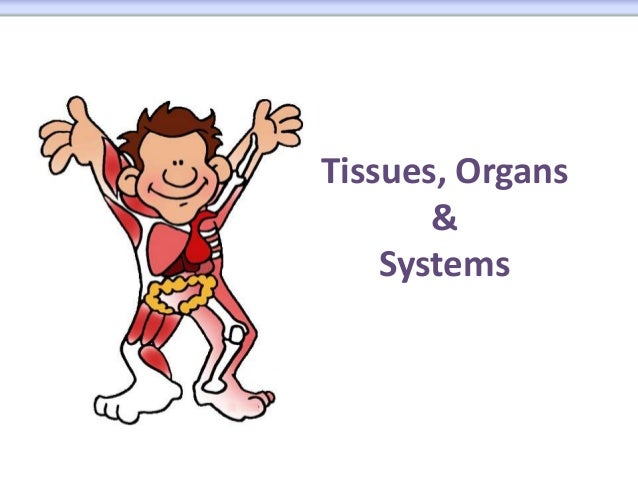
You made it! By the end of this task, I hope you know all about cells, tissues, organs,and systems. The purpose of this task was to teach each other and all of you did that very well! Your Kahoots were great and the information taught you and your class some neat things! We hope all of you had a lot of fun learning about cells, tissues, organs, and organ systems!

Thanks,
Tanya, Vinita, and Tripat
(creators of this WebQuest)