
Introduction
By Mr. Woodley
Introduction to the Topic: The Goal of this WebQuest is to further deepen the knowledge of the conflict between the Colonies and Great Britain. The students will have the opportunity to explore the topics of the Townshend acts, the non-importation agreement, the Boston Massacre, the Boston Tea Party, and the Coercive acts. Not only will the student learn the content, they will also begin forming opinions on the perspectives of Colonial Rebels, and British Parliament.
Task
Task
Your job is to establish a deeper knowledge of all the topics presented in this WebQuest. Students will be responsible for understanding the specifics of content. Students will also think critically about why the events happened and what it meant for the relationship between Britain and the Colonies. Students will voice a forming opinion on the question, "Was the American revolution justified?"
Process
The Townshend Acts

Non-Importation Agreement and Boycotts
boycott: a type of protest that involves a halt in purchasing of certain goods from a specific person, country, or business. This results in a loss of profit for the group protesters are not buying products from.
.jpg?1472532907)
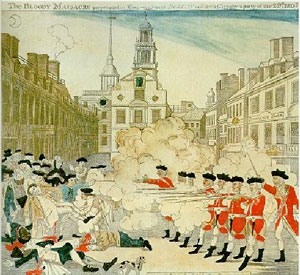
The Boston Massacre
Massacre: an indiscriminate and brutal slaughter of people.
Propaganda: information, especially of a biased or misleading nature, used to promote or publicize a particular political cause or point of view.

The Boston Tea Party

The Coercive Acts/ Intolerable Acts

Evaluation
|
WebQuest Performance Rubric |
5 |
3 |
1 |
|
Completion |
Students have attempted to answer all questions in the WebQuest packet. |
Students have completed at least three-fourths of the WebQuest packet questions. |
Students have failed to complete at least half the WebQuest packet questions |
|
Content |
The student response to the questions within the WebQuest packet are full and complete. The student expresses a gain in new knowledge. Possibly has considered additional information to add to their responses. |
The student responses to the questions within the WebQuest packet are mostly finished. Responses show some gain in new knowledge. Has left out some important information. |
The student responses to questions within the WebQuest packet are barely present or missing. No clear gain in new knowledge is present. Student has left out a lot or all of the important information. |
|
Opinion Formation |
Student responses have considered viewpoints of both the rebellious colonists, and British Parliament/loyalists. Students have written on this viewpoint and have made a clear connection to a forming an opinion on the subject area. |
Student responses show some signs of considering viewpoints of the rebellious colonists and British Parliament/loyalists. Students are moving in the direction of opinion formation, but have yet to express it clearly. |
Student responses show little to no sign of consideration of viewpoints between the rebellious colonists and British Parliament/loyalists. Students have not formed an opinion on the issue between the two viewpoints. |
Conclusion
Conclusion
These political events from 1767-1773 created deeper conflict between Britain and the American colonies. Things were beginning to reach a point of no return. By gaining deeper knowledge on these events you should now be able to understand why they took place, and why people reacted in the manner that they did. Question to keep thinking about, "Was the American Revolution Justified?"
Credits
Links used throughout the WebQuest
Articles
https://www.landofthebrave.info/townshend-acts.htm
https://www.masshist.org/revolution/non_importation.php
http://www.eyewitnesstohistory.com/bostonmassacre.htm
http://www.ushistory.org/us/9f.asp
https://www.landofthebrave.info/boston-tea-party.htm
http://www.ushistory.org/us/9g.asp
Images
https://www.landofthebrave.info/images/parliament-1700's.jpg
https://www.landofthebrave.info/images/boston-tea-party-1.jpg
http://www.ushistory.org/declaration/related/images/massacre.jpg
http://www.postalmuseum.si.edu/outofthemails/boston.jpg

Video
Teacher Page
The goal of this WebQuest is to deliver content in a creative way where students can move at their own pace. The teacher can pair it with a worksheet of their choice that follows the content and aligns with the standards they need to meet. It goes over the Townshend acts, the Non-importation agreement, the Boston massacre, the Boston Tea Party, and the Coercive/Intolerable acts.