
Introduction
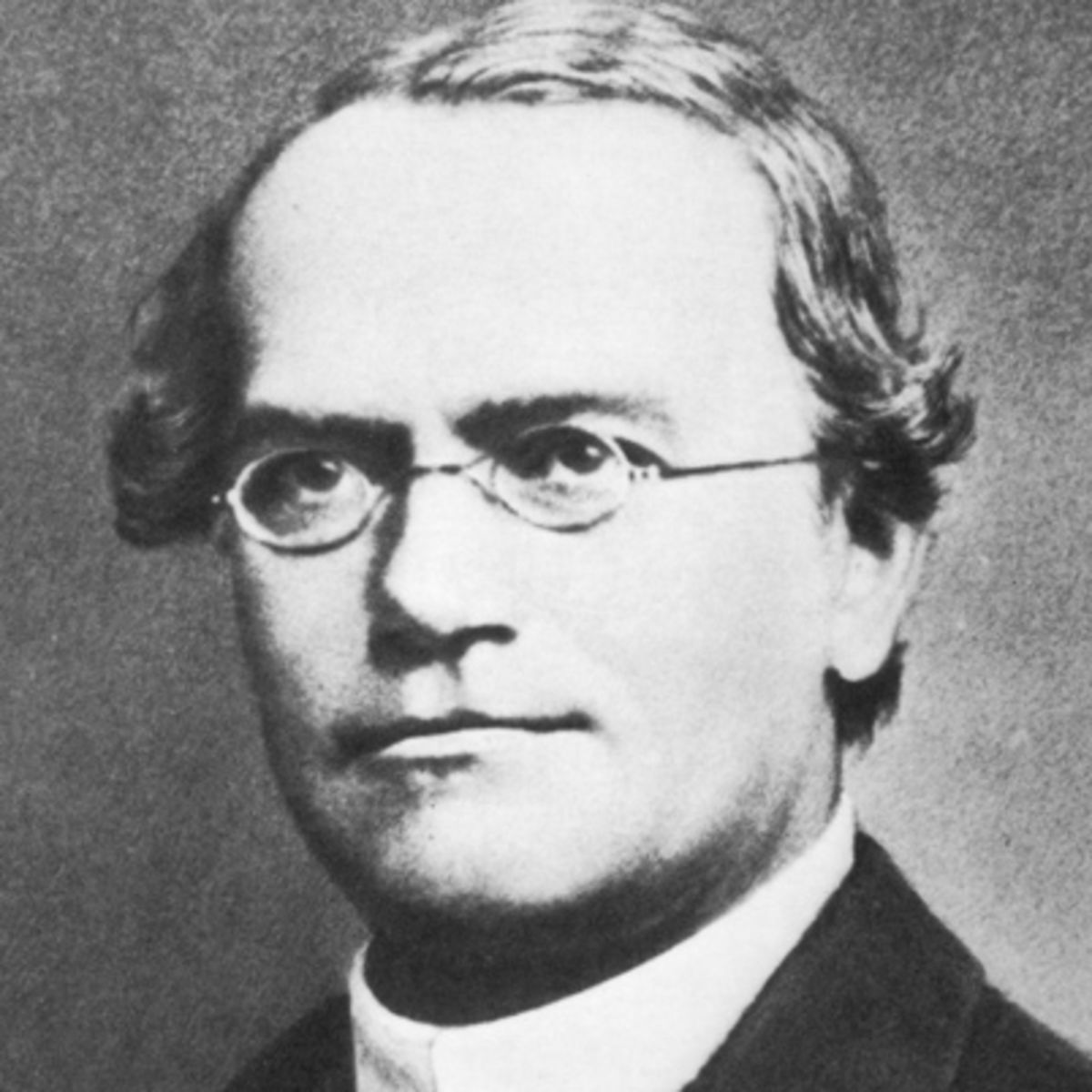
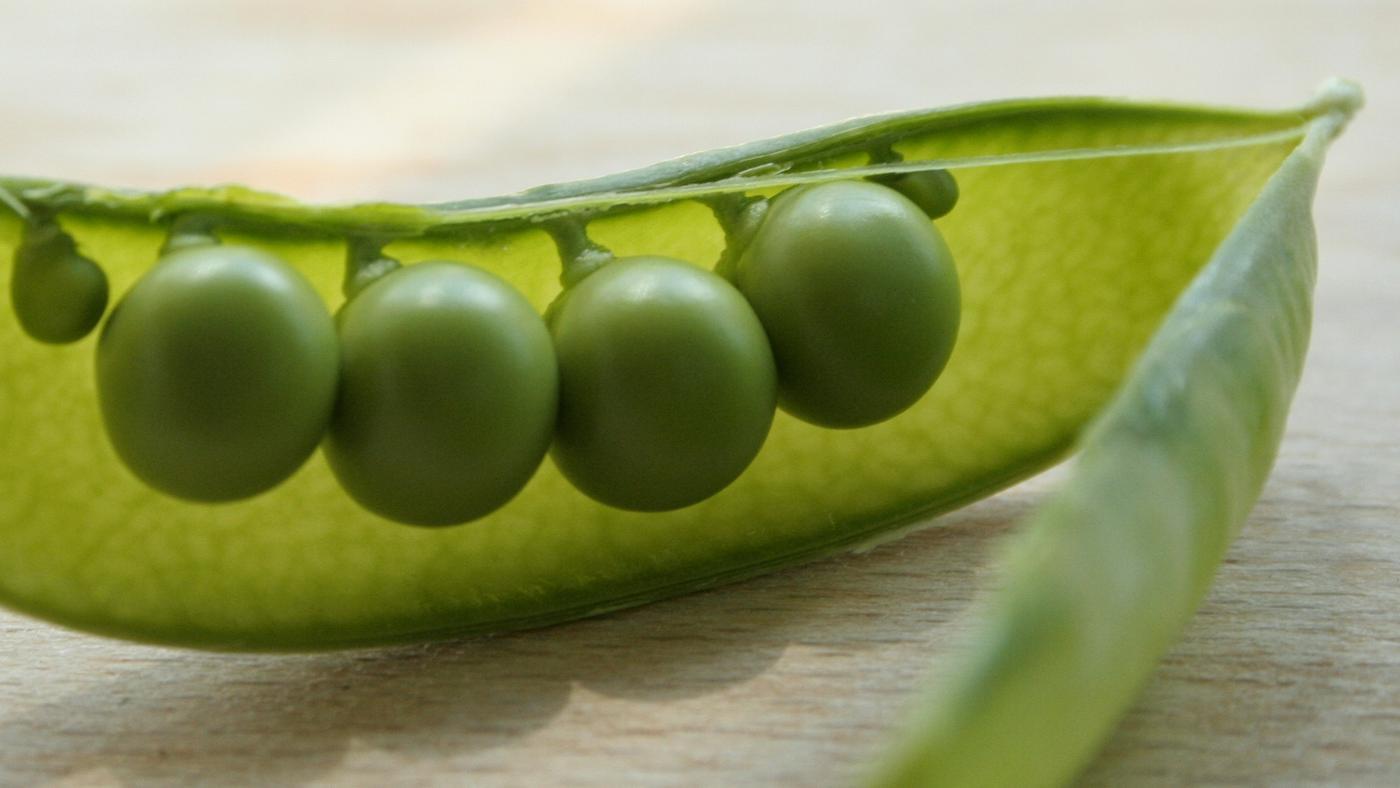
Have you ever wondered why we look like we do? Have you ever been envious of your sisters flowing blonde hair, when yours is just brown? These traits come back to the inheritance of characteristics, most famously researched by Gregor Mendel in the 1800's. Mendel, nicknamed "the father of modern genetics", was an Austrian monk who discovered the basic principles of heredity through experiments in his garden. By following this WebQuest you will learn about the history of inheritance, how it works and maybe even be able to work out a little of your own family genetics.
Check out this quick video on Mendel before hitting the task tab, he was a pretty important guy!!!!!
[video:https://www.youtube.com/watch?v=QmSJGhPTB5E]
Bio. (2013, July 8) Gregor Mendel - Mini Biography. Retrieved from https://www.youtube.com/watch?v=QmSJGhPTB5E
Task
Your task is to work through a series of exercises and questions that will give you everything you need to become a genetics expert just like Mendel! You will present your findings in a report (1500 words) that will be due at the end of term. Use the exercise titles as headings, simple right???
Process
Who was Gregor Mendel?
From the video on the introduction page and the link below, give a brief outline of who Gregor Mendel was.
http://www.biography.com/people/gregor-mendel-39282
just in case you missed the video...
https://www.youtube.com/watch?v=QmSJGhPTB5E
Now you know who he was, what did he do?
What did he do?
Outline the experiments carried out by Gregor Mendel.
You can find details of Mendel's experiments in the links below
http://anthro.palomar.edu/mendel/mendel_1.htm
http://study.com/academy/lesson/gregor-mendel-genetics-experiments-laws-discovery.html
Let's talk about his experimental techniques...
Mendel's experimental techniques
Describe the aspects of the experimental techniques used by Mendel that led to his success and outline the reasons why the importance of Mendel’s work was not recognised until some time after it was published.
Try this link to help you out.
https://sites.google.com/a/wisc.edu/ils202fall11/home/student-wikis/group8
A little less about the man now, lets look deeper into his research...
What is a monohybrid cross?
Describe outcomes of monohybrid crosses involving simple dominance using Mendel’s explanations.
Try your own punnett square!!!!
What is a homozygous and heterozygous genotype?
Analyse the difference between homozygous and heterozygous genotypes in monohybrid crosses.
You will find your information in these links.
https://www.stat.washington.edu/thompson/Genetics/1.3_genotypes.html
http://www.majordifferences.com/2013/11/difference-homozygous-vs-heterozygous.html#.V9qJ-Zh95h0
Almost there.....
Gene or Allele? Dominant or Recessive?
Explain the terms allele and gene, using examples and explain the relationship between dominant and recessive alleles and phenotype.
Here are your links:
http://www.nature.com/scitable/topicpage/gregor-mendel-and-the-principles-of-inheritance-593
http://www.differencebetween.net/science/difference-between-gene-and-allele/
Try out the information you have learnt in these activites
http://www.cccoe.net/genetics/dominant1.html
That's just about it!!!! You've got all you need to write your report now you are Mendel experts!! click on the evaluation page to see how you will be scored!
Evaluation
You will be given a score out of 30 for your report, the marks are designated below.
|
|
1-2 |
3-4 |
5 |
|
1 |
Students demonstrate very limited background knowledge of Gregor Mendel. Missing important points. |
Students demonstrate good background knowledge of Gregor Mendel. |
Students give an exemplary insight into the background of Gregor Mendel. |
|
2 |
Students demonstrate little understanding of Mendel’s experiments |
Students demonstrated sound knowledge of Mendel’s experiments |
Students provide an outstanding account of Mendel’s experiments |
|
3 |
Students provide very little understanding of Mendel’s techniques and their importance |
Students demonstrate a decent understanding of techniques used by Mendel. |
Students show an outstanding understanding of Mendel’s techniques and their importance. |
|
4 |
Students demonstrate little knowledge of monohybrid crosses. |
Students show a good knowledge of monohybrid crosses |
Students demonstrate and outstanding and thorough knowledge of monohybrid crosses. Provide a punnett square diagram |
|
5 |
Students confuse the terms homozygous and heterozygous or demonstrate very little understanding |
Students correctly identify the terms homozygous and heterozygous and show some understanding |
Students accurately describe the differences between homozygous and heterozygous and provide examples |
|
6 |
Students confuse alleles and genes and show little understanding of dominant and recessive. No examples given. |
Students understand the terms and provide limited examples. |
Students will demonstrate outstanding understanding and provide extensive examples. |
Conclusion
Congratulations! You have completed your quest on Mendelian genetics!
If you didn't already attempt the activities below, please try them out, they are really fun!
CHALLENGE QUESTIONS
http://www.cccoe.net/genetics/dominant1.html
[video:https://www.youtube.com/watch?v=Mehz7tCxjSE]
Ted-Ed (2013, March 12) How Mendel's pea plants helped us understand genetics - Hortensia Jiménez Díaz retrieved from https://www.youtube.com/watch?v=Mehz7tCxjSE
Credits
WebQuest prepared by Lauren Rieck c3205456 for EDUC2152
Please see "Teachers page" for personal reflection and syllabus outcomes.
Teacher Page
The contextual outline in the HSC Biology Syllabus module 9.3 Blueprint of life states that; 'the segregation and independent assortment of the genetic information within a species provides the variation necessary to produce some individuals with characteristics that better suit them to surviving and reproducing in their environment. Changes in the environment may act on these variations. The identification of mutations and their causes becomes important in preventing mutations and in identifying and potentially nullifying the effects of mutations in living organisms'. I feel that students would be particularly interested in this section of the syllabus as genetics is a topic that students can relate back to themselves on a personal level.
I chose to use this part of the syllabus for this web quest as there are a lot of valuable resources available on the internet. Allowing the students to do their own research, with guidance, gives them the sense of freedom and responsibility. This also promotes self-directed learning, which is an essential skill for any form of tertiary education. Building these skills at a HSC stage will ensure the ctudents success in future years.
| Students learn to: | Students: |
Gregor Mendel’s experiments helped advance our knowledge of the inheritance of characteristics |
|
|
Students will achieve all outcomes for this specific part of the 9.3 - 2 Blueprint of life section of the HSC Biology Syllabus. They will be able to outline Mendel's work and experiment techniques, distinguish between homozygous and heterozygous genotypes, explain the relationship between dominant and recessive alleles and define the terms