
Introduction
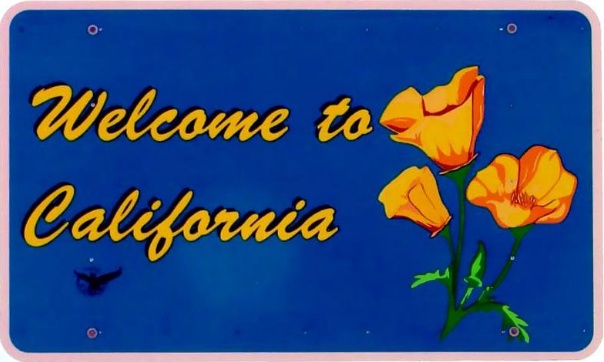
From the very start, California has been a place of diversity. There is diversity in its culture, its people, and its landforms. This diversity is the reason so many people live in California and why others travel to the Golden State.
California is located on the West coast of the United States. Due to its immense size and very distinct landforms, California has been divided into four major regions. California's regions are: 1) the Mountain Region, 2) the Coastal Region 3) the Central Valley Region, and 4) the Desert Region.
What makes each of these regions so unique? Why was California divided in this way? What about these regions attracts people to visit or live there? These questions and more will be answered as you take a journey through this WebQuest and become an expert on California's Regions!
Task
You've been hired to be a travel agent for a specific California Region (Coast, Valley, Desert, Mountain). It will be your job to do the research necessary to gather information to get people to come and visit the state of California, especially your region!
Your roles are:
1. Travel agent #1 visits the Desert Region
2. Travel agent #2 visits the Pacific Coast Region.
3. Travel agent #3 visits the Mountain Region.
4. Travel agent #4 visits the Central Valley Region.
Click on the link below to go the website to learn more about your region:
Process
Your project is to create a screencast video using the app Screencastify to demonstrate all that you have learned about your natural region. Your video will be audio recorded over a Google Slideshow you create in your Google Drive. Your screencast video should include:
1. A map showing the location of your region.
2. An illustration, or pictures, of each region that may include the various animals and plants that live there.
3. Regional climate (So tourists know what clothing to pack in their suitcases!)
4. At least 2 interesting facts about your region that visitors might be interested in. (You may want to pinpoint points of interest using spots on your map.)
5. A catchy slogan to make tourists want to come and visit.
HOW TO CREATE A SCREENCASTIFY:
https://www.youtube.com/watch?v=tfucb1gy8VA
You will each be given a travel journal to keep track of all your exciting new knowledge. In it, you will write down the important information you gather in each stop, which will help when creating your screencast.
Evaluation
California's 4 Regions Project--Rubric
|
Google Slide/ Screencastify Rubric |
1 Below |
2 Approaching |
3 Meeting |
4 Exceeding |
|
Content/Organization |
Information is not accurate or does not relate to topic. Topic is addressed but not discussed or elaborated on. Information is not paraphrased, but copied from another text. |
Some of the information is accurate and relates to topic. Topic is slightly discussed but more material is needed. Information is paraphrased. |
Most information is accurate and outlines main ideas of the topic. Topic is somewhat discussed but more information is required. Information is paraphrased. |
All information is accurate, relevant, and follows all project requirements. Topic is discussed clearly and in an organized manner. Information is entirely paraphrased. |
|
Graphics/Layout |
The slides are not easy to read. There is little use of graphics or effects. |
Slides are easy to read. Less than half the slides have graphics or effects. |
Slides are attractive. Text is easy to read. Graphics and effects are used to enhance presentation. |
Slides are attractive. Text is easy to read. Graphics and effects are used throughout to enhance presentation. |
|
CUPS – Capitalization, Usage, Punctuation, Spelling |
There are many errors in CUPS on the presentation. |
There are less than 4 errors in CUPS on the presentation. |
There are less than 2 errors in CUPS on the presentation. |
No errors in CUPS |
|
Oral Presentation |
Speaker cannot be understood or heard, reads from slide. Student makes no eye contact. Student demonstrates little understanding of the presentation and struggles with much of the wording. |
Speaker does not present in a loud or clear voice and reads simply from the presentation. Student demonstrates some understanding of content. |
Speaker presents in a loud, clear voice but turns to the screen occasionally. Student demonstrates an understanding of content.
|
Speaker presents in a loud, clear voice and doesn't read from screen. Student demonstrates strong understanding of content. |
|
Use of Class Time |
Did not use class time to focus on project OR distracted others. Reminders were given. |
Used some of the class time well. There was some focus on getting the project done but occasionally distracted others. |
Used time well during the class period. Usually focused on getting the project done and never distracted others. |
Used time well during the class period. Focused on getting the product done. Never distracted others. |
Conclusion
Wow, you look exhausted from your trip around the big, beautiful state of California! Welcome home, and a job well done.
Self reflection is important, especially after such a journey.
Take the time to fill in the Reflection Log, using your Travel Journal to help you.
Extra Credit
** If you would like to expand this project, and receive extra credit, consider the following options:
1. Plan a written tour guide of the region. Include at least 3 stops, and consider transportation and the money needed to visit.
2. Prepare a PPT on another region in California. Compare the two regions.
3. Write an acrostic or quatrain poem about your region, using the facts and details that you have learned.
4. Create a survey about California and it's regions. After recording at least 50 responses, graph your results.