
Introduction
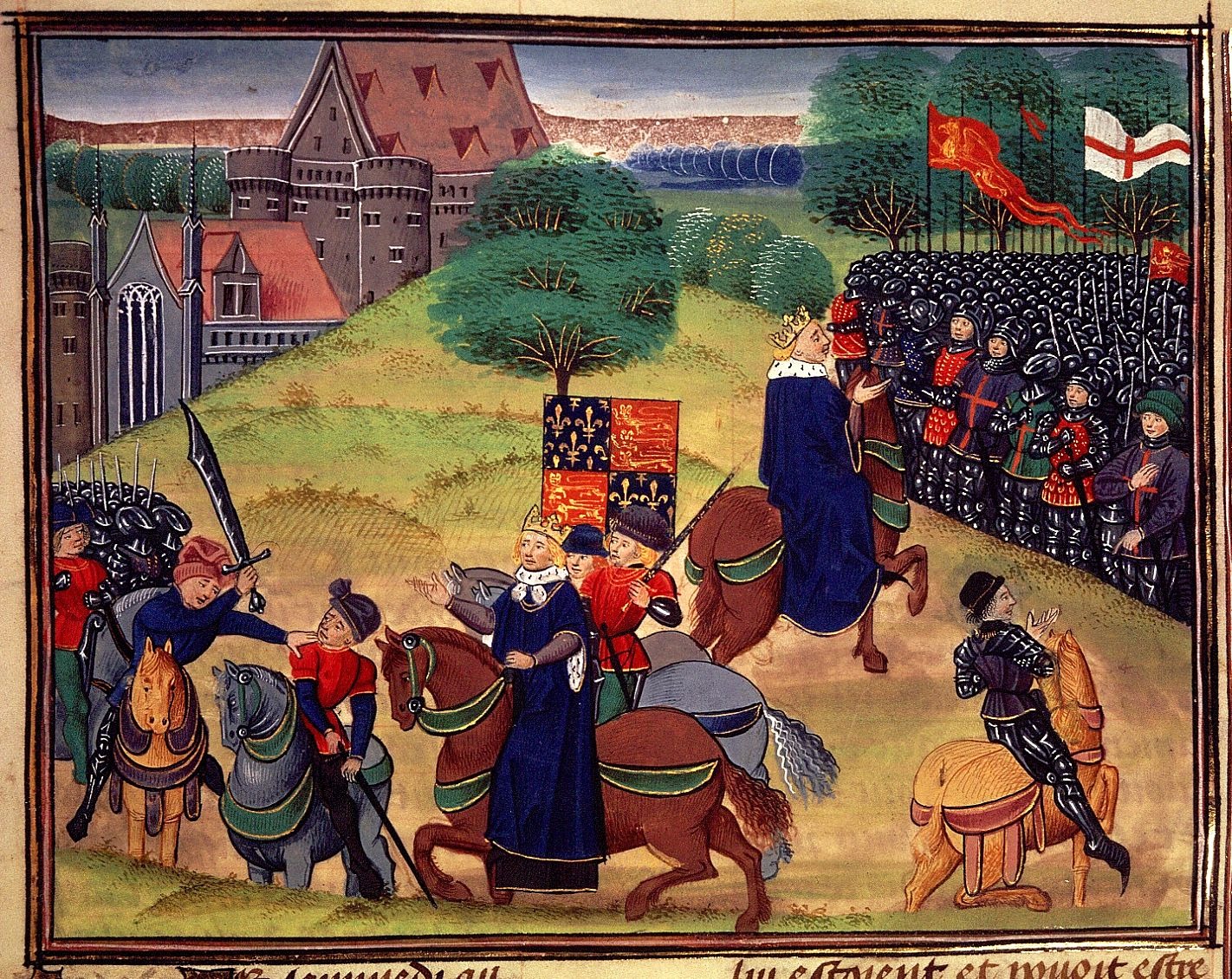
It is 14th Century Britain, The Black Death has wreaked havoc across the country. Over a third of the population has perished in the pestilence. The bubonic plague pandemic has resulted in a depleted workforce, meaning the working classes are working harder to account for less man power. Despite working harder, wages are not increasing to reflect this, and the King has recently passed the Statute of Labourers to ensure that an emergence of a middle-class is impossible.
We will study the aftermath of this, commonly termed 'The Peasants' Revolt' through group work and indivudual research. This is in order to assess the medium-long term effects of The Black Death. We will view relevant sources and documentation to garner a more in-depth understanding of the era and enhance our historical skill set, further equipping us as citizens of future Australian society.
Task
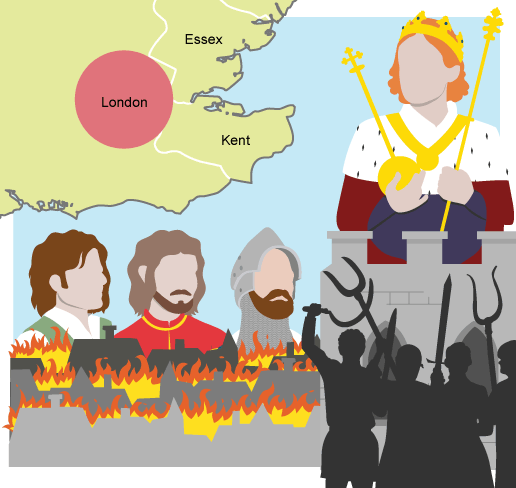
You will be placed into groups of three and each student will research one of the key figures or groups in the Peasants' Revolt.
1) The King (Richard II)
2) Wat Tyler and the Peasants
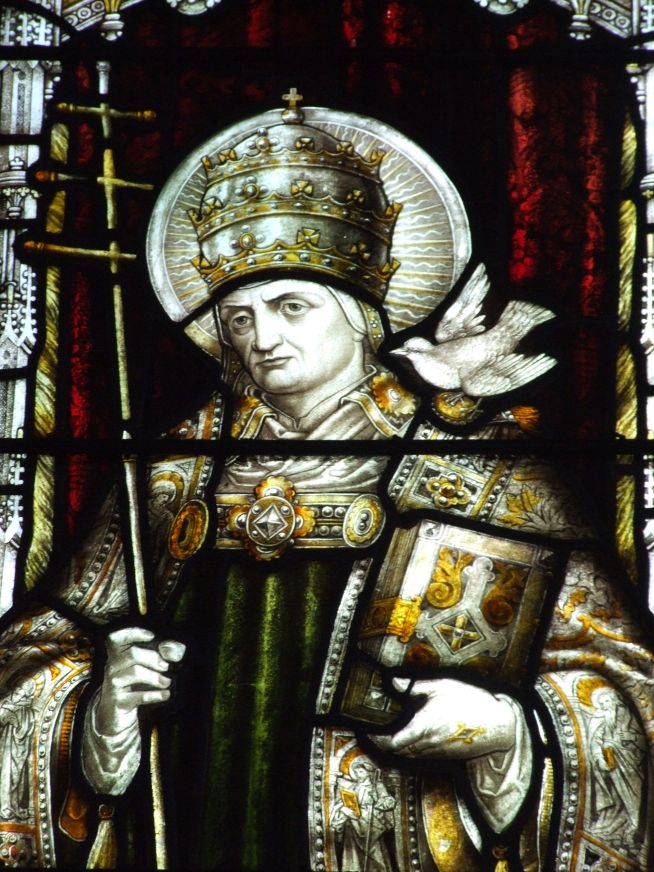
3) The Archbishop of Canterbury (Simon Sudbury)
You will collaborate to evaluate and analyse the motives of each stake-holder in the conflict and hypothesise how effects of the Black Death (we have covered in this unit) contributed to their actions.
Your understanding will be evidenced through creating a presentation that outlines the role, actions, and consequences of each of the three stakeholders. Your presentation should be nine minutes in length.
Process
Each group of students will be allocated three lessons to complete the aforementioned task.
I will assign the groups and each group will go through the following process.
1) Assign which member of the group is going to cover which figure from the Peasants' Revolt.
2) Utilise the links and resources available to research each figure, paying particular attention to:
a) the role they played in the Peasants' Revolt;
b) How one or many of the immediate effects of the Black Death contributed to their actions
i) Consider changes to Religion, Clergy, Medicine, Attitudes to authority, morals, religious intolerance, taxes (all the effects we covered in class).
c) Why they are important in the study of The Peasants' Revolt
d) The consequences of their actions, how they died/survived, and the impact it had on wider society going forward.
3) Present your findings to the rest of the group
4) Synthesise your information (put together in a coherent way) and create a presentation to exhibit your findings.
Ideally you should spend the first lesson researching information from the links provided. Lesson two discussing your findings with your group and beginning to synthesise. Lesson Three creating your presentation.
People of study.
Below is the relevant information on each historical figure you can study. It is your job to use these links to research your individual and decide how to best utilise the information. This unit we have discussed at length about corroborating sources, making sure you are looking at many sources to ensure reliability of claims. This is a chance to put that skill to the text.
Richard II
Images


Documents
Peasants Revolt Book (For Skimming)
Videos
Bloody Britain - Peasants' Revolt
Wat Tyler/Peasant Forces
Images

Documents
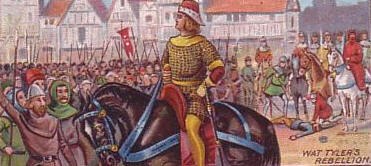
UK History - Wat Tyler and the Peasants' Revolt
Peasants Revolt Book (For Skimming)
Videos
Bloody Britain - Peasants' Revolt
Simon Sudbury
Images


Documents
Peasants Revolt Book (For Skimming)
Black Death and Religious Impact
After the Black Death (Excerpt)
Videos
Bloody Britain - Peasants' Revolt
Evaluation
Evaluation not taken from another source, devised and written in whole for the purposes of this WebQuest.
|
Knowledge and Understanding |
A |
B |
C |
D |
E |
|
Understanding of the causes and consequences of the peasants revolt |
Student displays comprehensive understanding whenever discussing causes and consequences of the Peasants’ revolt. |
Student mostly displays wide-ranging understanding when discussing causes and consequences of the Peasants’ Revolt. |
Student displays a satisfactory level of understanding when discussing causes and consequences of the Peasants’ Revolt but some gaps in knowledge are evident. |
Student’s understanding of the Peasants’ Revolt has glaring errors and many gaps. |
Student does not succeed in displaying any understanding regarding the Peasants’ Revolt during presentation. |
|
Knowledge of how a key historical figure affected the Peasants’ Revolt |
Student exhibits exemplary knowledge of how a key historical figure affected the Peasant’s Revolt, and provides substantial background regarding the role played. |
Student exhibits great knowledge of chosen historical figure and how they affected the Peasants’ Revolt, and provides some background regarding the role played. |
Student exhibits partial knowledge of chosen historical figure and how they affected the Peasants’ Revolt, and provides one or two pieces of background information. |
Student’s knowledge of historical figure is limited and no attempts at background are made. |
Student does not succeed in exhibiting knowledge about historical figure. |
|
Knowledge of links between Black Death and Peasants’ Revolt |
Links between the aftermath of the Black Death and the start of the Peasants’ Revolt are extensive and well presented. |
Links between the aftermath of the Black Death and start of the Peasants’ Revolt are presented. |
Links between the aftermath of the Black Death and start of the Peasants’ Revolt are attempted with some success. |
Links between the aftermath of the Black Death and start of the Peasants’ Revolt are limited or incorrect. |
Student does not attempt to link the Black Death to the Peasants’ Revolt. |
|
Skills |
|
|
|
|
|
|
Ability to work cohesively with others to create an effective group presentation |
Students’ work shows synthesise and cohesion, moving seamlessly through most of the presentation. Script is not used. |
Students’ work shows cohesion and mostly works without delays.
Script is used in part. |
Students present together but presentation is disjointed.
Script used. |
Students struggle to create collaborative presentation. Unengaging |
Students do not present in a group, including exemplary individual presentations |
|
Selection of information from sources |
Students’ select only relevant information from sources and use in in an effective manner. |
Students’ select mostly relevant information from sources and use in an effective manner. |
Students’ selection of information from sources is not entirely relevant, but relevant information is still identifiable. |
Students’ selection of information from sources has limited relevance. |
Students do not utilise information from sources provided. |
|
Clear and concise language, using historical terms and concepts |
Clear and concise language is used throughout, paying attention to use of historical terms. Student does not stumble or pause and speaks with authority. |
Clear and concise language is used in most parts of the presentation, historical terms are mostly used. Some pauses in speech. |
Clear and concise language is used in most parts of the presentation, historical terms are lacking. Pauses in speech. |
Students’ language is muddled and not much attention is paid to historical terms. |
Students’ speech is not clear, no attention is paid to historical terms. |
Conclusion
Now you have completed your presentation you are well on your way to becoming an effective historian!
Your exploration of the Peasants' Revolt in 1381 has resulted in a greater knowledge of cause and effect and is an amazing complement to your knowledge of the Black Death learned earlier in the unit.
You have effectively interacted with online stimulus to research and take control of your own learning.
Wat Tyler, Richard II, and Simon Sudbury may have perished, but your knowledge and skills live on!
Credits
References
Australian Curriculum, Assessment and Reporting Authority [ACARA]. (2016).Foundation to year 10 curriculum. Canberra, ACT: Commonwealth of Australia.
Australian Institute for Teaching and School Leadership [AITSL] (2016). Australian Professional Standards of Teaching. Canberra, ACT: Commonwealth of Australia
Jung, I. (2005). "ICT-Pedagogy Integration in Teacher Training: Application Cases Worldwide". Educational Technology & Society, 8(2), 94-101.
Krathwohl, David R. (2002). "A revision of Bloom's taxonomy: An overview." Theory into practice 41.4.
Tinio, V. L. (2003). ICT in Education. retrieved 21st August <http://www.saigontre.com/FDFiles/ICT_in_Education.PDF>
Teacher Page
Rationale for WebQuest
WebQuest is aimed at Year Eight History students as part of the ‘Black Death in Asia, Europe and Africa (14th Century Plague)’ unit, and fits well with the C2C documents that accompany the unit when taught in schools. The WebQuest aligns with content descriptor ACDSEH070, which relates to the responses of different groups in society to the Black Death (ACARA, 2016). Also relevant is ACDSEH071, which discusses the immediate and long term effects of the Black Death (ACARA, 2016). The most advantageous alignment of this WebQuest with ACARA (Australian Curriculum Assessment Reporting Authority) specified standards is that it allows students to interact with Ethical Understanding, Intercultural Understanding, and Critical and Creative Thinking. Ethical understanding is interacted with through analysing the immediate effects of the Black Death and the motives for the actions of the historical figures included. Intercultural understanding is covered as students use the WebQuest to explore the way war and pandemic can influence the citizens of another nation and historical period. Critical and Creative thinking is required to create the presentation, as well as select appropriate source information and critique the information and validity of the resources provided.
Contemporary education theory suggests the pedagogical advantages of ICT integration are numerous. WebQuests can help to fulfil and exhibit some of these advantages in various ways. Firstly, there is a consensus that a functioning technological literacy is important to workplaces of the future (Tino, 2003). With this in mind, introducing students to a technological task that includes both fundamental ICT literacy and interpersonal skills is an effective way that schools can work towards providing society with a computer-literate generation. Tino further states that curiosity (a thirst for knowledge), creativity and imaginative thinking, effective communication, personal accountability for the way a person uses ICT, interactive communication, and competence in conveying, transmitting, accessing and understanding information are all vital parts of future employability. The Peasants’ Revolt WebQuest effectively embeds a task that achieves a foundation skill in each of these criteria. Students use the WebQuest to seek knowledge regarding the Peasants’ Revolt through the links given, work collaboratively with others to communicate and create with ICT, and convey their understanding in a formative assessment task. This is a testament to the multi-faceted ways in which something as technologically simple as a WebQuest can help fulfil a plethora of educational and society needs.
ICT is described as an ‘essential tool for teaching and learning’ (Jung, 2005) and the pedagogical advantages are evident in this WebQuest. The WebQuest allows a pedagogical approach that encompasses one of the most sought after facets of modern education, engagement with higher order thinking skills. Alignment with Bloom’s Taxonomy and instances of analysing, evaluating, and creating (Krathwohl, 2002) are evident and identified using the same verbs in the WebQuest and accompanying task. Other pedagogical advantages is that the tool provides differentiation for gifted or impaired learners. The resources are plentiful and some are easier to understand than others, but not in a way that hinders learners, it simply provides resources that gifted students will be able to receive more from.
The Australian Professional Standards of teaching lists effective integration of ICT to make content relevant and meaningful as a crucial part of education (Australian Institute for Teaching and School Leadership, 2016). Thus it should be the responsibility of every graduate teacher to have ICT resources in their arsenal. The Peasants’ Revolt WebQuest provides a way to integrate ICT into every stage of learning, introduction to content, responsibility over knowledge acquisition, creation and assessment, proving once again it is an effective learning tool.
A positive relating to ICT-related in education is that the introduction or integration of ICT in education is wholly beneficial to learners in history, as it eases the access in which modern students can learn extraordinary facets of past worlds. ICT enhances traditional learning outcomes by coupling lesson content with more engaging instruction and knowledge quests, as well as providing another skill for a student to be equipped with in the same period of time. ICT means students are acquiring another skill than they otherwise would in the classroom.