
Introduction
Calling all Year 10 Geographers! The Sunshine Coast Council needs your help!
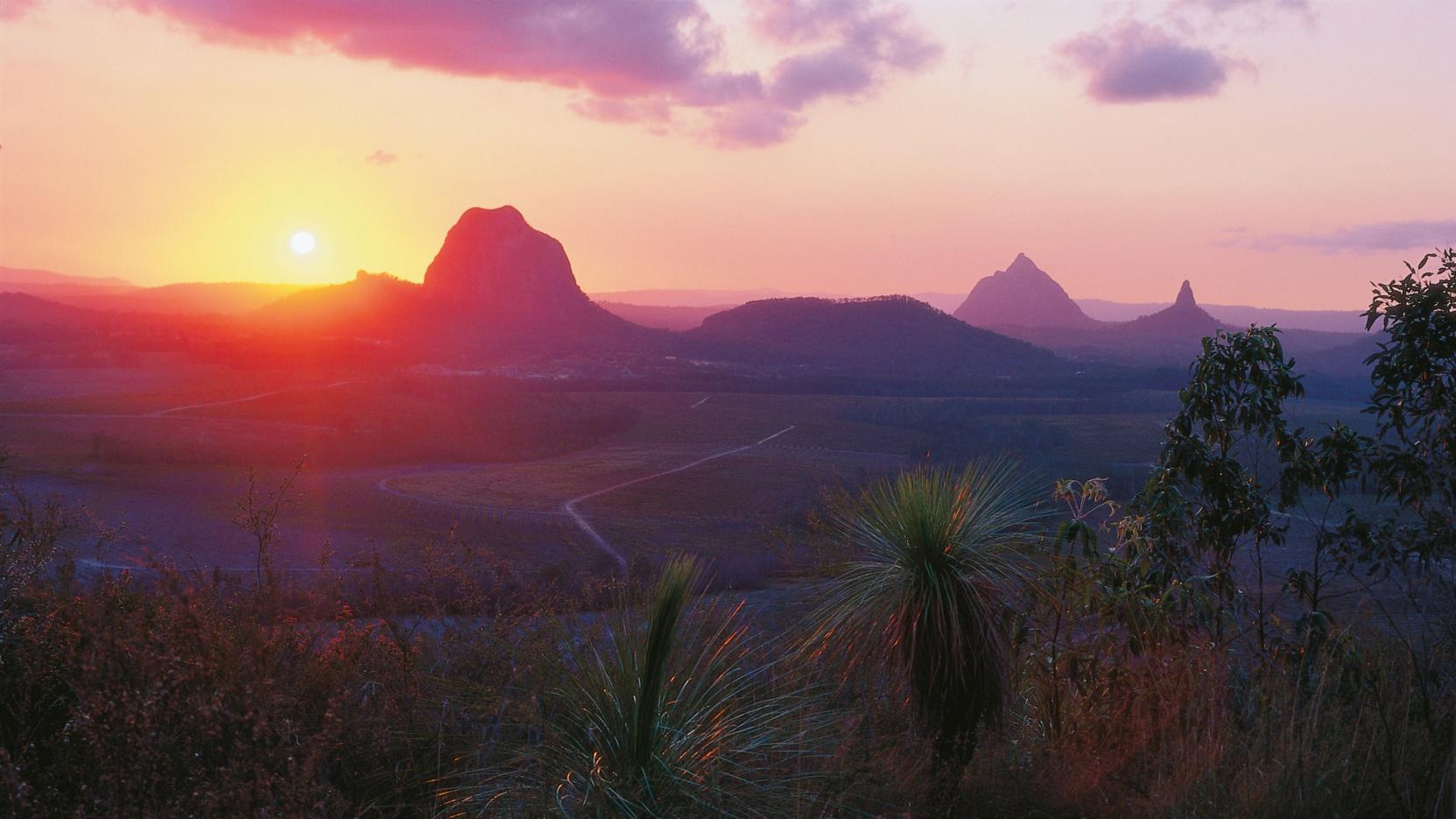
In order to further promote the Sunshine Coast, the Sunshine Coast Council is applying to the World Heritage Committee of the United Nations to include the Glasshouse Mountains on the “World Heritage List”. This means the Glasshouse Mountains will be lifted from a National Heritage to World Heritage level.
As a Year 10 Geography expert, the Sunshine Coast Council has asked you and your colleague (you will work in pairs) to be part of their promotional team working towards the goal of having the Glasshouse Mountains accepted as a World Heritage listed landform with outstanding natural significance.
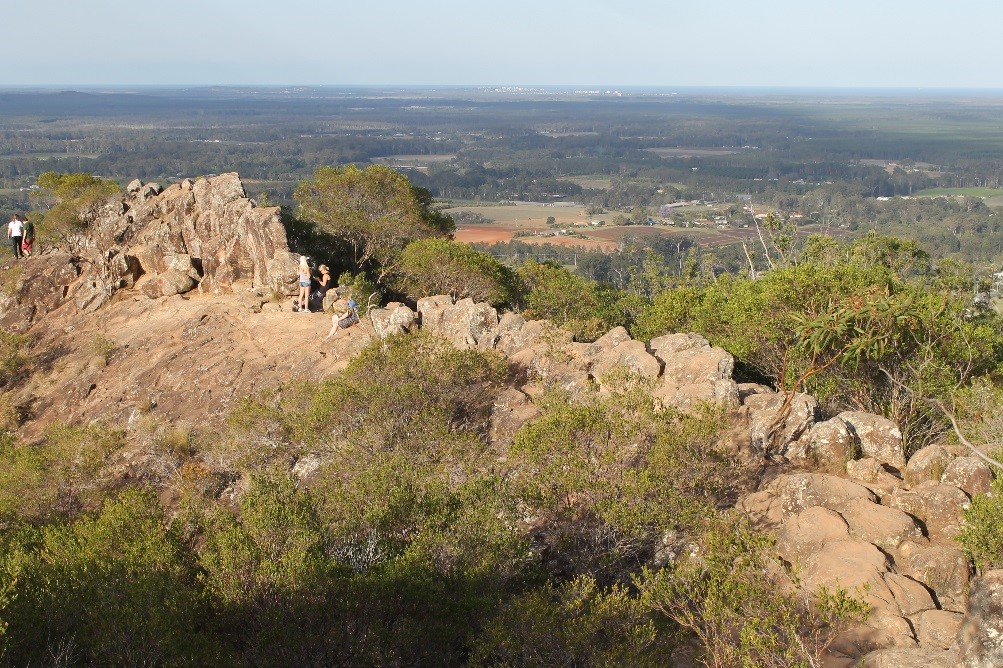
By completing this project for the Sunshine Coast Council, you will be able to:
- Describe UNESCO's World Heritage List
- Discuss the key attributes of the Glasshouse Mountains landscape
- Apply UNESCO's 'outstanding natural criteria' to the Glasshouse Mountains site
- Examine the evidence which supports why the Glasshouse Mountains should be added to the World Heritage List
- Justify why the perspectives of Sunshine Coast stakeholders support this area becoming a World Heritage Site
- Plan, design and compose a feature article (on behalf of the Sunshine Coast council) to persuade UNESCO to include the Glasshouse Mountains on the World Heritage List
Task
Your Task...
You and your partner are to prepare a feature article to show why the Glasshouse Mountains meet UNESCO World Heritage Selection Criteria as an outstanding site of natural significance.
You will have 2 x 90-minute lessons to complete this feature article and be ready for publication.
You will publish your article in a format similar to that seen in National Geographic using Adobe Spark. An example looks like this:
http://www.nationalgeographic.com.au/nature/australias-has-its-first-da…;
The Sunshine Coast Council has also asked you to follow these publication guidelines...
- You must work and collaborate with a colleague to complete this task
- The article must be 500 words or more, and must include images, maps and graphics were applicable
- You must refer to research and referenced information
- You must use language that informs and persuades
- Follow the guide in the Field Journal the Council has given you (in 'Process') to ensure you adequately cover the relevant areas of study

Process
My Field Journal
The Sunshine Coast Council has provided you and your colleague with the following Field Journal, which outlines the relevant information you should include in the feature article. The Journal also includes a range of 'thinking breaks' whereby you can deepen your understanding of the new knowledge by applying, analysing and evlauting the information.
Step 1
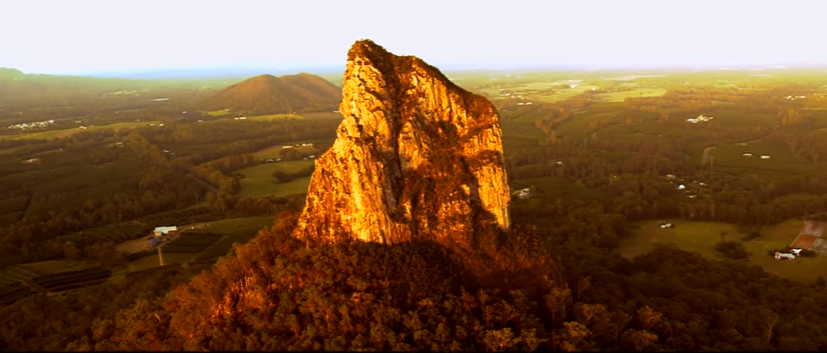
Let this video begin your inspirational journey in understanding the Glasshouse Mountains:
https://www.youtube.com/watch?v=Ya8DX6HTx8M
Step 2
Now read and explore what the Queensland Government National Parks website has to say about the Glasshouse Moutains:
http://www.nprsr.qld.gov.au/parks/glass-house-mountains/culture.html
Record some key insights into the table below to kick start your research:
|
Sub-Heading |
Key Points to Consider |
Key Quotes (as Evidence) |
|
Natural Environment |
|
|
|
Culture and History |
|
|
Step 3
Now let's look specifically at the geological processes which have shaped the Glasshouse Mountains over millions of years. No wonder the area is already a National Heritage Site.
Read the following information (below) and then head on over to SketchPad and get creative.
Ancient History - The Glass House Mountains tell a story
As you gaze at the Glass House Mountains, imagine this view 65 million years ago. Australia was much further south, and still part of the ancient super-continent of Gondwana. The climate was much colder and wetter and much of Australia was covered in tropical rainforest dominated by ferns, conifers and cycads. Slowly but dramatically, Australia separated from Antarctica and began drifting northwards.
When the Glasshouse mountains were formed between 30 and 22 million years ago, south-east Queensland was rocked by prolonged volcanic activity, caused by the continent moving over a 'hot-spot' in the Earth's mantle beneath the crust. In the Maleny district about 29 million years ago one or more volcanoes began to erupt basalt lava flows, filling many of the valleys of the district and eventually building up broad, gently sloping plains and shield shaped mountains.
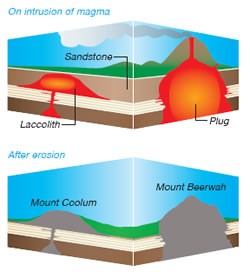
A little later (25 million years ago), numerous dome-like plugs of magma were forced through the surrounding older rocks, filling volcanic vents or subsurface bulges (laccoliths). They are now exposed as the steep sided peaks we know as the spectacular Glass House Mountains. They have resisted erosion while the surrounding softer sandstone rocks have been worn away. Remnants of these flows now cap the Mapleton to Maleny plateau. With erosion of the basalt rocks, fertile soils have built up to enable rainforests like Mary Cairncross Scenic Reserve to re-establish and thrive.
Rainforests reached their most complex stage about 25 million years ago and then began retreating to wetter areas and higher mountain ranges in the face of increasing aridity. Uniquely Australian plant families like Myrtaceae (Eucalypts) and Proteaceae (Banksias) emerged from their rainforest origins and evolved to the drier conditions, though not as dominant as today.
References:
W.F Wilmott & N.C. Stevens, 1988, Rocks and Landscapes of the Sunshine Coast. Geological Society of Australia
Warwick Willmott, 2004, Rocks and Landscapes of the National Parks of Southern Queensland. Geological Society of Australia
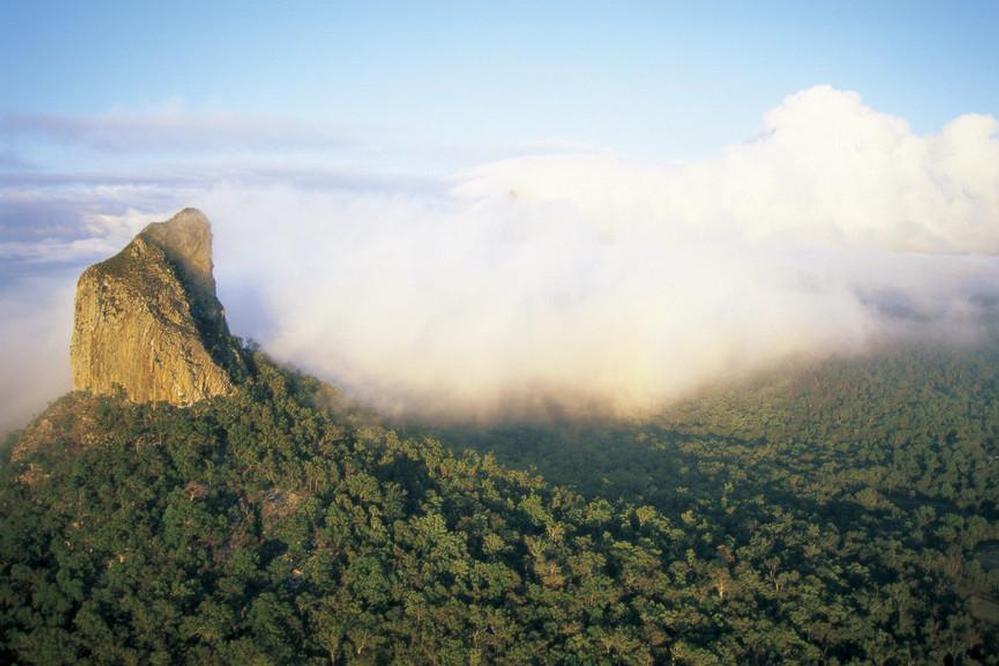
Now go to SkecthPad and create a digital sketch of what the Glasshouse Mountains would have looked like when they were being formed, and label as many features as you can.
Step 4
Let's bring in the UNESCO World Heritage List now. Go to this Adobe Spark, paying particular attention to the Natural Criteria, and then complete the table below to organise your progress so far.
https://spark.adobe.com/#design/page/5960b370-3d75-4b76-ba91-ac9ceb58fc69
Then you can add your evidence to combine the Glasshouse Mountains and the UNESCO criteria below.
UNESCO World Heritage List Selection Criteria
(vii) to contain superlative natural phenomena or areas of exceptional natural beauty and aesthetic importance
|
Words I don’t understand |
Definitions |
|
|
|
|
My new understanding of the sentence
|
|
|
Evidence that the Glasshouse Mountains meet this critiera
|
(viii) to be outstanding examples representing major stages of earth's history, including the record of life, significant on-going geological processes in the development of landforms, or significant geomorphic or physiographic features
|
Words I don’t understand |
Definitions |
|
|
|
|
My new understanding of the sentence
|
|
|
Evidence that the Glasshouse Mountains meet this critiera
|
(ix) to be outstanding examples representing significant on-going ecological and biological processes in the evolution and development of terrestrial, fresh water, coastal and marine ecosystems and communities of plants and animals
|
Words I don’t understand |
Definitions |
|
|
|
|
My new understanding of the sentence
|
|
|
Evidence that the Glasshouse Mountains meet this critiera
|
(x) to contain the most important and significant natural habitats for in-situ conservation of biological diversity, including those containing threatened species of outstanding universal value from the point of view of science or conservation
|
Words I don’t understand |
Definitions |
|
|
|
|
My new understanding of the sentence
|
|
|
Evidence that the Glasshouse Mountains meet this critiera
|
Step 5
Now it is your turn to take the lead and show the Council what you are made of! Look at the following websites and select the information you believe is important to identify Glasshouse Mountain Stakeholders.
Synthesise this knowledge into the following table (below). This will be your final steps of 'research' before you can begin designing and composing your feature article.
http://www.australiannationalparks.com/queensland/glasshousemountains/default.htm
http://www.nprsr.qld.gov.au/managing/plans-strategies/statements/glass-house.html
http://www.hinterlandtourism.com.au/attractions/the-glasshouse-mountain…
http://www.environment.gov.au/heritage/places/national/glass-house-moun…
http://www.quarrymagazine.com/Article.aspx?id=6884
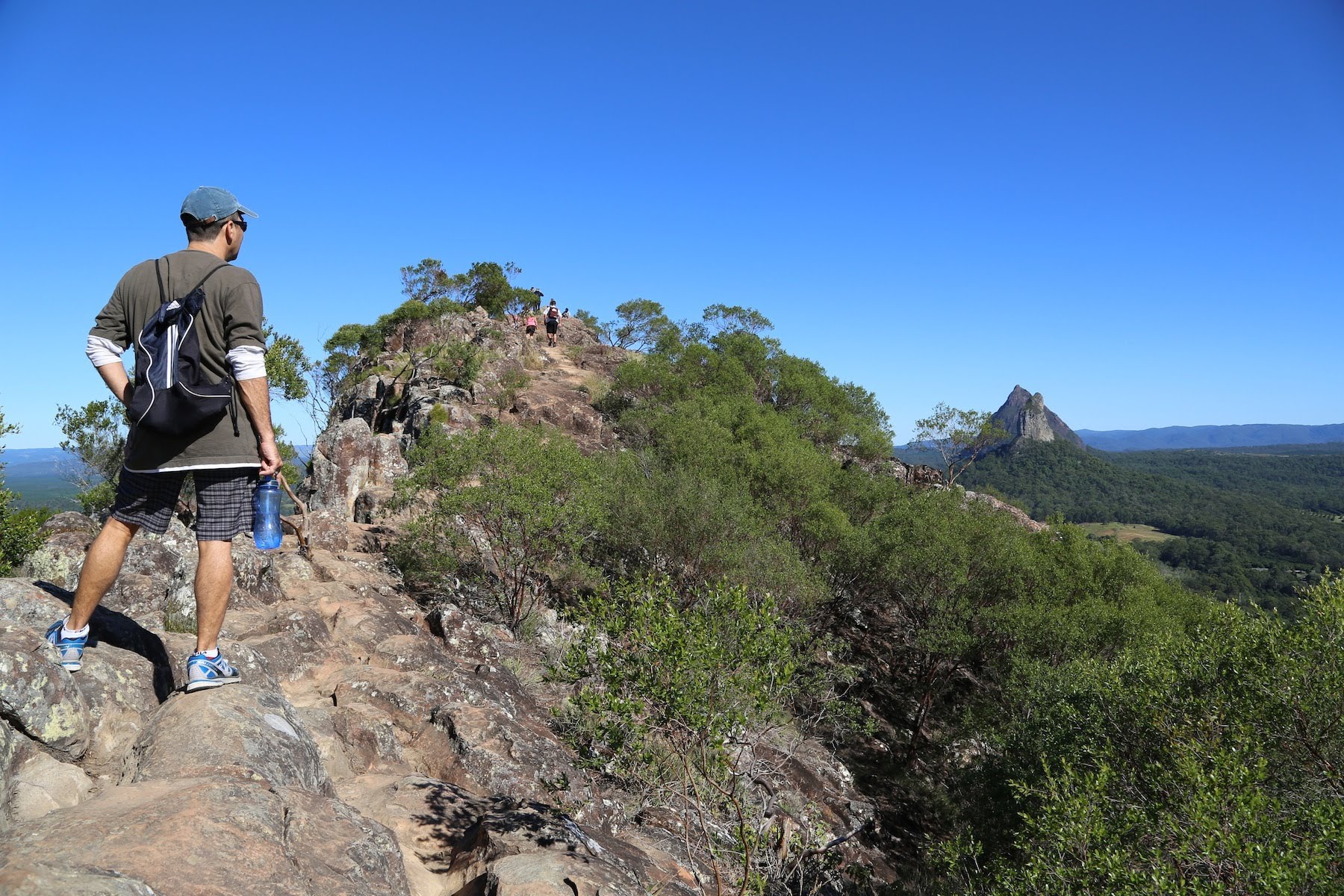
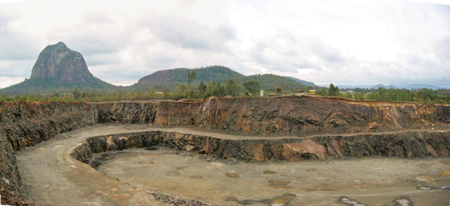

Who are the stakeholders in the use of land surrounding the Glasshouse Mountains, and what might their viewpoints be on its use?
|
Stakeholder |
Values/ Viewpoint/ Perspective |
Conflicting interests? |
|
|
|
|
|
|
|
|
|
|
|
|
|
|
|
|
|
|
|
|
Step 6: Writing your feature article!
Now it's time to complete your feature article in Adobe Spark. A basic feature article scaffolded strcuture is available below.
https://spark.adobe.com/
Also make sure to take a look at the next tab over in 'Evaluation' to make sure you know how to self-evaluate your success in this task, before you publish it for the Sunshine Coast Council.
And just a reminder... this is a formative assessment task. It will give both yourself (and your teacher) an indication of your current geographical writing and evaluating skills (and also ways to improve).
Writing a Magazine Feature Article
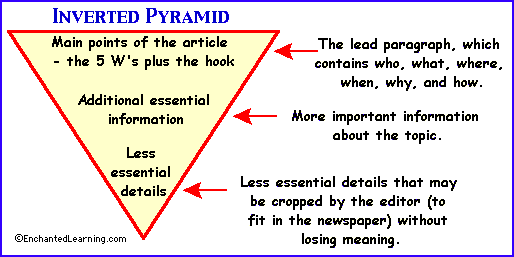
Your title and kicker can wait until you have written the feature article – don’t forget to include a title that gains the reader’s attention and a kicker to kick-start the story by posing a question or summarising the feature article. You will also need to add the by-line (the writer’s name) at the beginning.
The Lead paragraph:
The purpose of the intro or lead paragraph is to capture the attention of the readers and entice them to read further into the story. Cover the main points of the article – by answering the “w” questions.
The body paragraph(s):
- The body paragraph includes more important/essential information about the topic.
- Remember, a magazine writer must remember the readers are not interested in the author, but instead in the subject of the article – Try not to use “I”.
- Quotations can be used to add life and personality to an article. However, a quote should appear only when necessary. Long, drawn out and ordinary quotes should be avoided. Quotes normally give a sense of getting to know a person and readers expect a quote to reveal something important. You can use a special font, style or even function in an online platform for a special quote – ‘pull-out quote’ – which grabs the readers eye.
- Paragraphs should flow so that the reader does not feel any sudden jolting changes of subject. The trick is to use a transitional/connecting/linking word (a conjunction) or phrase: additionally; consequently; however; therefore; as a result…
The conclusion:
A conclusion should tie everything together and sum up the article - revisit the reason/purpose for the article. There are many ways to conclude. A few are listed below:
- a return to some earlier statement that now means more than it did
- saving an explosive piece of information until the last paragraph
- an unexpected twist
- a ‘call to action’ or a recommendation.
Remember to click 'pubish' and 'share' your feature article in Adobe Spark once your done! That way you can share your article with family, friends and classmates :)
Evaluation
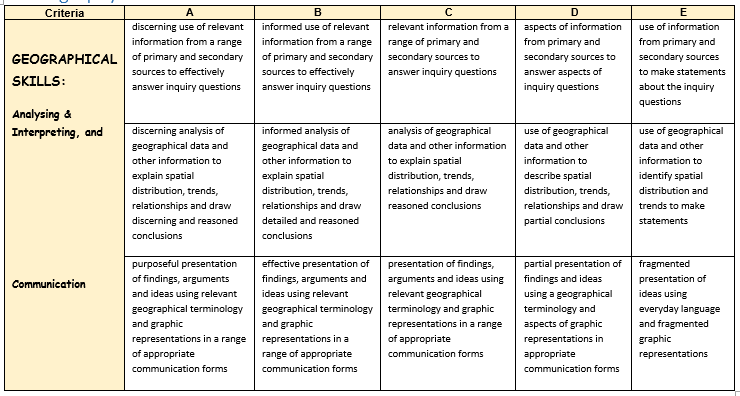
You will be evaluated on you and your colleague's ability to:
- Explain the GEOGRAPHICAL LOCATION, SIZE and DETAILS OF THE SITE (include maps)
- Explain the TYPE OF LANDSCAPE of your site and its FORMATION PROCESSES (include images)
- Explain the stakeholders and their VALUES/VIEWPOINTS/PERSPECTIVES attached to the site: (natural, cultural, spiritual, economic and aesthetic significance).
- Locate the selection criteria on UNESCO’s website, and analyse the selection criteria to decide and explain which criteria support adding the Glasshouse Mountains to the List (the purpose of your article
Conclusion
Well Done!
Congratulations on completing your first project as a Geographer working for the Sunshine Coast Council.
Now you just have to wait for your feature article to go 'through editing' (your teacher will read, evalaute and give you and your colleague feedback).
Thanks to your effective geographical research skills, The Glasshouse Mountains may become the newest UNESCO World Heritage Site, so it can be enjoyed for many future generations to come.
Credits
Disclaimer:
All of the information in this WebQuest remains the property of its original owners.
This content will only be used for educational purposes and will remain online with open access by the public, other teachers and educational institutions.
Teacher Page
Rationale
This WebQuest, ‘The Glasshouse Mountains and the World Heritage List’, provides learners the opportunity to engage in a realistic geographical project that promotes collaboration, innovation, design, problem solving and higher-order thinking. The task itself is a replica of “…a doable and interesting task that is ideally a scaled down version of things that adults do as citizens or workers” (Dodge, 2015, p.1); and accurately reflects the inherent benefits of engaging students in web-based inquiry tasks. ICT activities which follow the Inquiry-Based Learning approach, allow students to become accustom to being independent learners and develop the skills to ask questions, solve problems and think creatively without teacher instruction (Hepworth & Walton, 2009, p. 195-197). Students who participate and complete this WebQuest hence build not only independent thought and elevate their analysis and creative skills, but furthermore can enjoy ‘success’ in their learning.
This WebQuest promotes ‘success’ and ICT literacy for each learner by following the ‘scaffolded’ approach within the Inquiry-Based model. By scaffolding the ‘steps’ for learners within the ‘Process’, this WebQuest ensures that all students are ‘guided’ through the web-based information they need to complete this task (Hepworth & Walton, 2009, p. 195-197); yet as you will find, each feature article will be a unique product that maintains alignment to the geographical criteria. The criteria selected for this WebQuest is derived from the standards set out in the National Curriculum, and satisfies the Curriculum’s recommendation to meet each student ‘at their own level of understanding and prior knowledge’ (Australian Curriculum, Assessment Reporting Authority [ACARA], 2016a, p.1). This task further implements the ICT General capability within the Australia Curriculum, and aligns itself with ‘Level 6’ of the ICT Learning continuum in all three areas: investigation, creation and communication (ACARA, 2016b, p.1; ACARA 2016c, p.1). This WebQuest can therefore be implemented with confidence, knowing that no matter the prior knowledge each student brings to the task, age-appropriate ICT literacy skills will be developed through the application of higher-order thinking digital activities.
This WebQuest is relatively reflective of Bloom’s Revised (Digital) Taxonomy, whereby students’ thinking is moved from lower-order (remember; understand; apply) towards higher-order thinking (analyse; evaluate; create) (Educational Technology and Mobile Learning, 2016, p.1). Its design encompasses higher-order skills such as examining geographical evidence against the UNESCO World Heritage criteria; justifying the supporting opinions of local Sunshine Coast stakeholders; and designing and publishing a feature article into a persuasive medium. The benefit of publishing a web-based product like a feature article (through Adobe Spark) allows students to not only share their in-class work with other students, but also with family, friends and like-minded people through the internet (Gokhale, 1995, p.1). The notion of being ‘proud’ and sharing quality work with others further builds the ‘success’ students feel when they complete this task, and provides opportunities to learn via feedback and through the encouragement of others outside classroom walls.
‘The Glasshouse Mountains and the World Heritage List’ WebQuest therefore provides students with a technologically-lead research environment to engage in a higher-order creative task. Your students will experience success and positive feedback; yet most of all will enjoy the intrinsic satisfaction of learning through web-based creation.
References
Australian Curriculum Assessment and Reporting Authority (ACARA). (2016a). Curriculum: 7-10 Geography: Year 10 Level. Retrieved from http://www.australiancurriculum.edu.au/humanities-and-social-sciences/g…;
Australian Curriculum Assessment and Reporting Authority (ACARA). (2016b). Information and community technology (ICT) capability. Retrieved from http://www.australiancurriculum.edu.au/generalcapabilities/information-and-communication-technology-capability/introduction/introduction
Australian Curriculum Assessment and Reporting Authority (ACARA). (2016c). Information and community technology learning continuum. Retrieved from http://www.acara.edu.au/_resources/General_capabilities_-_ICT_-_learning_continuum.pdf
Dodge, B. (2015). Creating WebQuests: Learning Design and Technology. San Diego State University. Retrieved from http://webquest.org/index-create.php
Educational Technology and Mobile Learning. (2016). Bloom’s Digital Taxonomy Cheat Sheet for Teachers. Retrieved from http://www.educatorstechnology.com/2016/02/blooms-digital-taxonomy-cheat-sheet-for-teachers.html
Gokhale, A. (1995). ‘Collaborative learning enhances critical thinking’. Journal of Technology Education, vol. 7, no. 1, pp. 1. Retrieved from https://scholar.lib.vt.edu/ejournals/JTE/v7n1/gokhale.jte-v7n1.html
Hepworth, M., & Walton, G. (2009). Teaching information literacy for inquiry-based learning. Oxford, England: Chandos Publishing. Retrieved from https://books.google.com.au/books?id=p_-jAgAAQBAJ&dq=inquiryBased+Learning+and+ICT&lr=&source=gbs_navlinks_s