
Introduction
This term the main focus area we are looking at are fitness components particularly within touch football. Furthermore, students will have the opportunity to create a training program that will hypothetically enhance their fitness to a professional level. This webquest will introduce you to various terminology and fitness components that will be used throughout the term, in addition to providing a deeper understanding and insight into Touch fitness. All students must complete the WebQuest. There will be adequate time provided in class but students will be required to also study at home.

Throughout the Webquest there are different hyperlinks, these will be highlighted. You are to click on the hyperlinks to access the resources.
In the first two practical classes you completed a pre test of the 11 different fitness components. Your objective is to analyse your fitness results and compare to those of a professional. Similarly, you will create an appropriate training program to enhance the desired fitness components for touch.
Brayden Moor ID: 1065583
Task
The objective of this WebQuest is for you to acquire a deeper understanding and evaluate different fitness components and how they are utilised in Touch.
Students will do this through navigating different websites which will allow you to define the main fitness components within touch football and elaborate and compare, through a paragraph for each main component, how you rate in respect to the Queensland standards. The last part of this webquest will involve you to create a hypothetical training program, after researching different excersies, to enhance your Touch fitness.
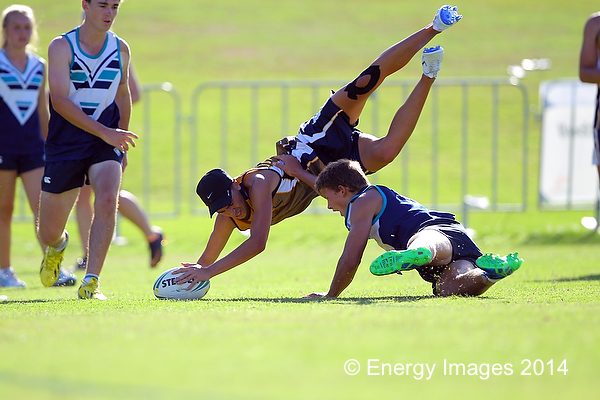
This WebQuest is to be completed individually, however group collaboration will be incorporated.
Process
This task will involve 4 different aspects which you must work through methodically.
Part 1: Write down your own definition of what fitness is. Research and compare the definition of fitness to your opinion.
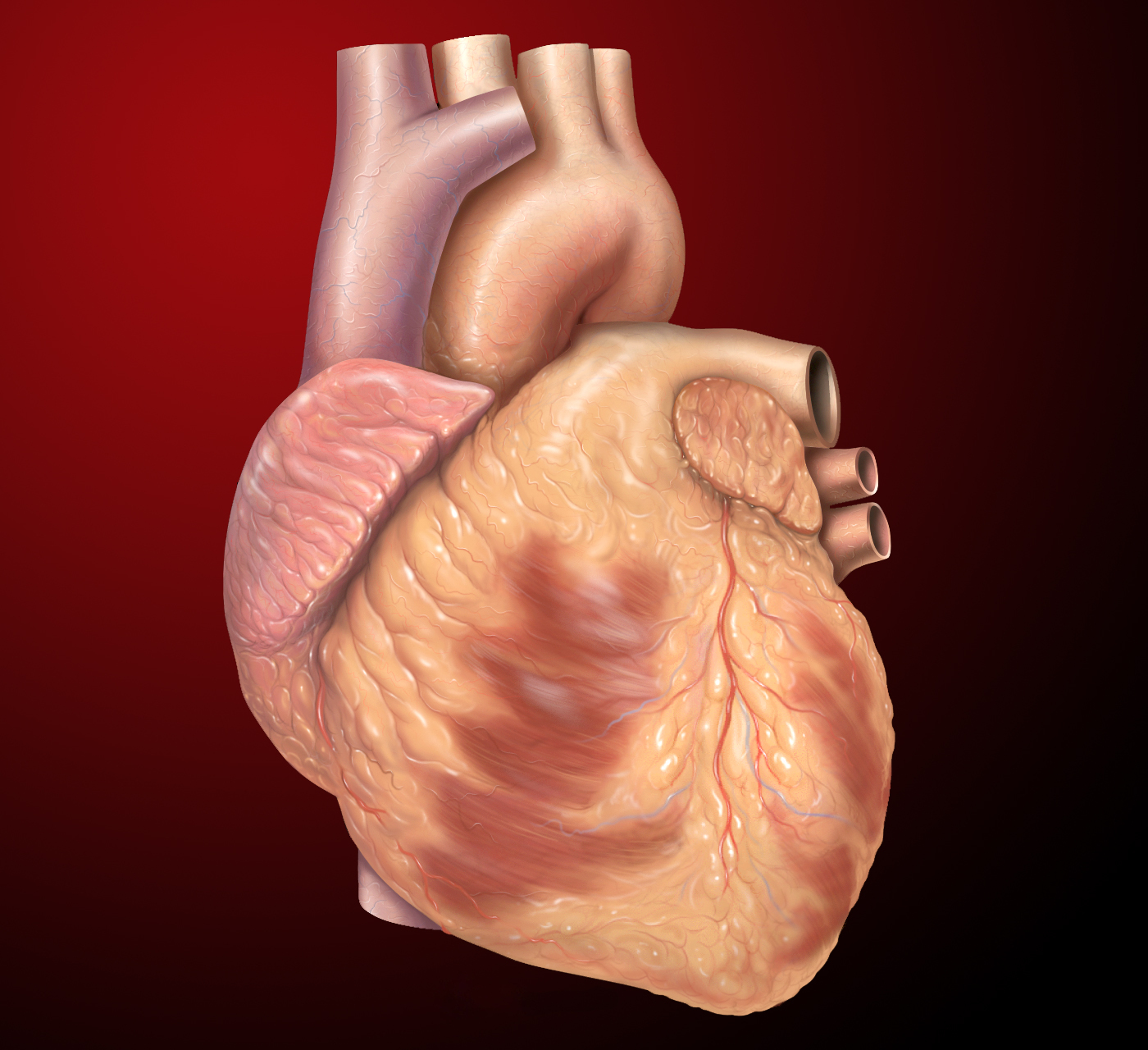
2: Research the health and skill fitness components and determine which components are useful in touch.
You must write a paragraph for each component that is relevant to touch describing what is is and how to test the component.
Furthermore, you must judge your fitness results based upon the Queensland average for men and women (Must click on Fitness Workbook - Cambridge University Press. pdf file)
3. Evaluate the various training techniques for the fitness components.
4. Choose the fitness components you identified are associated with touch football. Design and create your training program to enhance on your pre-test scores. This is what you will be assessed on.
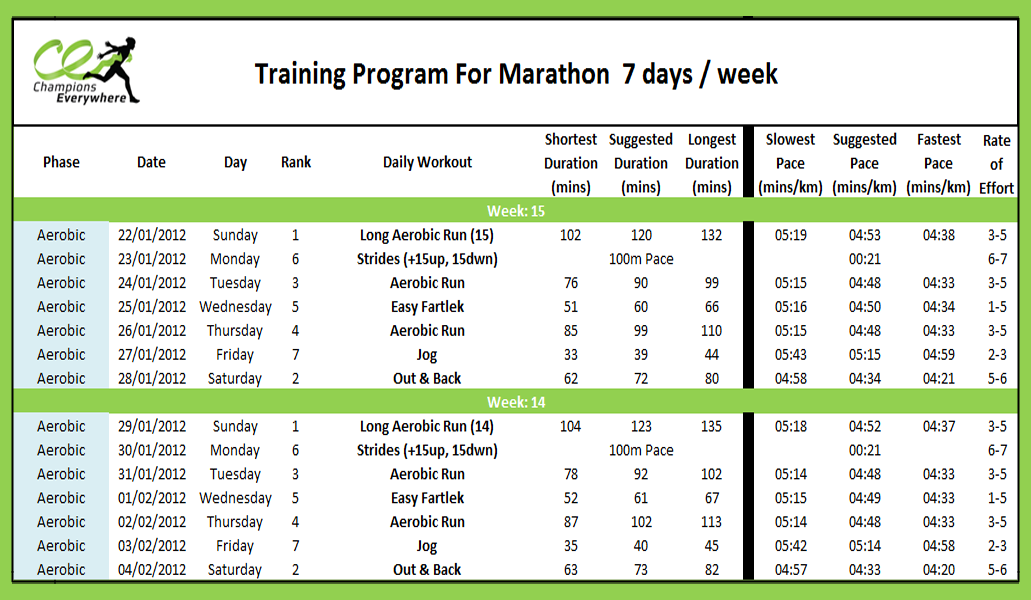
Below is an example of a training program. Additionally, follow the link for an example circuit training.
Evaluation
|
|
A |
B |
C |
D |
E |
|
Acquiring |
Students demonstrate: Accurate and concise comprehension of all terminology in regards to fitness components.
Accurately identifies and describes all the components relevant to Touch Football. |
Students demonstrate: Accurate and relevant understanding of most of the terminology in regards to fitness components.
Accurately identifies and describes most of the components relevant to Touch Football. |
Students demonstrate: Accurate comprehension of some of the terminology in regards to fitness components.
Accurately identifies and describes some the components relevant to Touch Football. |
Students demonstrate: Identifies terminology with little regards to fitness components.
Identifies some the components relevant to Touch Football. |
Students demonstrate: Little understanding of the terminology relevant to fitness components.
Little identification of the components relevant to Touch Football. |
|
Applying |
Precisely and succinctly applies the appropriate fitness components to all individual Touch football fitness results.
Independent and effective selection of substantial, creative training methods to enhance all required fitness components. |
Succinctly applies a majority of fitness components to individual Touch football fitness results.
Independent selection of effective training methods to enhance the majority of the required fitness components. |
Applies appropriate fitness components to some Touch football fitness results.
Selects appropriate training methods to enhance some required fitness components. |
Provides some fitness components to the occasional fitness result.
With additional help some training methods are selected to enhance little fitness components. |
Inappropriate fitness components selected in regard to touch football.
Selects inappropriate training methods. |
|
Evaluating |
Convincingly demonstrates multiple reasons and judgments for the selections made.
Evaluates accurately and appropriately how fitness components are relevant towards Touch. |
Succinctly demonstrates a few reasons and judgments for the selections made.
Evaluates appropriately how fitness components are relevant towards Touch. |
Demonstrates accurate reasons and for the selections made.
Evaluates accurately how fitness components are relevant towards Touch. |
Provided judgments for the selections made.
Evaluates how fitness components are relevant towards Touch. |
Describes no information regarding chosen selections.
Does not evaluate how fitness components are relevant to Touch. |
Conclusion
Woohoo! Your have now completed this WebQuest. Remember to finalise and submit your training program to the class learning space as this will be used towards your summative assessment in the coming weeks. There will also be a post test in week 10 to analyse if you have gained any fitness over the duration to the term.
Over the remaining weeks of term we will analyse the various skill components and determine what sport you are best suited to as well as evaluating different training programs for those sport specific components.
Below is video for your enjoyment of the 2015 Touch World Cup mixed final match, held in Coffs Harbour, between Australia and New Zealand.
Credits
Refrences:
2015 Touch World Cup. (2015). 2015 World Cup Mixed Open Final - Australia v New Zealand Highlights [Video file]. Retrieved from https://www.youtube.com/watch?v=x374sc7aidU
Bayani, M. (2014). Fitness Component & Principles by mehdi bayani on Prezi. Retrieved from https://prezi.com/nsc6j-6idk-b/fitness-component-principles/
Brunetto, F. (2009). Step up: Health and physical education for Queensland. Port Melbourne, Vic: Cambridge University Press.
Champions Everywhere. (2011). Marathon training program [Photograph]. Retrieved from http://www.championseverywhere.com/coaching
Demand Media Inc. (2016). 10 Examples of Coordination & Balance Exercise | LIVESTRONG.COM. Retrieved from http://www.livestrong.com/article/506296-10-examples-of-coordination-ba…
Freedieting.com. (2016). Circuit Training - Sample Workout Plan. Retrieved from http://www.freedieting.com/circuit_training.htm
Sports-training.com. (2016). Definition of Fitness for Sports. Retrieved from http://www.sports-training-adviser.com/definition-of-fitness.html
TeachPE. (2016). Health Related Fitness | Training Theory | Training & Fitness. Retrieved from http://www.teachpe.com/fitness/health.php
TeachPe. (2016). Skill Related Fitness | Training Theory | Training & Fitness. Retrieved from http://www.teachpe.com/fitness/skill.php
Touch Football Australia. (2016). Logo [Photograph]. Retrieved from http://www.touchfootball.com.au/
TouchFootballAus. (2016). Classic Matches - 2014 Trans Tasman (Mixed) [Video file]. Retrieved from https://www.youtube.com/watch?v=D6y40rnvUww
Wikipedia. (2016). Heart [Photograph]. Retrieved from https://en.wikipedia.org/wiki/Heart
Teacher Page
The WebQuest 'Am I fit?' is directed towards Year 9 Health and Physical education. WebQuests allow students to learn through new and alternative techniques they may have not been accustomed to. Additionally, there are educational learning theories which support the use of WebQuests in addition to, requirements obtained by students, from the Australian Curriculum, Assessment and Reporting Authority (ACARA). The foundations of the WebQuest are derived from one of the two strands within the national Australian Curriculum for Health and Physical Education. The Webquest 'Am I Fit?' refers to the stand of "Movement and physical activity" as students will analyse various fitness components and evaluate through physical activity how to enhance specific fitnesses (ACARA, 2012). Furthermore, the WebQuest naturally incorporates ACARA's general capability of Information, Communication Technologies (ICT's), as well as allowing students to become competent digital learners (ACARA, 2012).
The educational learning theories which support ICT incorporation, (for example WebQuests) include Bloom's revised taxonomy. The WebQuest perfectly utilises each stage of thinking skills in particular the three higher order thinking skills (Krathwohl, 2002) as students complete the set tasks. Due to the involvement of practical skills within "Am I Fit", students are required to remember and understand the 11 health and skill fitness components particularly for task 1. Students then apply what they remember of the fitness components into various tests which measure each fitness level. For the third task students will analyse and evaluate their fitness scores in comparison to a professional Touch football player. Lastly using the higher order thinking skill of creating a training program which will incorporate the other higher order thinking skills to enhance their individual fitness to that of a professionaltouch player. Through students participating in computer assisted learning, it engages thier higher order thinking abilities as well as promotes and inquiry based classroom (Clarke & Clarke, 2009). Additionally, Bloom's revised taxonomy provides a structre of learning as students are required to move through each level of thinking skills (Forehand, 2005). The WebQuest offers this same form of structure as students are reuqired to progressively navigate through each of the four tasks before moving on. Therefore, Bloom's revised taxonomy supports the use of WebQuest through the structure as well as engaging students in deeper knowledge.
Additionally, through online learning, students are able to gain the ICT competency required for year nine, as demonstrated through ACARA's general capacities ICT learning continuum (ACARA, 2016). As students navigate through the WebQuest, they are able to accomplish various sub-elements within the continuum; particular sub-elements include "Select and evaluate data", "Generate ideas, plans and processes" as well as "Generate solutions to challenges and learning area tasks" (ACARA, 2016). Each of the tasks students are to complete have been organised and structured around these general capability sub-elements.
WHen students navigate through and complete the WebQuest, students gain a deeper understanding through inquiry based activities which scaffolds the students (March, 2004). Additionally student gain further understanding of the value of topic, are able to transfer learning across subjects as well as gain a solid base of knowledge to move forwardwithin the topic (March, 2004).
References
Australian Curriculum, Assessment and Reporting Authority. (2012). The shape of the Australian curriculum: Health and physical education. Sydney, N.S.W: ACARA.
Australian Curriculum, Assessment and Reporting Authority. (2016). Information and Communication Technology Capability learning continuum. Retrieved from http://www.acara.edu.au/verve/_resources/General_capabilities_-_ICT_-_learning_continuum.pdf
March, T. (2004). The learning power of WebQuests. Educational Leadership,61(4), 42-47.
Forehand, M. (2010). Bloom’s taxonomy. Emerging perspectives on learning, teaching, and technology, 41-47.
Krathwohl, D. R. (2002). A revision of Bloom's taxonomy: An overview.Theory into practice, 41(4), 212-218.