
Introduction
Rationale:
There are a number of pedagogical advantages in using webquests to help students learn. Research indicates that with an increasing amount of information and resources available online, students need guidance in knowing how to gather, interpret, synthesize and create with the information they interact with (Ikpeze &Boyd, 2007). Web based inquiry learning tasks can take students beyond lower level learning skills, namely memorizing facts and help students evaluate sources, create and make informed decisions that enhance student learning (Boyd & Ikpeze, 2007). Indeed this webquest reflects these advantages as students need to navigate through a variety of sites and evaluate the sources they are engaging with. Furthermore, students need to infer meaning from the information they find to ascertain its relevance to the objectives of the webquest. This webquest is inclusive of these pedagogical advantages and as a result supports higher order thinking through inquiry based and student centred learning.
The ACARA year level description for year 8 History emphasizes the importance of students understanding the key historical events and societies that have existed from the ancient to the modern world. The year level description explains students are required to explore ‘important features of the period, c. 650 AD (CE)- 1750’ (ACARA, 2016). In addition, the curriculum maintains that students are required to complete four in depth studies of significant societies and events during this period. The Black Death is one of the options for the in depth studies. Therefore, the webquest fulfils this aspect of the curriculum requirements.
In addition, the webquest and subsequent assessment task reflect specific content descriptors including, ‘living conditions and religious beliefs in the 14th century, including life expectancy, medical knowledge and beliefs about the power of God’ and ‘The role of expanding trade between Europe and Asia in the Black Death, including the origin and spread of the disease’ (ACARA, 2016). Central to the webquest are questions that require students to engage with the content descriptors and infer meaning from the sources and sites they interact with. This is achieved in a number of ways including, providing questions at different levels of the Bloom’s spectrum, from initial basic knowledge and understanding, central to the task, to higher order thinking skills where students are required to infer and hypothesize about interpreting and analyzing historical sources. This is a clear pedagogical advantage of the webquest and ensures students are engaging in higher order thinking activities throughout the task. Moreover, the webquest also compliments the ICT capability for year 8 history by engaging students in “locating, processing and analyzing historical information”. Students achieve this by engaging with a variety of digital sources where students are required to “critically analyse evidence and historical trends; communicate, present and represent their learning; and collaborate, discuss and debate to co-construct their knowledge”.
Furthermore, the webquest is inclusive of differentiation for students with different learning abilities. For Year 8 students it is important that sufficient scaffolding is provided to ensure students are aware of the task requirements and can engage with the set task. By initially providing links that scaffold student understanding around the topic, lower level students are able to develop the essential information related to the task. Moreover, by grouping students with different learning abilities, collaborative learning and peer teaching can occur (Kanevsky, 2011). This benefits all students and also shows inclusion of the ACARA ICT capability for History “collaborate, discuss and debate to co-construct their knowledge”.
In addition, this webquest is inclusive of a variety of learning styles including visual, musical/auditory, linguistic, social, verbal and combination. There are a number of links that engage a variety of different learners to ensure all students are engaging with content (Kolb & Kolb, 2005). In addition, students are engaged in different learning activities throughout the webquest. For example, students are required to create a graphic organizer to help them organize information in relation to the different strands of plague. This supports linguistic learners. Also, students are engaging with primary and secondary sources and having to select appropriate quotes that substantiate their argument. This requires students to apply historical inquiry skills and engages social, linguistic and combination learners. Moreover, students are also provided with additional clips that they can engage with for additional information to infer meaning. This allows students to use higher order thinking skills, make inferences and hypothesize about historical events. Finally, asking students to create a news report on i-movie enhances their higher order thinking skills. Students that are able to engage with higher order thinking will reflect the A criteria as outlined on the GTMJ. The GTMJ requires students to demonstrate their historical knowledge, understanding and skills relevant to the task.
Finally, webquests benefit students by reflecting components of the ACARA ICT learning continuum including investigating, creating and communicating with ICT. For example, students ‘assess the suitability of data or information using appropriate or own criteria’. Moreover, students ‘use appropriate ICT to collaboratively generate ideas and develop plans’ and ‘select and use appropriate ICT tools safely to lead groups in sharing and exchanging information, and taking part in online projects or active collaborations with appropriate global audiences’. The task reflects the requirements of the learning continuum, level five, for year 8. It is important to ensure students are engaging with ICT resources safely and responsibly.
Therefore, this webquest is inclusive of a number of advantages for learners and reflects the components of the Australian curriculum and ICT learning curriculum for year 8 history.
Introduction
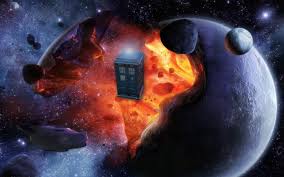
You are a time traveller from the planet Gallifrey. You have been flying through the universe in you TARDIS when you get caught in a solar flare storm. Your TARDIS has been thrown off course and you land somewhere that from your estimation appears to be Europe.
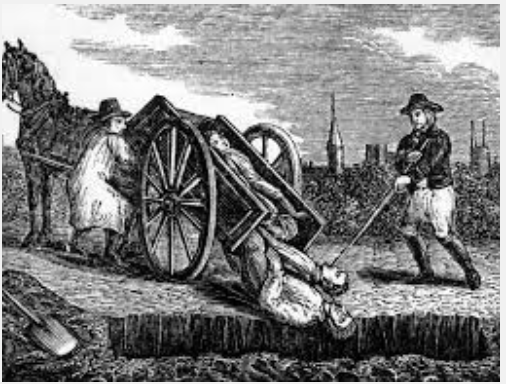
You stumble out of your TARDIS and are immediately greeted by a repulsive smell. You turn to your right and are almost knocked over by a wooden cart piled with dead bodies. The bodies are covered in black wounds that are oozing with pus. You remember hearing someone talking about The Black Death a while ago, but can’t remember much of what was said...

In year 8 History you have been studying ancient societies and the progression to the modern age. As a requirement of this unit you must complete four in depth studies of societies and the changes that occurred as a result of key historical events. The Black Death is one of the options and it compliments the other major areas of study outlined by the Australian curriculum for Year 8.
The webquest is inclusive of the content descriptors outlined by Australian curriculum for Year 8 History namely, "The immediate- and long-term effects of the Black Death on Asian, European and African populations, and conflicting theories about the impact of the plague and Causes and symptoms of the Black Death and the responses of different groups in society to the spread of the disease, such as the flagellants and monasteries". By using these content descriptors as a focus for the webquest it ensures you are working towards the achievement standards and the expectations of the Australian curriculum.
This webquest answers two essential inquiry questions outlined by Australian curriculum that reflect the key ideas that students need to ascertain during the unit of study. These are,
- How did societies change from the end of the ancient period to the beginning of the modern age?
- What key beliefs and values emerged and how did they influence societies?
Task
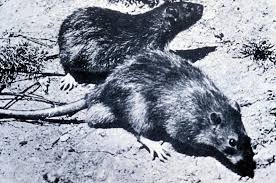
The purpose of this task is for you to understand the changes in societies from the ancient to the modern period.
You will focus on how beliefs and religious practices influenced societies and how The Black Death changed society.
You are to take the role of a newspaper or TV reporter.
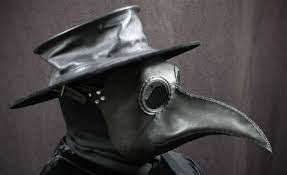 You will look through a number of resources that will provide you with the information you need in relation to understanding The Black Death.
Your task is to find out:
STEP 1) What is The Black Death.
STEP 2) Where did it start and how did it spread.
STEP 3) How did society and the church treat the plague and deal with the subsequent impacts?
STEP 4) After considering the links, what solution can you come up with and how would you be able to encourage society to adopt your idea.
STEP 5) How did society change following The Black Death and is it possible the plague could become a problem in the future.
You are required to present your findings in a newspaper article or news report using i-movie to help the local people understand what the disease is and how to treat it.
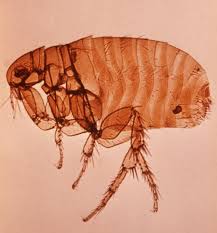 You should compare factual medical information with popular mythical belief at the time to support your story. Your article should be 300 words or a 3 minute speech.

Process
Follow the process and links below to gather the necessary information to complete the web quest task: Your newspaper article or news report should answer the questions listed below.
STEP 1. Watch the following clip and explore the following site
https://www.youtube.com/watch?v=rZy6XilXDZQ
http://www.eyewitnesstohistory.com/plague.htm
Explain how the black death was able to thrive and spread so rapidly in such a small period of time.
STEP 2. What might this cart have been used for?
STEP 2. Read the following page for some information on the plague:
http://www.themiddleages.net/life/blackdeath.html
STEP 3. Watch the following clip and consider the following questions:
[video:https://youtu.be/y7OWLohZ_fs]
What happened to people once they caught the plague, describe the process from initially contracting the disease until death?
What impacts did the Black death have on the population of Europe?.
Provide 2 possible theories that explain how the disease initially spread from Asia to Europe.
How was the plague transmitted?
STEP 4. Explore the following site and create a graphic organiser explaining the differences between the three different types of plague.
https://en.wikipedia.org/wiki/Bubonic_plague#Types
STEP 5. Watch the following clip and consider the following questions:
[video:https://www.youtube.com/watch?v=NktvJNtGeZU]
Describe who the flagellants were and what the purpose of their actions were.
Describe the position the church took when the Black Death broke out.
Provide two reasons explaining why the church responded the way they did when the plague reached its height in mid 14th Century.
STEP 6. Visit the following site and use some of the eye witness accounts in your newspaper article/ news report that support your findings.
http://www.eyewitnesstohistory.com/plague.htm
What scientific information was available at the time to explain the Black Death and was this used? yes/no explain your answer.
STEP 7. These links will help if you are still looking for more info
http://listverse.com/2013/01/21/10-crazy-cures-for-the-black-death/
STEP 8. Watch the following clip
https://www.youtube.com/watch?v=ySClB6-OH-Q
Finally, present a possible way to treat the epidemic and stop it spreading that can be put into place immediately.
What were two positive effects following the black death?
Is it possible the Black Death could return in the future yes/no/ why- explain your answer.

Evaluation
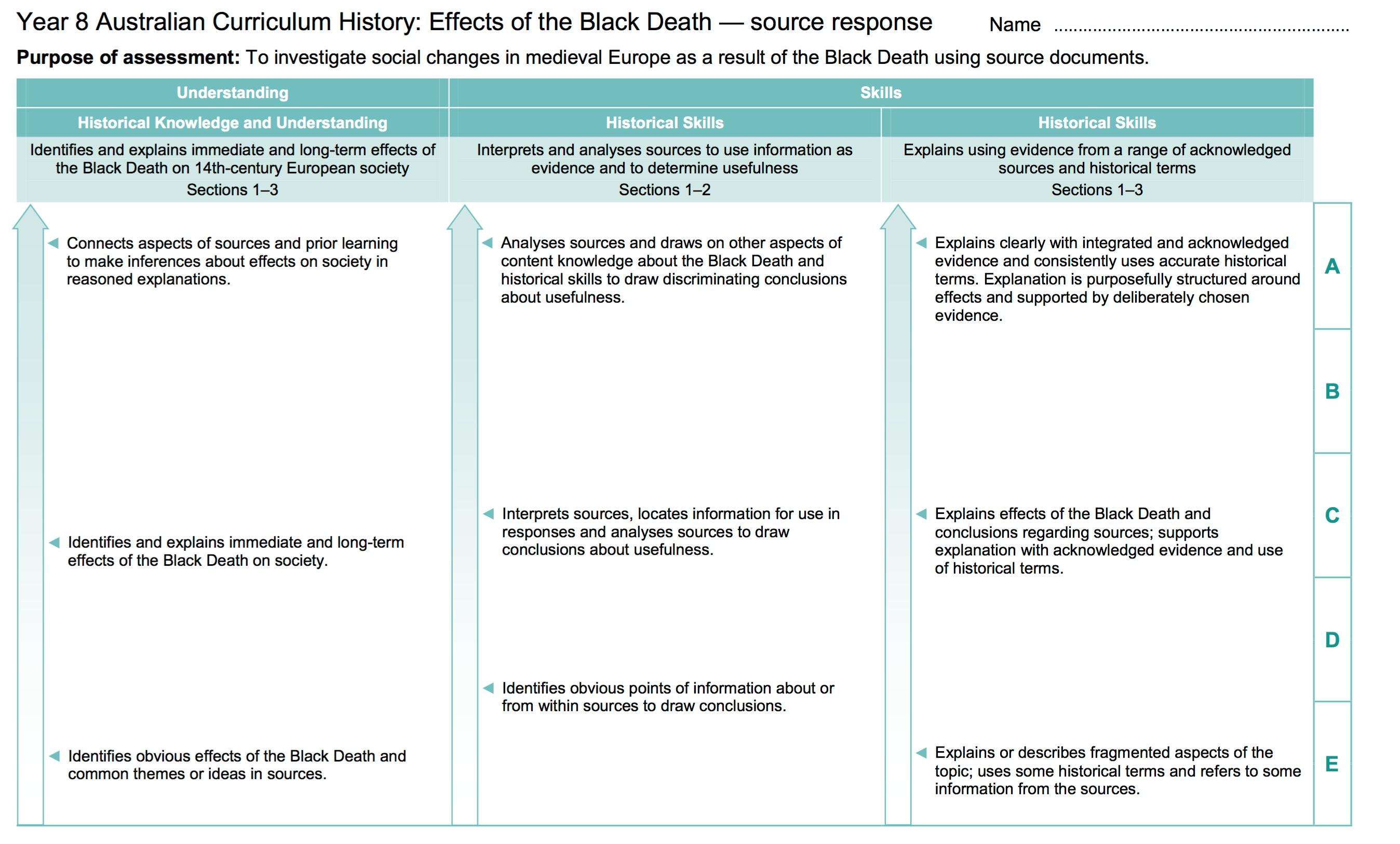
This is the GTMJ that will be used to mark your report/ newspaper article.
Conclusion
The purpose of this webquest has been to apply your historical interpretation skills and understanding to examine a variety of primary and secondary sources to explore the impacts of "The Black Death'. In addition, you have had to infer meaning through the anlaysis of a variety of sources to construct an historical opinion of a significant event. You have had to evaluate the popular beliefs of the time and how these changed society following the Black Death. In addition, you have then had to work in a group to complete the task. This has encouraged you to work with your peers and effectively manage the dynamics of group work.

Credits
Reference List:
Australian Curriculum, Assessment and Reporting Authority. (2016). Information and communication technology (ICT) capability/ learning continuum.
Australian Curriculum, Assessment and Reporting Authority. (2016). Year 8 History.
Ikpeze, C. H., & Boyd, F. B. (2007). Web‐based inquiry learning: Facilitating thoughtful literacy with WebQuests. The Reading Teacher, 60(7), 644-654.
Kanevsky, L. (2011). Deferential Differentiation What Types of Differentiation Do Students Want?. Gifted Child Quarterly, 55(4), 279-299.
Kolb, A. Y., & Kolb, D. A. (2005). Learning styles and learning spaces: Enhancing experiential learning in higher education. Academy of management learning & education, 4(2), 193-212.
https://www.youtube.com/watch?v=rZy6XilXDZQ
http://www.eyewitnesstohistory.com/plague.htm
http://www.themiddleages.net/life/blackdeath.html
https://en.wikipedia.org/wiki/Bubonic_plague#Types
http://www.eyewitnesstohistory.com/plague.htm
http://listverse.com/2013/01/21/10-crazy-cures-for-the-black-death/