
Introduction
Welcome to Space!
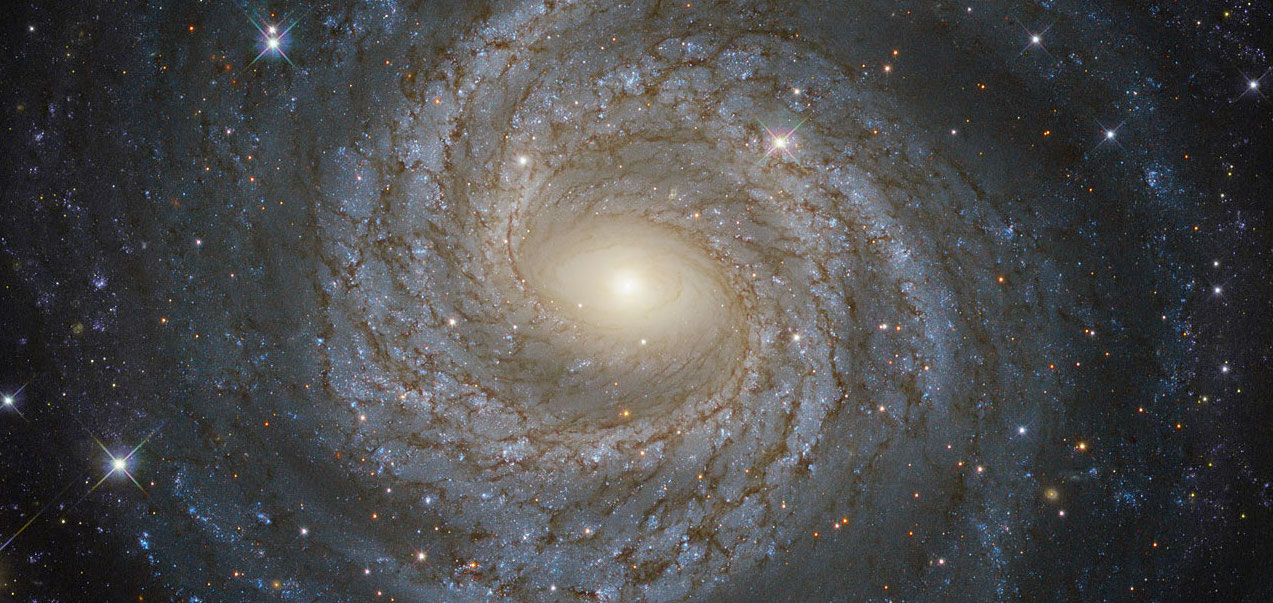
Welcome to NASA (National Aeronautics and Space Administration)
You have successfully completed 2 years of intense physical training and have now been selected to join the crew of elite astronauts venturing into space on our next planned mission. As a scientific astronaut, you must know the basics of space and travel first.
The subsequent component of your training involves you learning about the vastness of the universe, what it is like to live in space and how space exploration affects your daily life already. You will learn about gravity and the solar system as well as the history of space exploration to ensure that you are most prepared for your journey into the starry horizons.
All the best with your ventures!

Task
As part of your professional development you will be required to keep a journal (take notes) of your learning experiences and insights that you gain along the way. This will assist you in your final task, whereby you are required to create a presentation on your learning through the use of PowerPoint.
In groups of 3 to 4 you are required to create a 10-minute presentation that provides the rest of the class with an introductory overview of space and space exploration.
Your presentation should include an explanation of:
- Space and the solar system (including what is gravity and how it affects planetary orbit)
- What life in space is like
- The history of space travel and exploration
- How space exploration has changed our daily lives
- And a prediction of what space travel or life in space will look like in 50 years (be creative!)
The following websites and links are provided to guide you in your learning experience as well as prepare you for your final presentation.
Process
Once you have allocated yourself into groups of 3 to 4 (the same groups you will be presenting in) you may embark upon your learning journey.
There are 6 components and 12 sites in total. Remember to take notes.
Component One: Welcome to Space!
Explore the vastness and magnitude of space through the following two links.
The Scale of the Universe
How Far is it to Mars?
Component 2: What is Gravity?
Discover the forces that are responsible for keeping planets, comets and satellites in orbit.
Gravity – why do planets move in orbit?
https://fuse.education.vic.gov.au/content/35b31b62-977d-47c1-a5af-7858a531b30e/p/Index.html
Gravity – recap and quiz
https://fuse.education.vic.gov.au/content/2534d652-fb04-4733-bfa3-982e736511a7/p/index.html
Component 3: History of Space Exploration
Venture through some of history’s most unforgettable spaceflight moments
Exploration of Space Timeline (visual)
http://www.nationalgeographic.com/125/timelines/space-exploration/
Space Exploration Timeline (detailed)
http://www.archives.gov/research/alic/reference/space-timeline.html
Component 4: Life in Space
Investigate ways in which living in space differs to living on earth.
Living on the International Space Station (3 min 27 sec)
http://splash.abc.net.au/home#!/media/103968/
Life in Space: Astronaut Chris Hadfield’s Video Guide (8 short videos – choose 2 or 3 watch)
http://www.space.com/20616-astronaut-space-life-video-guide.html
Component 5: Impacts on Daily Life
Examine how space exploration impacts daily life through this interactive website.
How does space exploration affect your daily life?
http://www.nasa.gov/externalflash/nasacity/index2.htm
Component 6: The Future
Consider what spaceflight or life in space may look like in the years to come. Use these websites to inform your thinking and to stimulate your creativity!
Future of Spaceflight
http://science.nationalgeographic.com/science/space/space-exploration/future-spaceflight/
Mars One
Signs of Life Will Be Found by 2025
http://www.space.com/29041-alien-life-evidence-by-2025-nasa.html
Evaluation
The rubric below is to be used in the marking of the final presentation. There is to be one grading per group.

Conclusion
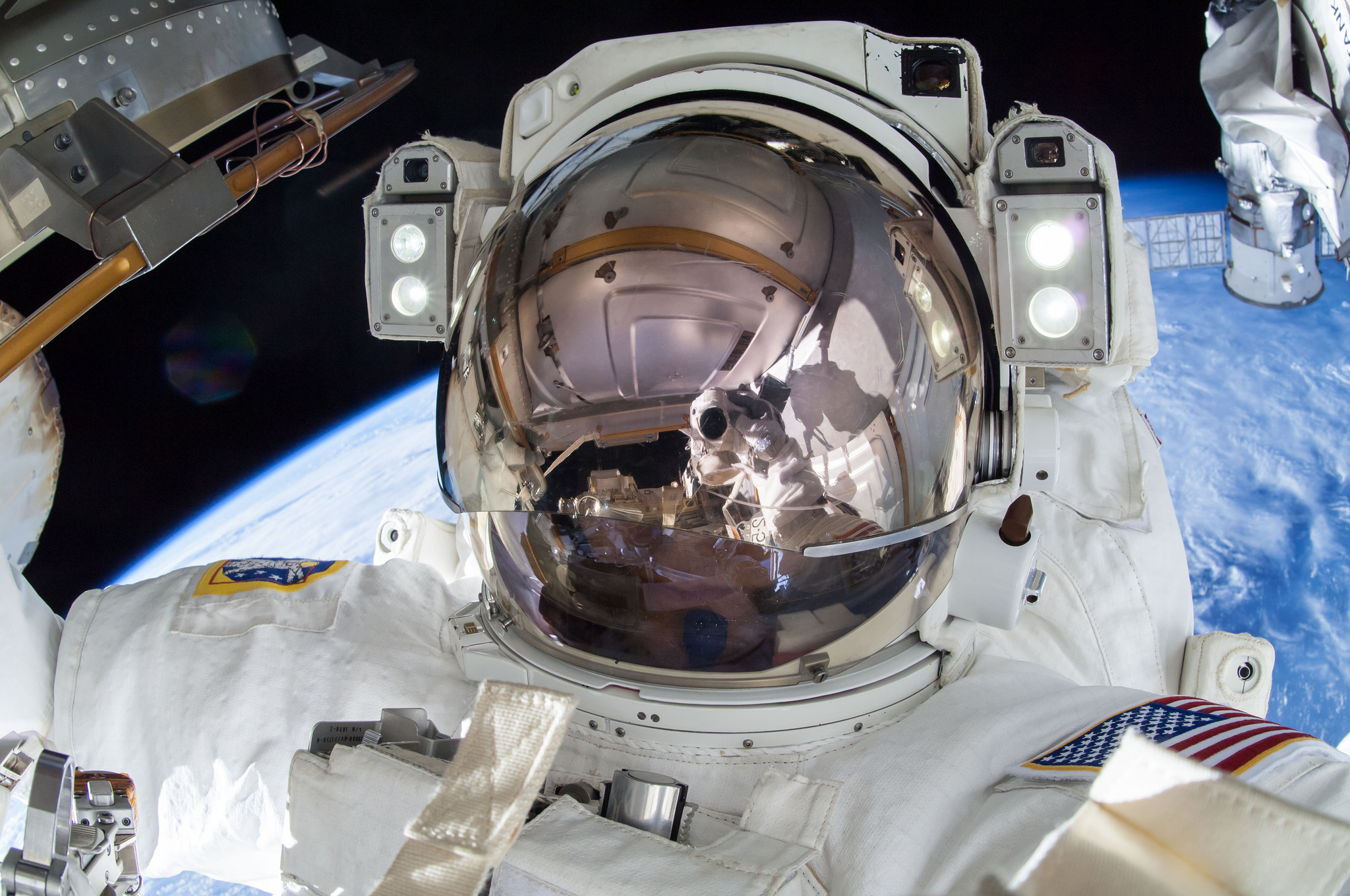
Congratulations - you have successfully completed the final component of your training!
Now that you have learned the fundamentals of space, space flight, what life in space is like and what it may look like in the future – you are ready to embark upon our next manned mission into space. It may be Mars; it may be to the Moon. For now though, well done, all the best with your presentation and remember – to infinity and beyond!
For further study or for your own perusal pleasure, check out some of the great websites below.
NASA for students
http://www.nasa.gov/audience/forstudents/9-12/index.html
The Hubble site: for spectacular images, videos and the latest news
International Space Station Live Feed: for a live view of Earth from the ISS above
Credits
All images used in this WebQuest were obtained from the following location:
NASA. (2016). Hubble Space Telescope Images. Retrieved 9 August 2016, from https://www.nasa.gov/mission_pages/hubble/multimedia/index.html
Conclusion References
N2YO. (2016). Live Streaming from the International Space Station. Retrieved 13 August 2016, from http://www.n2yo.com/space-station/
NASA. (2016). Hubble Site. Retrieved 13 August 2016, from http://hubblesite.org
NASA. (2016). NASA For Students. Retrieved 13 August 2016, from http://www.nasa.gov/audience/forstudents/9-12/index.html
WebQuest References
ABC Splash. (2016). Living on the International Space Station. Retrieved 13 August 2016, from http://splash.abc.net.au/home#!/media/103968/
Department of Education and Early Childhood Development. (2016). Gravity. Retrieved 13 August 2016, from https://fuse.education.vic.gov.au/content/35b31b62-977d-47c1-a5af-7858a531b30e/p/Index.html
Department of Education and Early Childhood Development. (2016). Gravity and the Solar System. Retrieved 13 August 2016, from https://fuse.education.vic.gov.au/content/2534d652-fb04-4733-bfa3-982e736511a7/p/index.html
Huang, C. & Huang, M. (2012). The Scale of the Universe 2. Retrieved 13 August 2016, from http://www.htwins.net/scale2/
Mars One. (2016). Mars One. Retrieved 13 August 2016, from http://www.mars-one.com
NASA. (2016). NASA at Home and City. Retrieved 13 August 2016, from http://www.nasa.gov/externalflash/nasacity/index2.htm
National Geographic. (2016). Future of Spaceflight. Retrieved 13 August 2016, from http://science.nationalgeographic.com/science/space/space-exploration/future-spaceflight/
National Geographic. (2016). Space Exploration Timeline. Retrieved 13 August 2016, from http://www.nationalgeographic.com/125/timelines/space-exploration/
Paliwoda, D. & Williams, J. (2016). How Far is it to Mars?. How Far is it to Mars?. Retrieved 13 August 2016, from http://www.distancetomars.com
Space.com. (2016). Life in Space: Astronaut Chris Hadfield's Video Guide. Retrieved 13 August 2016, from http://www.space.com/20616-astronaut-space-life-video-guide.html
Space.com. (2016). Signs of Alien Life Will Be Found by 2025, NASA's Chief Scientist Predicts. Retrieved 13 August 2016, from http://www.space.com/29041-alien-life-evidence-by-2025-nasa.html
The U.S. National Archives and Records Administration. (2016). Space Exploration. Retrieved 13 August 2016, from http://www.archives.gov/research/alic/reference/space-timeline.html
Rationale References
ACARA. (2012). The Shape of the Australian Curriculum: Technologies. Retrieved August 9 2016, from http://www.acara.edu.au/_resources/Shape_of_the_Australian_Curriculum_-_Technologies_-_August_2012.pdf
ACARA. (2016a). Science Curriculum. Retrieved 8 August 2016, from http://v7-5.australiancurriculum.edu.au/science/curriculum/f-10?layout=1#level10
ACARA. (2016b). Science Curriculum. Retrieved 8 August 2016, from http://v7-5.australiancurriculum.edu.au/science/curriculum/f-10?layout=1#level7
ACARA. (2016c). Information and Communication Technology (ICT) Capability Learning Continuum. Retrieved 21 July 2016, from http://www.australiancurriculum.edu.au/generalcapabilities/information-and-communication-technology-capability/continuum#layout=columns
Australian Academy of Science. (2015). 5Es Teaching and Learning Model. Retrieved 8 October 2015, from https://www.primaryconnections.org.au/about/teaching
Department of Education and Training. (2003). Quality teaching in NSW public schools: A classroom practice guide. Ryde, NSW: Professional Support and Curriculum Directorate.
Shaffer, D., & Kipp, K. (2010). Developmental Psychology: Childhood and Adolescence (8th ed.). Wadsworth: Cengage Learning.
Teacher Page
Rationale
This WebQuest was designed for a Year 10 Science class as an introduction to the Physical Sciences unit on Earth and Space Sciences (ACSSU188) in which students explore the universe, galaxies and solar systems (ACARA, 2016a). The purpose of this rationale is to explain and justify the effectiveness of the WebQuest in relation to relevant literature and research.
In alignment with the NSW Quality Teaching Model, this WebQuest was designed to meet the three dimensions that constitute quality learning and assessment; namely, intellectual quality, quality learning environment and significance (Department of Education and Training, 2003).
Regarding intellectual quality, the sites and resources selected allow students to develop deep understanding through the way in which knowledge is constructed upon as well as through the way students are required to engage in higher-order thinking. Deep learning is made conducive by constructing upon knowledge from previous years (ACSSU118) as well as through the chunked, scaffolded learning content within the task itself (ACARA, 2016b). For instance, within the WebQuest, students first learn about the forces of gravity relevant to planetary orbit followed by the way in which living in space resultantly differs to living on earth.
Regarding quality learning environment, the WebQuest allows for students to work collaboratively in groups, thus nurturing social learning. The way in which one learns more through collaboration with others is explained within Vygotsky’s Theory of Social Learning and is depicted within his Zone of Proximal Development Model (Shaffer & Kipp, 2010). In relation to significance, learning is made meaningful and important to students by way of connecting learning to students’ personal lives. For example, through the way in which students are required to explore how space exploration already affects their daily lives.
Another practical framework that was referred to in the development of this WebQuest was the 5E’s model. The 5E’s model is an inquiry oriented teaching and learning framework that focuses on the progression of five phases: Engage, Explore, Explain, Elaborate and Evaluate (Australian Academy of Science, 2015). In relation to the WebQuest, Component 1 was designed to interest and engage students as they actively explore the universe and space through interactive websites. Component 2 focussed on explaining theoretical concepts whilst Components 3, 4, 5 and 6 elaborated upon such, leaving the final task as a means of evaluation.
Incorporating ICT into pedagogy, as guided by the ICT Learning Continuum, is highly beneficial to the classroom as it not only increases levels of student engagement but assists in creating self-sufficient life-long learners (ACARA, 2016c). Similarly, integrating ICT into the classroom, such as by way of WebQuests also ensures that students are being actively prepared for careers in a technology-driven future.
The sites within the WebQuest were selected for their media-rich, contemporaneous and contextualised information that stimulates interactivity. Furthermore, the interactive resources and websites in combination with the final task allows students to receive personalised learning experiences by the way in which they are required to collaboratively and innovatively create and design. Requiring students to analyse, evaluate and create furthermore fosters students’ intrinsic motivation as well as engagement (ACARA, 2012).
In conclusion, this WebQuest not only introduces students to the topic of Earth and Space Sciences in an engaging and media-rich way, but it also allows for deep learning through collaborative and constructive scaffolding. Quality learning is facilitated through interactive sites and is ensured through the final task, which requires higher order thinking skills such as creativity and imagination. Lastly, significance to students is ensured through the way in which content is related to students’ individual and personal daily lives.