
Introduction
By Mrs Kristi-Leigh Paterson
This term we are focussing on the topic of Drugs, Tobacco & Alcohol and its effects on the wider community, particularly within Australia. This lesson we will be looking into the effects of Alcohol in the community and the social and cultural factors surrounding its consumption. This WebQuest will assist you in evaluating and applying health information from a range of sources to health decisions and situations. This is to be completed during allocated classtime. Anything not completed with in classtime must be finished at home.
Essential Questions to be answered throughout this WebQuest:
1. What social and cultural messages are portrayed in Australian media?
2. What affect does alcohol have on the body?
3. How can I discern at-risk behaviour?
4. What are appropriate laws andpenalties surrounding alcohol consumption?
At the end of the lesson, students can:
- Evaluate and Analyse personal and social motivations for consuming alcohol within Australian society and culture.
- Recall thehealth risks and effects that drinking alcohol has on different parts of the body in males and females.
- Understand the legal implications and consequences for alcohol misuse and misconduct.
Task
You will be viewing alcohol advertisements in order to identify stereotypes and discuss the assumptions made about Australian culture.
You will research and investigate the effects of drinking alcohol on major organs and the different effects between males and females.
You will also be able to see distinct lifestyle differences between low and high risk alcohol consumers and evaluate strategies to improve their health and wellbeing.
By evaluating and creating your own appropriately deemed legal penalties regarding alcohol consumption and comparing them to the actual penalties you will gain multiple perspectives on the topic.
This task is to be completed and submitted individually, however you may feel free to have constructive discussions with a partner. Please be aware that this can be a senstive topic and refrain from sharing personal experiences and asking personal questions regarding the subject.

Throughout the WebQuest you will be required to answer questions using the Socrative Student Application assigned to room TCBGR7AR. Have this open before you begin.
Process
This task will be completed through a number of activities please complete them in order:
Activity 1: YouTube Task. (Socrative Questions 1 & 2)
Watch the following clips and then respond to the questions in Socrative (room: TCBGR7AR).
- https://www.youtube.com/watch?v=Lw8J0rkAVs4
- https://www.youtube.com/watch?v=7g4Z1OYnlDM
- https://www.youtube.com/watch?v=E64CKQBsqGs
- https://www.youtube.com/watch?v=7b3S6tqiHHU
What does Australian media suggest about Alcohol consumption?
What are some prevalent social and gender stereotypes apparent in the commercials?
Activity 2: Interactive Research Task. (Socrative Questions 3 - 10)
Research the health effects that alcohol can have on major bodily organs using the interactive Drinkwise website.
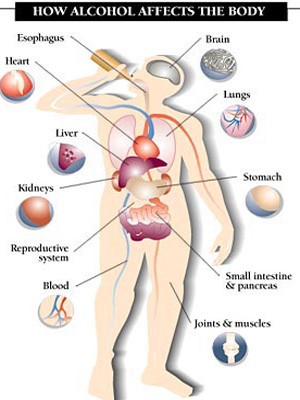
This website allows you to select each organ from an image and read about the health effects that moderate and heavy drinking can have. Feel free to explore the related articles on each organ. You are to answer 8 questions in the in Socrative room that are specifically formulated from the related articles to encourage you to delve deeper into their research and gain further insight into the health effects.
Activity 3: Assess Your Drinking Activity (Socrative Questions 11 & 12)
You are to answer a questionarre from the “At Ease” government website based on the character profiles given in Socrative questions 11 & 12. The character profiles of a male and a female include information regarding their lifestyles and drinking habits. Using your judgement based on their profile, answer the questionarre to assess their drinking. You will be able to discern distinct lifestyle differences between low and high risk alcohol consumers and evaluate strategies to improve their health and wellbeing.
Activity 4: Your Rules (Socrative Question 13 & 14)
This activity requires you to formulate a list of rules, regulations, and penalties relating to the consumption of alcohol and behaviour whilst under the influence (UTI).
You may discuss and brainstorm this with the person next to you. Also consider the perspectives of the following: a policeman, a paramedic, an alcohol company, a civilian with a young family, an alcoholic, a court judge, a local pub owner and licensee, and a teenager with a provisional driver’s license.
Once you have established at least five rules for drinking alcohol in Australia, explore and compare them to the actual laws outlined in the following websites.
Evaluation
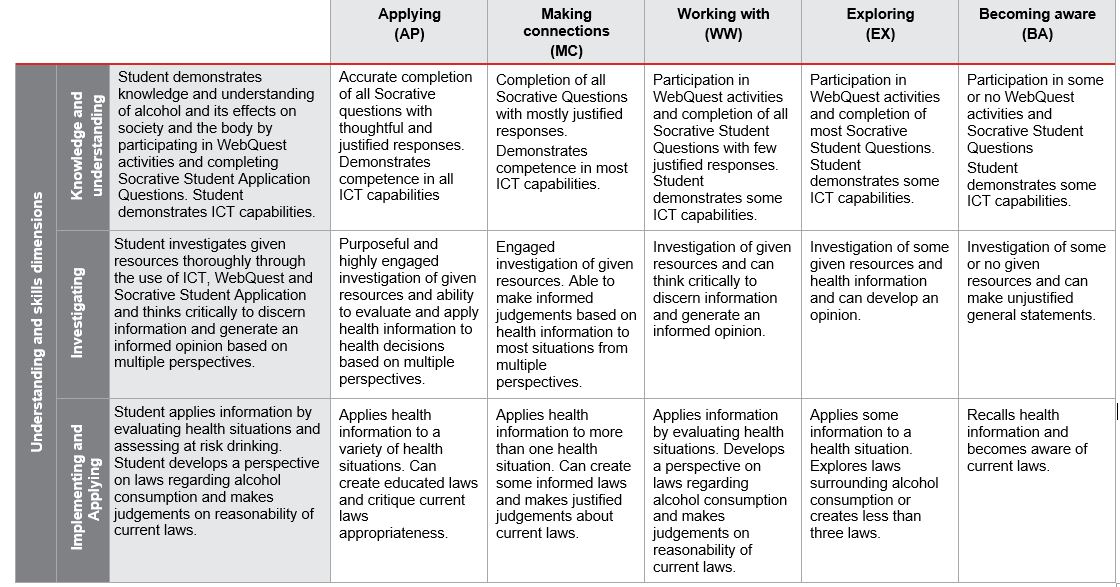
Australian Curriculum Year 9 Health and Physical Education ׀ Task-specific standards — matrix | Mrs Kristi-Leigh Paterson | 1070730
Alcohol Investigation
©The State of Queensland (Queensland Curriculum and Assessment Authority) and its licensors 2015. All web links correct at time of publication.
Purpose of assessment: This assessment as learning allows for student-directed inquiry-based learning and its purpose is for students to evaluate and apply health information from a range of sources to health decisions and situations as well as critique strategies to enhance health safety and wellbeing of their communities and critique behaviours and contextual factors that influence the health and wellbeing of their communities.
Conclusion
Congratulations on completing this WebQuest!
It should have deepened your understanding of the social and cultural factors that affect consumption of alcohol and the gender stereotypes that are portrayed in media.
Through your research you would have discovered the effect alcohol has on the body and the different affects it can have on males and females.
You would have evaluated and applied your knowledge to a real scenario by assessing two characters' drinking habits by rating them as at low, medium or high risk.
Lastly, you formulated your own laws using your judgement and evaluated the current laws based on multiple perspectives.
Next lesson we will be building on our knowledge and understanding of Alcohol in society and delve into Tobacco as our next topic.
Closing Activity:
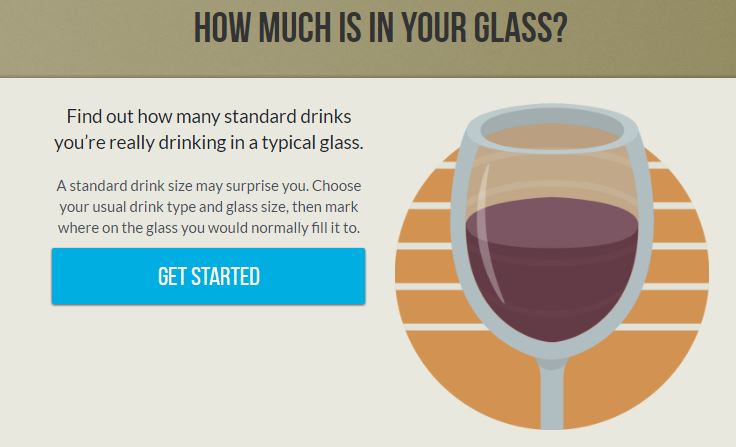
Visit this website and estimate what level of a glass is considered a ‘standard’ drink depending on the type of alcohol. Report your attempts in the next class!
(This task is not compulsory. However, if you are interested in what constitutes a standard drink you may find this website relevant and interesting.)
Credits
Special Thanks to:
Alcohol & your health. (2016). DrinkWise Australia. Retrieved 9 August 2016, from https://drinkwise.org.au/alcohol-and-your-health/#
Ilja TV, (30th April 2014). How to speak Austrlian, Foster's Beer Commercial. Retrieved from https://www.youtube.com/watch?v=Lw8J0rkAVs4
Liquor fines and penalties for non-compliance | Queensland Government. (2016).Business.qld.gov.au. Retrieved 16 July 2016, from http://www.business.qld.gov.au/industry/liquor-gaming/liquor/compliance…
Minors and under-age drinking on licensed premises | Queensland Government. (2016). Business.qld.gov.au. Retrieved 10 July 2016, from http://www.business.qld.gov.au/industry/liquor-gaming/liquor/compliance…
mUmBRELLA, (18th February 2010). XXXX GOLD - Treadmill by BMF. Retrieved from https://www.youtube.com/watch?v=E64CKQBsqGs
mUmBRELLA, (18th February 2010). XXXX GOLD - Barra by BMF Retrieved from https://www.youtube.com/watch?v=7b3S6tqiHHU
Socrative. (2016). Socrative.com. Retrieved 11 August 2016, from http://www.socrative.com
Spacdud, (6th May 2013). Australian Beer Commercial *Carlton Mid*. Retrieved from https://www.youtube.com/watch?v=7g4Z1OYnlDM
The Right Mix. (2016). Therightmix.gov.au. Retrieved 3 August 2016, from https://www.therightmix.gov.au/how-risky-is-your-drinking?step=1
Wendt, M. (2016). Alcohol - Legal Aid Queensland. Legalaid.qld.gov.au. Retrieved 16 August 2016, from http://www.legalaid.qld.gov.au/Find-legal-information/Personal-rights-a…
Images:
Socrative. (2016). Socrative.com. Retrieved 11 August 2016, from http://www.socrative.com
Alcohol & your health. (2016). DrinkWise Australia. Retrieved 9 August 2016, from https://drinkwise.org.au/alcohol-and-your-health/#
Teacher Page
Rationale:
This WebQuest was developed for a Year 9 Health and Physical Education (HPE) theory class based on the Years 7 to 10 HPE document by Australian Curriculum in Queensland (ACiQ). ACiQ was developed by the Queensland Curriculum and Assessment Authority (QCAA) who developed advice, guidelines, and resources incorporating the Australian Curriculum. Integrating a WebQuest into teaching and learning allows for a critical inquiry approach, independent student-directed learning and also addresses Information Communications Technology (ICT) Capabilities from the Australian Curriculum Assessment and Reporting Authority (ACARA). This particular WebQuest addresses the topic of Alcohol within the Drugs, Alcohol and Tobacco unit and correlates specifically to content descriptions:
Evaluate and apply health information from a range of sources to health decisions and situations (ACPPS095).
Plan, implement and critique strategies to enhance the health, safety and wellbeing of their communities (ACPPS096).
Critique behaviours and contextual factors that influence the health and wellbeing of their communities (ACPPS098).
(Australian Curriculum, 2016)
The main pedagogical advantage this task has for students is its allowance for inquiry based learning that is student-directed. A social critical inquiry approach is embedded in the Australian Curriculum HPE Syllabus. This encourages students to think critically, make decisions and solve problems to complete investigations (QCCA, p.21, 2016). The Inquiry approach refers to instructional practices that promote “development of higher order intellectual and academic skills through student-driven and instructor-guided investigations” (Hudspith & Jenkins 2001 cited from Justice et al., 2009). Students who learn through inquiry, and learn to become inquirers “master the process and skills involved in establishing concepts and facts and are equipped to be effective researchers and lifelong learners” (Justice et al., 2009). As opposed to traditional didactic teaching methods, students who are actively engaged with content through a personal interest reach a deeper understanding and greater integration and internalisation of information (Abdal-Haqq, 1998 cited from Justice et al., 2009). In conjunction with this approach, ICT can provide a way for making learning more relatable and therefore, more engaging.
The integration of ICT within education can be a helpful tool in engaging students but should only be used if it is purposeful to deepening students’ knowledge and understanding of a topic. The specific ICT’s used throughout this lesson were chosen because they will deepen student understanding of alcohol in Australian culture, the health implications depending on amount consumed, and the legal regulations surrounding alcohol. Additionally, it is believed that using these ICT’s will make the lesson relevant to the students, make them aware of health services available to them as well as encourage computer literacy and research skills. The ICT capabilities incorporated in this assessment as learning WebQuest include three of the five ICT capabilities: investigating with ICT, communicating with ICT and managing and operating ICT. Additionally, the inclusion of Socrative alongside WebQuest was a way of monitoring student engagement and progress as well as providing evidence of learning for evaluation.
Each individual activity within the process of this WebQuest was constructed based on current Educational theory. Killen (2013, p.312) states that “web-based research creates some exciting learning opportunities,” however, some precautions need to be taken with internet research in the classroom. Using preselected sources for student-lead research is an effective way of ensuring that websites are safe and credible. Another problem that arises with this activity is the proposition that students will easily copy and paste information without effective cognitive processing. The way the Socrative Quiz is designed combats this by requiring students to source information from various links on a given website and to answer specific multiple choice, true or false, and short answer questions.
The character profiles for assessing drinking is adapted from a role play teaching strategy and also effectively integrates ICT. This activity removes students from personally completing the assessment within the classroom and enables them to identify and critique strategies to improve someone’s health whether they have a low or high risk drinking habit. Role play used in this activity aims to “challenge students with problems that are beyond their existing level of experience and facilitate the process of finding the solution to such problems” (Vincent & Shepherd, 1998:2, cited from Killen, 2013, p.343). This activity demonstrates effective pedagogy because it brings “realism to student’s learning and helps to make it relevant” (Killen, 2013, p.344). Additionally, students are made aware of a reliable health service that they can access in the future if they ever need information or are seeking help.
The formulation of regulations by students based on the views of certain professionals, encourages students to “explore a diversity of perspectives” allowing them to gain a much broader understanding of the topic (Killen, 2013, p.165). It requires students to use higher order thinking skills as identified in Bloom’s Revised Taxonomy (Anderson & Krathwol, 2001, cited from Duchesne et al, 2013, p. 218). Before being able to formulate, students must recall prior knowledge and understanding of the issue before being able to analyse, evaluate, and create suitable laws. This activity is effective in scaffolding learning from the lower to the higher order thinking skills in order to deepen knowledge and understanding surrounding alcohol consumption and its health and legal implications.
The Standard Elaborations (SE) used for this Task were founded on the Years 7 to 10 HPE document by ACiQ. The understanding and skills dimensions for this task included: knowledge and understanding, investigating, and implementing and applying. These criteria will be mostly evident in the Socrative results and through in-class observation of engagement and discussion.
It is believed that this WebQuest and Socrative Quiz will be highly effective in engaging students in learning, promoting ICT capabilities and fostering lifelong learning through the skills of investigation and inquiry.
Word Count: 920
References:
Anderson, L. W., & Krathwohl, D. R. (Eds.) (2001). A taxonomy for learning, teaching, and assessing: A revision of Bloom’s taxonomy of educational objectives. New York: Longman.
Essential learnings. (2016). www.qcaa.qld.edu.au. Retrieved 12 August 2016, from https://www.qcaa.qld.edu.au/downloads/p_10/qcar_el_ae_kla.pdf
Health and Physical Education Foundation to Year 10 Curriculum by rows - The Australian Curriculum v8.2. (2016). Australiancurriculum.edu.au. Retrieved 16 August 2016, from http://www.australiancurriculum.edu.au/health-and-physical-education/cu…
Information and Communication Technology (ICT) Capability - In the learning areas - The Australian Curriculum v8.2. (2016). Australiancurriculum.edu.au. Retrieved 16 August 2016, from http://www.australiancurriculum.edu.au/generalcapabilities/information-…
Information and Communication Technology (ICT) Capability - Introduction - The Australian Curriculum v8.2. (2016). Australiancurriculum.edu.au. Retrieved 16 July 2016, from http://www.australiancurriculum.edu.au/generalcapabilities/information-…
Information and Communication Technology (ICT) Capability - Key ideas - The Australian Curriculum v8.2. (2016). Australiancurriculum.edu.au. Retrieved 16 August 2016, from http://www.australiancurriculum.edu.au/generalcapabilities/information-…
Justice, C., Rice, J., Roy, D., Hudspith, B., & Jenkins, H. (2009). Inquiry-based learning in higher education: Administrators' perspectives on integrating inquiry pedagogy into the curriculum. Higher Education, 58(6), 841-855. doi:http://dx.doi.org.ezproxy.usc.edu.au:2048/10.1007/s10734-009-9228-7
Killen, R. (2013). Effective teaching strategies: Lessons from research and practice 6th ed. South Melbourne, VIC: Cengage Learning Australia, Print.
Queensland Studies Authority. (2014). Building Student Success: A Guide to the Queensland Curriculum, Assessment, and Reporting Framework. Retrieved from https://www.qcaa.qld.edu.au/downloads/p_10/qcar_building_student_succes….
Queensland Curriculum Assessment Authority. (2016). Years 7 to 10 Health and Physical Education Australian Curriculum in Queensland — assessment and reporting advice and guidelines. (1st ed.). Retrieved from https://www.qcaa.qld.edu.au/downloads/p_10/ac_hpe_yr7-10.pdf