
Introduction
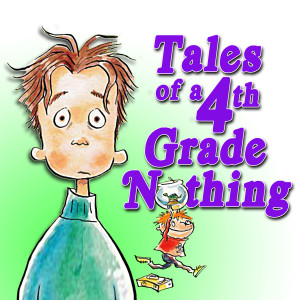
Do you have a younger brother, sister or cousin who annoys you? Do they always get into your things or try to be like you? Well, you are not alone. Poor Peter! His little brother Fudge is driving him crazy. Fudge is always the center of attention, while Peter is polite and watches out for Fudge. Fudge is always getting into Peter’s personal stuff and throwing tantrums if he does not get his own way. What could possibly be going through Peter’s mind when Fudge behaves this way? How do you feel when your younger brother, sister or cousin behaves like Fudge? What is a fourth grader supposed to do? I think you may already have some ideas that might help Peter. Sometimes, if you are upset or angry about something, writing your feelings down can help. Do you think this is what Peter is doing as he tells his story through the author of the novel, Judy Blume? By understanding what the author writes or does not write, a good reading detective can then make "inferences" or fill in what the author does not say in the book. If we can make inferences, we are better able to understand how a character may feel or what he thinks about his situation. Inferences can also help readers to ask meaningful questions that help us to understand what the author of a book wants us to figure out for ourselves. In addition, inferring helps us to see how characters change throughout the novel. I think we can look for clues in each chapter of the book that will help us figure out how Peter feels about his younger brother and his situation Let's get started!
Task
Okay reading detectives, are you ready to help Peter? Let’s find out just how Peter feels about his life and how his feelings change by the end of the book. Remember that not all authors tell you everything. They want you, the reader, to figure out some things for yourself. I think we can figure out how Peter is feeling if we read carefully and look for clues in the pictures or the words to help us figure this out.
Your task is to start with Chapter One and to look for clues that Judy Blume has left for us throughout this chapter and all of the other chapters in the book. The clues you read might begin with sentences such as "I think..." or "I feel..." When you come across a statement that starts with these words or any clues that may provide you with an idea of how Peter feels about things, you will write your inferences on the "Inference Worksheet"
Process

Click on the first attachment below. All of your answers can be typed onto this sheet, and then emailed to Mrs. Ryals to mark.
Read the questions on the sheet and answer only the inferences - the parts that say: "I think…" or "Maybe…" Do not fill in the parts that say "Evidence from the book"
Now click on the "Tales of a Fourth Grade Nothing" link below and read Chapters One and Two.
After you have finished reading the chapters, go back to the inference sheet and fill in "Evidence from the book" by writing down the clues the author gives us.
If the inferences you made at the beginning are not correct, reread the evidence in the book and determine what it was that the author wrote that made you change your mind.
Don't forget to save your worksheet!.
Then, move onto the next worksheet for Chapter 3.
20120826013108ereNu.doc
Chapter 2 Inference Sheet
20120826013108uTyNe.doc
Chapter Three Inference Sheet
Evaluation
| Evaluation Rubric | ||||||||||||||||||||||||||||||||||||
|
|
||||||||||||||||||||||||||||||||||||
|
Conclusion
Wow!
You did a great job making inferences based on what the author was not telling you. Not only did you make inferences, you found the evidence from the chapters to prove that your inferences were correct! You are on your way to becoming a top-notch reading detective - you just proved it! Now when you read books, you are going to be able to figure out what the authors may not tell or make obvious to you and filling in that information as you read!
Good work reading detectives!
Teacher Page
Focus:
This WebQuest focuses on reading for meaning. The objective of this webquest is to help students learn to make inferences before, during, and after reading in order to make deeper meaning of a text.
I would recommend starting this project immediately after you have introduced and modelled how to make inferences before reading and are preparing the students to begin reading Chapter One in the novel "Tales of a Fourth Grade Nothing." This way, the students will have some background knowledge as they begin to work towards independent reading skills that include complex reasoning and critical-thinking.
- Students will learn to look for clues in a text, in pictures, and in their own knowledge that will help them make sense of the text.
- Students will learn that some authors write very little text but leave clues for the reader to discover and interpret.
- Students will fill in what an author leaves out and write down their inferences using evidence from the text.
- Students will describe how making inferences helps them to understand a story better.