
Introduction
Diane Schnell
How Do Plants Grow?

You will be conducting investigations in order to build a better understanding of plant growth and adaptations. You will be given a list of websites to explore in order to help you understant the life cycle of a plant, and how the environment affects plant growth and survival. You will also grow a plant and record in your journal your investtigation. Before we start tell me what you already know about plants, their growth, and how they adapt to their surroundings?
Get your Science Journal Ready to start exploring!
Click on the Task button to move on:
Task
Your Task is to Answer these Questions:
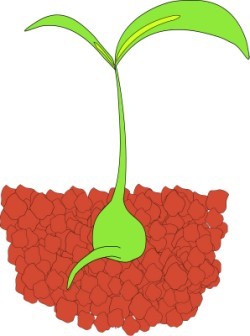 Students will be working both independently and in groups.
Students will know the parts of a vasclar plant.
Students will Identify and label the main parts of a plant.
Students will Identify the stages in the life cycle of a plant.
Students will Explain how the environment affects plant growth.
Students will describe and explain the different ways plants can reproduce.
Process
Session 1: Experiment bean plant- (partner work)
Material: seeds, dirt, plant pot, water, journal
Step 1 - Watch short you-tube video
https://www.youtube.com/watch?v=tkFPyue5X3Q&list=PLAIN8p49-a3gbHTFqolErBUtXswxGo8JY
Step 2- Get our your supplies. You and your partner will write in your journal. Write down what your prediction will be? What will happen when you plant your seed? Explain the process of planting the seed? You will create a table to show what will happen to your seed for the next 4 weeks.
Step 3- You will put small rocks in the bottom of your pot to help with drainage. Then you will half fill your pot with soil. Next you will add your seeds. Then cover the seed with dirt. Finally you will water your seed.
What do you need to do to help your seed to grow?
Session 2: Parts of a Plant- Independent work
Materials: Article: The Great Plant Escape, Activity Sheet, Journals
Step 1: you will click on http://www.urbanext.uiuc.edu/gpe/case1/c1facts2a.html
Step 2: You will reead about the different parts of a plant and their jobs. You will read all of Case 1- (link)http://www.urbanext.uiuc.edu/gpe/case1/c1facts2a.html
Step 3: When you have finished reding, get the Plant Parts Activity Sheet from your teacher. Using the plant part names a the bottom of the activity sheet, fill all the parts of the plant on the diagram.
Step 4: When you have finished, go to parts of a plant to check your answers. Since this is all about learning, you may correct any answers you may have gotten wrong.
Session 3: Life Cycle of Plant (Independent)
Materials: Brain Pop, Journals, Activty sheet
Step 1: You will log into BrainPop: [video:https://jr.brainpop.com/science/plants/plantlifecycle/preview.weml]
https://www.brainpop.com/science/cellularlifeandgenetics/plantgrowth/
Watch Video and then answer the questions at the end of the short video clip. You will go back and check answers. You may go back and correct answers.
Step 2: Get the Life Cycle Flow Map and fill it in. Using the flow map illustrate and write a brief description of each stage.
Session 4: Vascular Plant Parts (Science books)(Work with a Partner)
Materials: potted plant, newspaper, ruler, hand lens, Science journals, observation chart, science books
Step 1: Hold the potted plant upside down over the newspaper. Tap the pot gently until the plant comes out. Shake the soil fromt the roots so you can see them clearly.
Step 2: Observe the leaves of the plant. Measure and calculate their agverage length and width. Use the hand lens to obsrve the leaves more closely. Record your observations.
Step 3: Observe the stem. use the hand lens to see it in more details. Does it bend? does it have branches? Record your observations.
Step 4: Observe the roots. Notice their shape. Measure and calculate their average length. Use the hand lens to observe them more closely. Record your observations.
Step 5: Make a drawing of the plant. Label all the parts.
Step 6: Put the soil and the plant back into the pot, and water the plant lightly.
Step 7: Draw Conclusion: (Write in your journal)
1. What do you observe about each part of the plant?
2. What can you infer about the functions of roots, stems, and leaves?
Session 5: Powerpoint Presentation -(Partners)
Now it is your turn to create a powerpoint presentation telling the class everything you have learned about plants. You will use Google class to do this. You can use your science notebooks, flow map, and any websites you have used to help you successfully complete this task.
- Slide 1- The parts of a plant
- Slide 2- The stages in the life cycle of a plant
- Slide 3- The environmental conditions plants need to grow
- Slide 4- The different ways in which plants can reproduce/seeds travel
- Slide 5-Free choice-Be creative and tell us 1 interesting fact tha you have learned while completing this webquest.
You will share your powerpoint with the class.
Evaluation
Evaluation Rubric-Powerpoint Presentation
The following rubric shows you how you will be graded on " How Do Plants Grow?" Powerpoint activity. Refer back to this page often to make sure that you are on task and have everything completed for the project.
|
|
Exemplary -4 |
Very Good-3 |
Developing-2 |
Beginning -1 |
Score |
|
Appearance |
Work is neatly done.
|
Work is mostly neat and presentable |
Work is somewhat neat. |
Work is sloppy and not presentable. |
|
|
Mechanics |
No Misspellings or grammatical errors.
|
Two or less misspellings and /or grammatical errors.
|
Three misspellings and/ or grammatical errors. |
Four or more misspellings and/or grammatical errors. |
|
|
Content |
Information in all activities powerpoint are accurate and appropriate. Subject knowledge is excellent.
|
Information in most of the activities and powerpoint are accurate and appropriate. Subject knowledge appears to be good. |
Information in activities and powerpoint are somewhat accurate. May lack some information. |
Content is minimal or there are several factual errors. |
|
|
Requirements |
All requirements are met and exceeded expectations. You have 5 slides.
|
All requirements are met. You have 4 slides. |
One requirement was not completely met. You have 3 slides. |
More than one requirement was not completely met. You have 2 slides. |
|
|
Comments/ Total Score |
|
Evaluation Rubric-Journal
The following rubric shows you how you will be graded on "How Do Plants Grow?" Webquest activity/Journal activity. Refer back to this page often to make sure that you are on task and have everything completed for this project.
|
|
Exemplary -4 |
Very Good-3 |
Developing-2 |
Beginning -1 |
Score |
|
Observation Journal Questions (Each Page is a single grade) |
Students accurately completes 9 out of 10 to the best of his/her ability. |
Students accurately completes 8 out of 10 to the best of his/her ability. |
Students accurately completes 7 out of 10 to the best of his/her ability. |
Students accurately completes 6 or less questions to the best of his/her ability. |
|
|
Mechanics |
5 or 6 Misspellings or grammatical errors.
|
7 or 8 misspellings and /or grammatical errors.
|
9 or 10 misspellings and/ or grammatical errors.
|
11 or more misspellings and/or grammatical errors. |
|
|
Content |
Information in all activities are accurate and appropriate. Subject knowledge is excellent.
|
Information in most of the activities are accurate and appropriate. Subject knowledge appears to be good. |
Information in activities are somewhat accurate. May lack some information. |
Content is minimal or there are several factual errors. |
|
|
Requirements |
All requirements are met and exceeded expectations.
|
All requirements are met. |
One requirement was not completely met. |
More than one requirement was not completely met. |
|
|
Participation |
Students constantly makes an effort to actively participate in the WebQuest process.
|
Students makes an effort to actively participate in the WebQuest process. |
Students sometimes makes an effort to participate in the WebQuest process. |
Students hardly makes an effort to participate in the WebQuest process. |
|
|
Comments/ Total Score |
|
Conclusion
Studetns will be able to label the main parts of a plant, describe and illustrate the stages in the life cycle of a plant, explain how the enviromnet affects plant growth, and explaint the different ways palnts can reproduce. Students will observe vascular plant parts explain the purpose of the leaf, stem and roots. Studetns will use the powrpoint that they create to review and they will use this information to teach the class about the parts of a plant.

Credits
Resources Used:
http://www.urbanext.uiuc.edu/gpe/case1/c1facts2a.html
This website is titled "The Great Plant Escape."Stdents will read about the different parts of a plant and their jobs. It also has a button that takes students through a spanish version for English Language Learners to explore.
http://www.sciencekids.co.nz/gamesactivities/plantsgrow.html
This website is titled " Fun Science for Kids" Stuudents can use this website to find information for their powerpoint.
https://www.youtube.com/watch?v=ql6OL7_qFgU
Fun song for students to listen to when they are working. It is all about plants.
https://www.youtube.com/watch?v=1PRRWFyzAS0
Students will watch this Magic School Bus Video Plants grow
https://www.youtube.com/watch?v=tkFPyue5X3Q&list=PLAIN8p49-a3gbHTFqolErBUtXswxGo8JY
Students will watch this video to see how plants grow.
https://www.youtube.com/watch?v=czRUxCJwVjw
Introduction of plants growing
Text Book, HSP Life Science - Pennyslvania Science, 2009 Harcourt School Publishers, Florida
BrainPop: Interactive video activity https://jr.brainpop.com/science/plants/plantlifecycle/preview.weml
Teacher Page
The target learners for this webquest are studetns in 5th grade. Chidlren will explore websites to help them understand the life cycle of a plant, the parts of a plant, and how the enviromnet affects plant growth and survivial.
Goals:
S3.1.7.C
- Understand how theories are developed.
• Identify questions that can be answered through scientific investigations and evaluate the appropriateness of questions.
• Design and conduct a scientific investigation and understand that current scientific knowledge guides scientific investigations.
• Describe relationships using inference and prediction.
• Use appropriate tools and technologies to gather, analyze, and interpret data and understand that it enhances accuracy and allows scientists to analyze and quantify results of investigations.
• Develop descriptions, explanations, and models using evidence and understand that these emphasize evidence, have logically consistent arguments, and are based on scientific principles, models, and theories.
• Analyze alternative explanations and understanding that science advances through legitimate skepticism.
• Use mathematics in all aspects of scientific inquiry.
• Understand that scientific investigations may result in new ideas for study, new methods, or procedures for an investigation or new technologies to improve data collection.
S3.2.7.B
- See Science as Inquiry in the Introduction for grade level indicators.
S3.3.7.A
- See Science as Inquiry in the Introduction for grade level indicators
S3.3.7.C
- See Science as Inquiry in the Introduction for grade level indicators.
Objectives:
- Know the parts of a vascular plant
- Understand the funcitons of roots, stems, and leaves
- Understand how the plants reproduce
- Describe how plant organs work together during the process of photosynthesis
- Understand the cell division affect on growth
- Know the characteristics inherited