Introduction
Welcome to the weblesson about the musculoskeletal system! At the end of this lesson, you will able to answer;
-How does the musculoskeletal system help to maintain life?
-What is the muscluoskeletal system?
Task
Answer the following questions with the link provided:
http://kidshealth.org/en/teens/bones-muscles-joints.html#
Through what process are bones made?
What are joints?
What vitamin is needed to make bones hard?
Define Cartilage.
what does the cerebellum do?
Difference between flexors and extendors?
Name four mucles in the body
What are the different kinds of muscles?
State and define two different types of problems that can occur within the body?
Process
Play these games to test your existing knowledge of the system.
Hangman:
http://www.proprofs.com/games/word-games/hangman/musculoskeletal/
Wack-A-Bone
http://www.anatomyarcade.com/games/WAB/WAB.html
Poke A Muscles
http://www.anatomyarcade.com/games/PAM/PAM.html
Anatomy Game
Evaluation
Through what process are bones made?
ossification
What are joints?
where two bones meet
What vitamin is needed to make bones hard?
calcium
Define Cartilage.
a flexible, rubbery substance in our joints, supports bones and protects them where they rub against each other.
what does the cerebellum do?
coordinates the muscle movements ordered by the motor cortex.
Difference between flexors and extendors?
The flexor contracts to bend a limb at a joint. The extensor contracts to extend or straighten the limb at the same joint
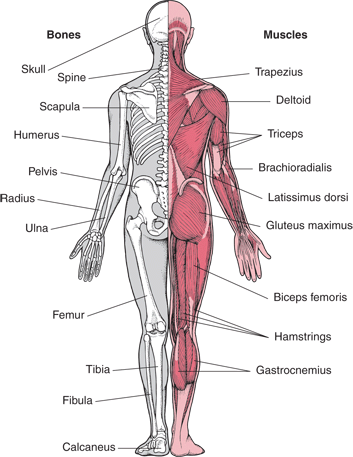
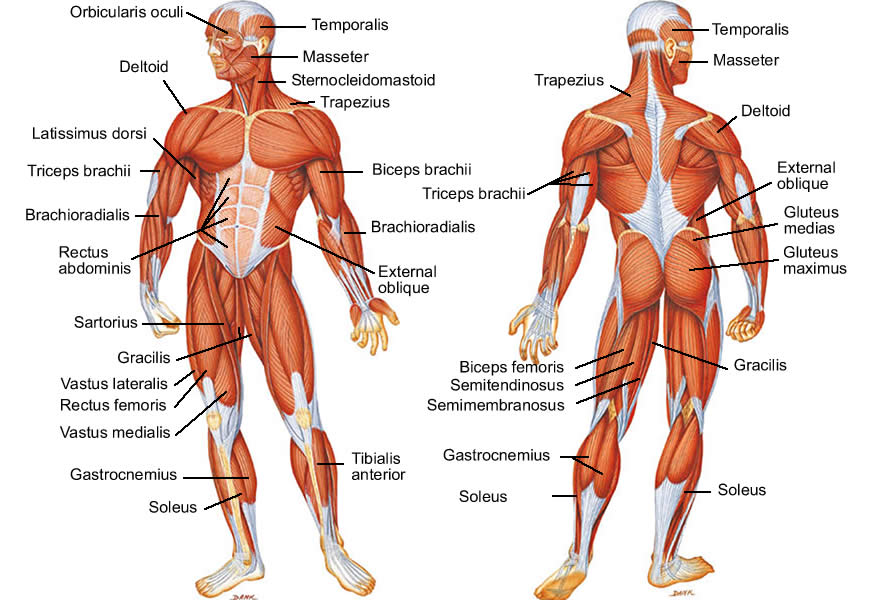
Name four mucles in the body
-bicept
-tricept
-deltoid
-quadricepts
(any mucles will do)
What are the different kinds of muscles?
-cardiac
-smooth
-skeletal
State and define two different types of problems that can occur within the body?
Osteoporosis: one tissue becomes brittle, thin, and spongy. Bones break easily, and the spine sometimes begins to crumble and collapse.
Tendonitis: . The tendon and tendon sheath become inflamed, which can be painful.
Conclusion
Hopefully these activities helped you learn more about muscles and the skeleton!