
Introduction
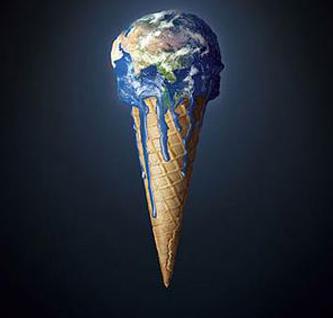
The Earth is getting warmer, and the signs are everywhere.
Many years ago, people all over the world started burning large amounts of coal, oil, and natural gas to power their homes, factories and vehicles. Today, most of the world relies on these fossil fuels for their energy needs. But, do you know what happens when we use this type of energy? Burning fossil fuels releases carbon dioxide into the atmosphere, which is the main reason why the climate is changing.
So, what can you do to fight climate change? The world needs your help. Your mission is to save the planet, and to do that you need to investigate alternative energies and transform our energy system into a cleaner one. Let’s start!
Task
You have been selected to become scientists and help the planet. As part of your training, you need to explore different websites to research on different energy sources and think of different ideas to live more sustainably.
You will form groups of 4. After completing your research you should be prepared to present your findings to the class. The final activity will be to design a poster in order to convince people to use renewable sources.
Process
1.Each group will use the websites provided to find information about the following:
- What is energy?
- How do we use energy in our everyday lives?
- What makes an energy form renewable or non-renewable?
- How many non-renewable sources do you know?
- What happens if we only use non-renewable sources?
- How many renewable sources do you know?
- Are renewable sources of energy better than non-renewable sources?
- Can you find a way to motivate people to use renewable sources?
- Why do you think the uses of renewable energies are connected to global warming?
- Why do we need to care about the use of renewable energy?
- Why might this be important?
2.Create a detailed poster that helps you persuade people to use renewable sources.
3.You will create a Power Point presentation of your research. You will present this and your poster to the class. The presentation will include:
- Title slide.
- Six to eight slides that provide a summary of all the information you need to research. (What is energy, sources of energy, implications of these sources in the environment, etc). The organization is up to you as long as all topics will be covered.
Evaluation
|
CATEGORY |
4 |
3 |
2 |
1 |
|
Content |
Covers topic in-depth with details and examples. Subject knowledge is excellent. |
Includes essential knowledge about the topic. Subject knowledge appears to be good. |
Includes essential information about the topic but there are 1-2 factual errors. |
Content is minimal OR there are several factual errors. |
|
Organization |
Content is well organized using headings or bulleted lists to group related material. |
Uses headings or bulleted lists to organize, but the overall organization of topics appears flawed. |
Content is logically organized for the most part. |
There was no clear or logical organizational structure, just lots of facts. |
|
Time-management |
Routinely uses time well throughout the project to ensure things get done on time.. |
Usually uses time well throughout the project, but may have delayed on one thing. |
Tends to procrastinate, but always gets things done by the deadlines. |
Rarely gets things done by the deadlines and group has to adjust deadlines or work responsibilities. |
|
Collaboration with Peers |
Almost always listens to, shares with, and supports the efforts of others in the group. Tries to keep people working well together. |
Usually listens to, shares with, and supports the efforts of others in the group. Does not cause \"waves\" in the group. |
Often listens to, shares with, and supports the efforts of others in the group but sometimes is not a good team member. |
Rarely listens to, shares with, and supports the efforts of others in the group. Often is not a good team member. |
|
Summary for the presentation |
Summary describes the information learned and some future applications to real life situations. |
Summary describes the information learned and a possible application to a real life situation. |
Summary describes the information learned. |
No summary is written. |
|
Oral presentation |
Student is completely prepared and has obviously rehearsed. And shows a full understanding of the topic. |
Student seems pretty prepared but might have needed a couple more rehearsals and shows a good understanding of the topic. |
The student is somewhat prepared, but it is clear that rehearsal was lack and shows a good understanding of parts of the topic. |
Student does not seem at all prepared to present and does not seem to understand the topic very well. |
|
Poster |
The poster is exceptionally attractive in terms of design, layout, and neatness. |
The poster is attractive in terms of design, layout and neatness. |
The poster is acceptably attractive though it may be a bit messy. |
The poster is distractingly messy or very poorly designed. It is not attractive. |
Conclusion
Congratulations! through this WebQuest exploration, you successfully learned about different energy sources and its environmental implications in the global warming.
You also learned how to motivate people to use alternative forms of energy to slow global warming.

Credits
• What is energy?
- How do we use energy in our everyday lives?
http://needtoknow.nas.edu/energy/energy-use/
http://www.explainthatstuff.com/energy.html
http://www.renewableenergyworld.com/ugc/blogs/2015/12/the_different_useso.html
http://www.childrensuniversity.manchester.ac.uk/interactives/science/energy/what-is-energy/
https://www.youtube.com/watch?v=__zB80Saglk
https://www.youtube.com/watch?v=aUa7I7D_myU
• What makes an energy form renewable or non-renewable?
http://nationalgeographic.org/encyclopedia/non-renewable-energy/
https://www.youtube.com/watch?v=MHutG0e58os
• How many non-renewable sources do you know?
- What happens if we only use non-renewable sources?
http://nationalgeographic.org/encyclopedia/non-renewable-energy/
http://greenplanetethics.com/wordpress/renewable-and-non-renewable-energy-sources-explained/
• How many renewable sources do you know?
- Are renewable sources of energy better than non-renewable sources?
http://greenplanetethics.com/wordpress/renewable-and-non-renewable-energy-sources-explained/
http://www.alliantenergykids.com/energyandtheenvironment/renewableenergy/
http://www.kids.esdb.bg/newenergy.html
http://homeguides.sfgate.com/importance-renewable-resources-energy-79690.html
• Why do you think the uses of renewable energies are connected to global warming?
• What for we need to take care about the use of renewable energy?
• Why it might be important?
https://www.youtube.com/watch?v=ko6GNA58YOA
https://www.youtube.com/watch?v=cJ-J91SwP8w
• Can you find a way to motivate people to use renewable sources?
Make your poster and try to convince people to switch to renewable energy. You can find ideas in the following webpages:
