
Introduction
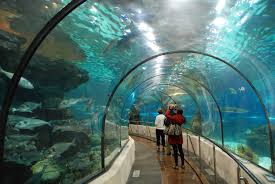
Welcome to the Aquarium! We have decided to add a new exhibit to showcase predators of the deep. We need your help to decide which sharks to bring in and what we will need to keep them healthy.
Task
Your task will be to research different sharks. You will then pick one shark as a group that you believe will fit best at the aquarium. You will present your choice to the class. Included in your presentation, you will need to create a 3D habitat for the shark of your choice.
Each person in the group will have a role:
The Architect- researches how much space is needed and creates the 3D representation of the space.
The Aquarist- researches interesting facts about the shark that can be used to create a brochure for visitors to the aquarium.
The Veteranarian- researches what other fish would get along with the shark and what it eats. They will then create a presentation explaining this.
The Marine Biologist- researches the habitat of the shark and how long it lives in the wild. They will then create video that can be used to inform guests of this information.
Process
- First, each person in the group will choose a role. Then each of you will fill out a short graphic organizer on a different shark.
- The graphic organizer will include:
- name of the shark
- where it lives
- size
- what it eats
- Is it nocturnal?
- As a group, you will decide which shark is best for our Aquarium. You will then research your shark of choice indepth and create a different part of the presentation.
- The Architect- researches how much space is needed and creates the 3D representation of the space. You may use a box and other materials to create the tank. Keep in mind the size of the shark and the size of the tank you are creating.
- The Aquarist- researches interesting facts about the shark that can be used to create a brochure for visitors to the aquarium. You may use pictures in the brochure but be sure to include at least 10 different interesting facts about the shark. Keep in mind that both kids and adults visit Aquariums.
- The Veteranarian- researches what other fish would get along with the shark, what the shark eats, and how many pups it can have at one time. They will then create a presentation explaining this. Feel free to include pictures as well as writing to create your posterboard. You want your presentation to catch the attention of the aquarium.
- The Marine Biologist- researches the habitat of the shark and how long it lives in the wild. They will then create video that can be used to inform guests of this information. Keep in mind that people will not want to stand for a long informational video about the shark so your video should be 4 to 8 minutes in length.
- Finally, you will present your project to the "Aquarium" to try and convince them to choose your shark.
Use these sites or another teacher approved site to do your research.
http://sharkopedia.discovery.com/types-of-sharks/
http://www.kidzone.ws/sharks/facts9.htm
Evaluation
Rubric
Total: 100pts
Graphic organizer filled out in detail: 10pts
Shark reasearch completed: 10pts
Presentaion: 80 pts
3D model of the tank: 10pts
brochure with appropriate images: 10pts
Poster board completed with images and short paragraphs of information: 10pts
Video presentation: 10 pts
Appropriate information and convincing argument presented:15pts
neatness: 5pts
Completed: 5 pts
Teamwork: 5pts
Appropriate citations: 5pts
*Remember, everyone needs to complete their own, individual part of the project. Faliure to do so will result in a grade deduction.
Conclusion
The purpose of this project was to use your critical thinking skills to decide what type of shark would best be suited for an aquarium environment. As you have found, some sharks would not suit an aquarium due to size or location.
Teacher Page
Webquests are useful in many classrooms. They provide a way for students to interact with one another as well as gain information on a topic. When students complete a webquest, they are given a question to answer and sites to use to find that answer. Webquests also give teachers the opportunity to differentiate the activity based on the needs of the students. For instance, if the class struggles with taking accurate notes, the teacher can include a graphic organizer to help guide. For this particular webquest, the teacher could also allow the students to find their own resources if they know how to do research. It is up to the teacher how much support to give the students while completing the activity.
March, T. (2012). What WebQuests (Really) Are. Retrieved June 09, 2016, from http://tommarch.com/writings/what-webquests-are/
Woolfolk, A. (2013). Educational Psychology: (12th ed.). Upper Saddle
5th Grade Florida Standards:
SC.5.L.15.1: Describe how, when the environment changes, differences between individuals allow some plants and animals to survive and reproduce while others die or move to new locations.
SC.5.L.15.1: Describe how, when the environment changes, differences between individuals allow some plants and animals to survive and reproduce while others die or move to new locations.
LAFS.5.SL.1.2: Summarize a written text read aloud or information presented in diverse media and formats, including visually, quantitatively, and orally.
LAFS.5.SL.2.5: Include multimedia components (e.g., graphics, sound) and visual displays in presentations when appropriate to enhance the development of main ideas or themes.
LAFS.5.RI.1.3: Explain the relationships or interactions between two or more individuals, events, ideas, or concepts in a historical, scientific, or technical text based on specific information in the text.