
Introduction
“When will I use this? How is this important?” 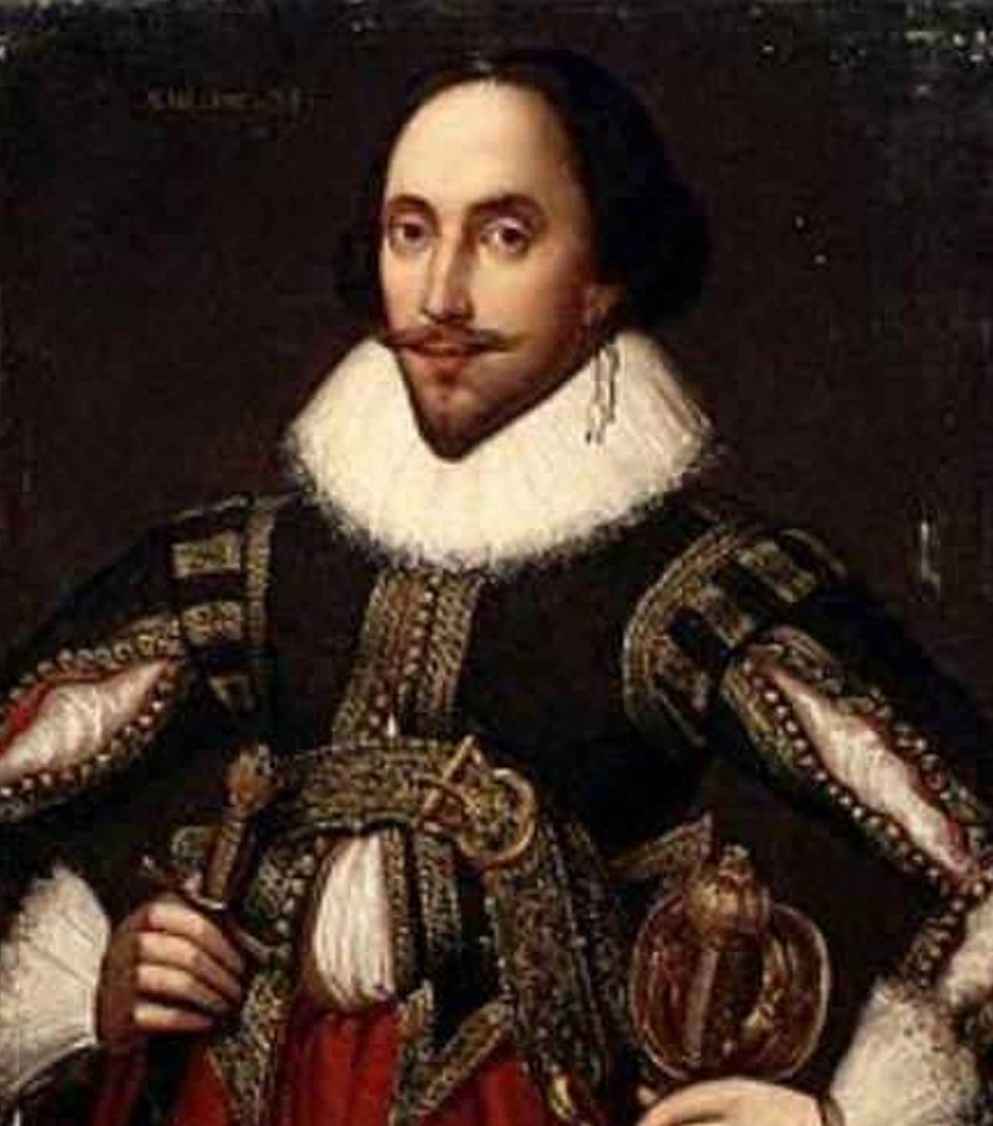
These were perhaps, the two most asked questions in my 12th grade English literature class and the questions still ring true 20 years later. Are Shakespeare’s plays and dramas still relevant? What about these works have preserved them for over 400 years?
The purpose of this webquest is to explore Shakespeare’s Macbeth and to analyze it for current relevance. Specifically, what are its themes, who are the characters, and how does the plot evolve? This webquest aligns directly with Georgia English Language Arts Standards for High School grades 9-12. Specifically, students are asked to evaluate a Shakespearean work (ELAGSE9-10RL9 & ELAGSE11-12RL7) and by the end of High School be able to read and comprehend literature with varying text complexity.
Shakespeare provides an opportunity for students to demonstrate their ability to communicate in multiple modes of discourse and to demonstrate their command of the rules of standard English.
So, is Shakespeare “good work”? Let’s see.
[video:https://youtu.be/nIZ_eq0vLfc]
Task
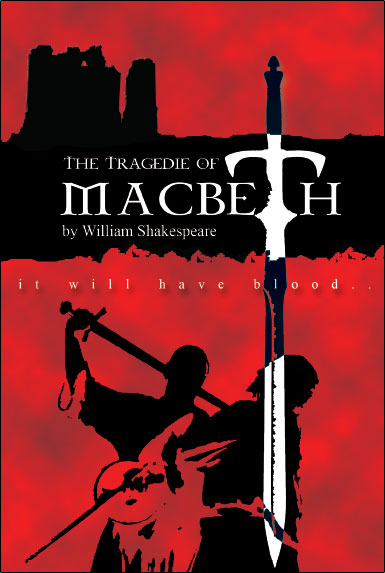
This lesson will introduce students to one of Shakespeare’s best known plays: Macbeth. It will focus in particular on dramatic monologue and how Shakespeare uses rhetoric (persuasive language) to further plot. This will lead into a communicative activity in which students learn how to use some of these persuasive techniques in order to get what they want in everyday English.
1. To build on students’ knowledge of characters
2. To develop students’ awareness of persuasive techniques (such as flattery, reassurance, putdown, etc.) and to provide an opportunity to practice using them
3. To raise awareness of the differences between vocabulary in Shakespeare’s time and today
Process
06/27 Introducing Shakespeare
Read the biography on Shakespeare below and try to complete the missing information. Then, visit www.bbc.co.uk/timelines/z8k2p39 to find the correct information and complete the short biography.
Shakespeare is England’s most famous playwright and _____________________. His plays are known throughout the world and he introduced up to 300 _____________________ and dozens of _____________________ into the English language.
He was born in _____________________ -_____________________ -_____________________ in the year __________________. He probably went to the local _____________________ school, King Edward VI’s School, where he learnt Greek and _____________________ . He didn’t go to _____________________ .
In 1582, he married _____________________ _____________________ , who was three months _____________________ . In total, they had _____________________ children.
He left Stratford to go and live in _____________________ , working as a playwright and actor. He performed many times for Queen _____________________ _____________________ .
Shakespeare’s group built their own theatre called the _____________________ . By now, Shakespeare was very rich. He bought the _____________________ _____________________ house in Stratford and many other properties as investments. He had a good head for business.
He died in _____________________ , probably of _____________________ . In his will, he left his _____________________ _____________________ bed to his wife. Nobody knows for certain why he did this. He is buried in Stratford.
07/01 Dramatic Monologue
Today you will be researching online. Working in pairs examine the monologues presented in the following links. Record your thoughts on each. How persuasive is the actor? What techniques are employed? Find 3 more dramatic monologues that you think are good and why?
Rate each monologue.
[video:https://youtu.be/YKHoKsrfdK0]
[video:https://youtu.be/pusU90ov8pQ]
[video:https://youtu.be/iOjf9S4alv0]
07/08 Hip Hop Shakespeare
So you've been introduced to iambic pentameter, prose vs. verse, and Shakespeare's use of figurative language in Macbeth. As you read the story, pay attention to shifts in language: When do characters speak in verse? When in prose? Which characters rhyme and why? And when are shared lines used significantly? Examine this clip for each literary term. Play around with the worksheet. Record your thoughts in your journal.
[video:https://youtu.be/DSbtkLA3GrY]
Hip hop or Shakespeare?
|
Quote |
Your answer |
Correct answer |
|
“Another heart is torn as close ones mourn” |
|
|
|
“Blood will have blood” |
|
|
|
“But that’s the whole tragic point, my friends” |
|
|
|
“For, judgment day cometh, conquer, it's war” |
|
|
|
“He wants the natural touch” |
|
|
|
“I twist darts from the heart” |
|
|
|
“I was born in a season where the world was quiet and cold” |
|
|
|
“It is a tale told by an idiot” |
|
|
|
“It's calm yet wild, the style that I speak” |
|
|
|
“Learn to see me as a brother instead of two distant strangers” |
|
|
|
“My strength, my son, the star, will be my resurrection” |
|
|
|
“Out damned spot!” |
|
|
|
“Present fears are less than horrible imaginings” |
|
|
|
“Screw your courage to the sticking-place” |
|
|
|
“Sentence begins indented with formality” |
|
|
|
“The bell invites me” |
|
|
|
“The dumb are mostly intrigued by the drum” |
|
|
|
“The milk of human kindness” |
|
|
|
“the red sun sinks at last into the hills of gold” |
|
|
|
“Unsex me here” |
|
|
07/15 Summarizing Macbeth
Watch following summary. Is this a good summary? Compose your own summary using the media of your choice. Highlight aspects of the play that you think are important. Guidelines are specified in rubric.
[video:https://youtu.be/T-PKotyoxys]
Evaluation
•Power of Persuasion
Literary Terms: Character Relationships, Conflict, Themes of Ambition, Power, Fate, Manliness, and Parenthetical Citation
Section of Play: 1.7.34-95
Speakers: Macbeth and Lady Macbeth
Writing Prompt:
In the play Macbeth by William Shakespeare, Lady Macbeth is said to be a driving force in the action and the outcome of the play. Macbeth tells Lady Macbeth, “we will proceed no further in this business” (1.7.34), meaning that he will not kill King Duncan. Yet, by the end of the scene he is resolved to commit murder. Listen to Angela Basset’s recitation from Act 1 Scene 7.35-45 and read the scene again and note how Lady Macbeth counters Macbeth’s arguments.
How does Lady Macbeth convince Macbeth to kill King Duncan? How do you ask for what you want? Does it differ from Lady Macbeth’s tactics? Explain.
•Essay must have a clear thesis•Minimum of 5 paragraphs•At least 1 primary source quote to support your positionRUBRIC
|
Criteria |
Strong (3) |
Developing (2) |
Weak (1) |
|
Evidence and Support |
•Student correctly uses at least one direct quote from primary source with appropriate (MLA) structure (parenthetical citation)
•Correct use of vocabulary |
•Student uses direct quote from primary source but applies (MLA) structure improperly (parenthetical citation)
•Some incorrect use of vocabulary |
•Student does not use a direct quote from the primary source•
•Incorrect use of vocabulary |
|
Structure |
•Organization and connections between ideas/and or events are clear and logically sequenced
•Establishes a strong beginning, middle, and end |
•Organization and connections between ideas and / or events are weak•
•Some evidence of a beginning middle and end |
•No organization evident••
•No clear indication of middle, beginning, or end |
|
Critical Analysis |
•The student response addresses the prompt and provides effective comprehensive development of the claim by using clear and convincing reasoning and details••Thesis is clearly stated
•Draws a direct comparison or contrast |
•The student response addresses the prompt and develops the claim minimally by using limited reasoning and details
•••An attempt at thesis is made, but is not supported throughout the essay••An attempt is made at comparing and contrasting but isn’t clear |
•The student response is underdeveloped and therefore inappropriate to the task and purpose•
•No thesis statement clearly evident •No comparison and / or no character contrast |
| • | • |
TOTAL _____ / 9 |
Conclusion
Is Shakespeare's Macbeth good work? What are your thoughts?