
Introduction
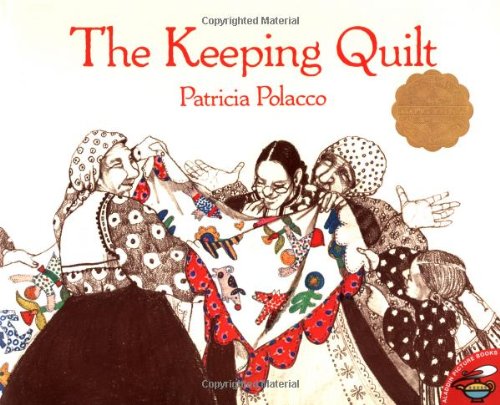
The Keeping Quilt by Patricia Polacco
A Reading WebQuest for 5th Grade Intermediate English Language Learners
Created by Chandra Beal, Georgia Daggett, and Kaitlan Norris
For Alliant International University TESOL Master's Program
TES7480-Technology and Teaching English Learners
Instructor: MaryLynn Patton
Spring 2016
Introduction
You have just finished reading The Keeping Quilt by Patricia Polacco, a story about one family's multiple generations and the quilt they passed down as an heirloom. Now you have the chance to create your own keepsake by making a quilt online. Your class needs your help! All of the quilts will be assembled at the end into a class quilt. Your contribution is very important! This is your chance to be creative and help your class make something beautiful and memorable. You will also be interviewing a family member about your family history, and you will look up new vocabulary words. To find out how to do these steps, read the instructions under "Task".
Task
You have three tasks to complete for this WebQuest. The first is a vocabulary task, where you will look up words and images from The Keeping Quilt. The second task is to interview a relative about your family history using a smart phone. The third task is to create a quilt online. Instructions are provided for each task in the "Process" section. Have fun!
Process
Vocabulary Task #1
After reading the story “The Keeping Quilt” you will define the following twelve terms from the story:
- Babushka
- Sabbath
- Challah
- Border
- Hankie
- Huppa
- Poverty
- Bouquet
- Kulich
- Jews
- Apron
- Cape
Previous technology instruction included the use of a Word document, familiarity with the many components of a keyboard (typing, print, save) and how to copy and paste a picture.
To begin, use the website https://www.vocabulary.com look up definitions. When you click on the link, you will type your vocabulary word into the rectangular box at the top of the page.
Next, you will use http://www.safeimages.safesearchkids.com/ to search for a picture or illustration that defines or illustrates the vocabulary word. You will then copy and paste a picture of the vocabulary word next to your definition in a Word document.
For example, Apron- a piece of clothing that is worn on the front of the body over clothes to keep them from getting dirty.

Once you are done and you have defined all twelve words and posted pictures, you will save your document and print it.
Test Your Knowledge
Attached you will find a PowerPoint where you will play a memory game. You will match the picture to the correct vocabulary word. Click on any two cards. If the vocabulary word matches the picture, congratulations you have a match. Once you have a match, do not turn the cards over again. If they don't match, turn the cards back over by clicking on the card again. Remember what was on each card and where it was.
To open up the PowerPoint, click on the tab that says Slideshow. Once you click on the tab the first icon you see will say From Beginning. Click on that tab to get the game started.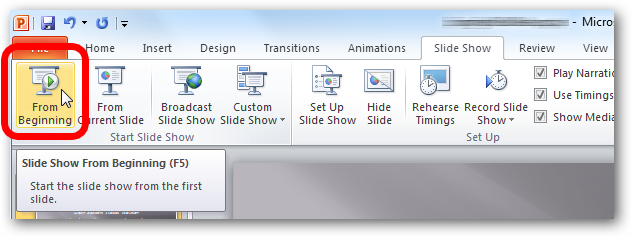
There is an answer key provided at the end of the PowerPoint to check your work. Good luck and have fun!
Family Interview Task #2
Now that you have read The Keeping Quilt, you understand that the book is about a family who passed a quilt from generation to generation, the importance of keeping the quilt and the memories surrounding it.
The objective of this interview is to ask a family member questions that pertain to your family history so that the memories of your family history can continue.
You will interview a family member using the questions below. The interview will be recorded on a smart phone. After the interview is complete, you will upload the recorded interview to the WebQuest.
https://www.createwebquest.com/node/39658/edit
Interview Questions
1. Did you immigrate to the United States?
2. What family member immigrated here?
3. From where did your family immigrate?
4. When your family immigrated, what did they bring with them?
5. Do you have any special item that you brought with you from your country?
6. Why is the item special?
7. Who gave it to you?
8. How was it used?
9. Will you pass the item to another family member? Why?
10. What story will you tell about the item so that your family can remember it from your home country?
Instructions for making an audio recording on a smart phone:
1) If you have an iPhone or iPod touch, you can record interviews with the built-in Voice Memo app. Connect your iOS device with a USB cable to your computer, then use iTunes to Sync Music and select “Include Voice Memos.”

2) If you have an Android device, download Smart Voice Recorder, a free app from the Google Store that connects to Google Drive and Dropbox (illustrated below), or the free Easy Voice Recorder app, or see more options.

3) Your laptop computer may have a built-in audio recorder. On a Mac laptop, go to Applications > Quicktime Player, and then File > New Audio Recording, which you may save in .M4A format.

Make a Quilt Task 3
Your last task is to make your own quilt online. Go to http://www.freequiltpatterns.info/custom/quilt-pattern-playground/quilt-pattern-playground.php to create a quilt using the template. Each member of your team can select a fabric. When you are happy with the quilt, click "Print Free Pattern", then save the file as a PDF.
Evaluation
Collaborative Work Skills: The Keeping Quilt
Students: _____________________ Teacher: _______________________
| CATEGORY | 4 | 3 | 2 | 1 |
| Level of Engagement in Group | Routinely provides useful ideas when participating in the group and in classroom discussion. A definite leader who contributes a lot of effort. | Usually provides useful ideas when participating in the group and in classroom discussion. A strong group member who tries hard! | Sometimes provides useful ideas when participating in the group and in classroom discussion. A satisfactory group member who does what is required. | Rarely provides useful ideas when participating in the group and in classroom discussion. May refuse to participate. |
| Quality of Quilt Square | Quilt square is colorful and geometric in design. | Quilt square is somewhat colorful and has some mistakes in the geometric design. | Quilt square has some color and there are many mistakes in the geometric design. | Quilt square is colorless and has no geometric design. |
| Preparedness | Brings needed materials to class and is always ready to work. | Almost always brings needed materials to class and is ready to work. | Almost always brings needed materials but sometimes needs to settle down and get to work | Often forgets needed materials or is rarely ready to get to work. |
| Vocabulary | Student knows meanings of all vocabulary words. | Student knows meanings of most vocabulary words | Student knows meanings of some vocabulary words | Student knows meanings of few vocabulary words |
| Use of Technology | Student is able to access all websites, use cell phone to interview family member and upload to webQuest. | Student is able to access most websites, use cell phone to interview family member and upload to webQuest. | Student is able to access some websites, and had difficulty using cell phone to interview family member and upload to webQuest. | Student was unable to access websites, and was not able to use cell phone to interview family member and upload to webQuest. |
| Teacher Comments |
Conclusion
Conclusion
Congratulations! You have completed the WebQuest!
Now you have learned a lot of new vocabulary related to quilts and people of Jewish ancestry. You have also learned about your own family's heritage and history through interviewing your relative. And you showed off your creativity by making your very own quilt online!
The WebQuest may be over, but there are ways you can keep learning about family heritage. Discuss these questions with your partners, then write your answers on a piece of paper and bring it to the next class. You should talk about the questions as a group, but answer them on paper for yourself.
- Has anyone in your family or that you know ever made a quilt? Do you think you would like to learn how to make one yourself? If so, what kinds of things would you include in your quilt?
- Did you enjoy interviewing your relative? Who else in your family could you talk to about your family history? What other ways could you preserve your family memories, for example, photos, interviews, clippings, a web page?
- Do you think it's important to preserve family memories? Why or why not?
Credits
All clip art in this WebQuest is from free sources via Google Images.
Instructions for recording audio interviews on smart phones was adapted from an article by Jack Dougherty of Trinity College: http://commons.trincoll.edu/jackdougherty/how-to/record-and-transcribe/
The rubric on the evaluation page was created at RubiStar.
The template for this WebQuest was provided by CreateWebQuest.
Teacher Page
This WebQuest was created by
Chandra Beal
Georgette Daggett
&
Kaitlan Norris
who are graduate students in
Alliant International University TESOL Master's Program
The creators would like to thank the students in TES7480-Technology and Teaching English Learners and their instructor, MaryLynn Patton, for their feedback and support in creating this project. We would also like to thank Patricia Polacco for writing The Keeping Quilt, on which this WebQuest is based.
For questions or feedback about this WebQuest, contact any of the creators at: