
Introduction
Have you ever heard of Head Lice or nits?
Do you know what they look like, where and how they live, how they get there?
Do you know how you can get rid of them?
Well even if you answered no to some of these questions, this webquest will help you to find out all of these answers.
Maybe you Mum, Dad or Carer would like to know these things as well and you can use this webquest with them to help them and you understand more about Head Lice and nits.
Task
- To begin with we will discuss and find out what you may already know about head lice
- We will then look at a short You Tube clip which will help to explain what head lice is and we can get it
- You will then all have a chance to create a poster, brochure or min-book about head lice
Process
- Lets have a brainstorm on the interaactive whiteboard about some of you might already know about head lice
- Watch the following You Tube Clip[video:https://www.youtube.com/watch?v=kAE458NjsrQ]
- Turn and talk to the person next you about what you think the most important things Dr Itchy spoke about in the video
- Now lets discuss these as a whole class
What are head lice and nits and where do they live?
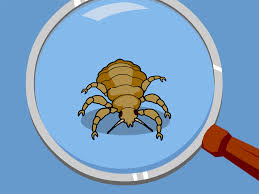
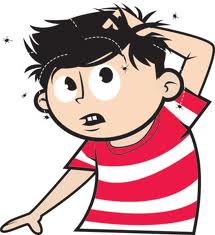
Head lice are little bugs that love to live on your head in your hair.
How do we get them?
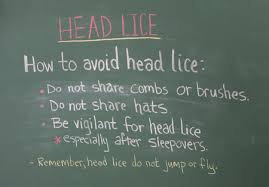
If we touch heads with our friends who may have them while we are playing the lice can jump onto our head. Also if we share our hat or hairbrush with someone who has head lice the eggs that the mother louse lays may end up in our hair and will hatch.
Do I have to stay home from school for a long time if I have them?
There is no need to stay home from school once your Mum, Dad or Carer has started treating your to get them.
How do we git rid of them?
You can use conditioner in your hair and a special comb that combs the nits out. This has to be done every couple of days until they are all gone.
OR you can use a special solution to kill the lice and then comb them and the eggs out. This needs to be done re-done 7 days after.
Evaluation
Thinking about the Mr Itchy's video and the things we just spoke about, you will now all have a chance to create you own poster, brochure or mini-book to show what you have learnt about head lice.
I will keep all of our ideas we spoke about on the interactive whiteboard as a hint and a reminder.
You need to make it nice and colourful with pictures and words as we will then be putting them up in our classroom.
Conclusion
Now a few of you will share your poster, brochure or min-book with the class and we will all show respect for the person who is presenting their work.
Now that we have listened to the presentations and gone through this webquest I am sure everyone now understands that:
- Head lice is something that is very common with children of your age
- It does not make you sick
- You should not share a hat or a hairbrush with your friends just in case either of you have headlice
- Their is the lice or louse which is the actual bug that lives in your hair on your head and there is also the egg.
- I only need to stay away from school if I have headlice until it has been treated
- It can be treated by using hair conditioner and a special comb to comb out the lice and eggs. OR special treatment can be purchased from the chemist.
Credits
References
Department of Health and Human Services Victoria. (2015). Treating and controlling headlice. Retrieved from https://www2.health.vic.gov.au/about/publications/factsheets/Treating%20and%20controlling%20headlice
Department of Education and Training Victoria. (2013, September 28). Student health and safety: headlice management. Retrieved from http://www.education.vic.gov.au/school/principals/health/Pages/headlice.aspx
My Headlice Treatment: Dr Itchy: Emily finds out she has headlice. (2009, Septemeber 4). You Tube. Retrieved from https://www.youtube.com/watch?v=kAE458NjsrQ
Teacher Page
Teachers:
This resource is aimed at Prep/Foundation students, however is relevant and can be adapted to students from Years 1-3.
More information can be found through the following websites:
http://www.education.vic.gov.au/school/principals/health/Pages/headlice.aspx