
Introduction
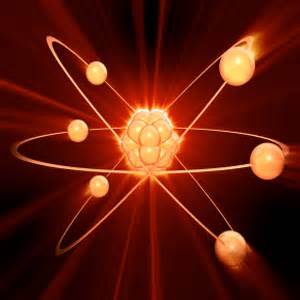 Welcome: What's Matter!
Description: This web quest will provide an overview of the composition of matter.
Grade Level: 8
Curriculum: Physical Science
Keywords: Matter Atoms Elements Periodic Table Webquest
Authors(s): John Lacy
This webquest will help you better understand matter, the composition of if, and how it's arranged on the Periodic Table. The way we think about matter has changed as time marched on and so has the Periodic Table.
Task

In This WebQuest you will:
- learn about the three sub-atomic particles of matter!
- learn about the phases of matter!
- learn about the movement of those sub-atomic particles and how they relate to it physcial phase!
- learn about atoms and molecules!
- learn about elements and the Periodic Table!
Process
GPS: S8P1 S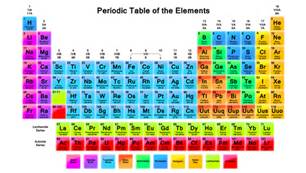 tudents will examine the scientific view of the nature of matter.
Phase I: Students will identify the sub-atomic particles and the number of those particles. In this phase, students will be given a model atom where they will color-code the sub-atomic particles; protons will be colored blue; neutrons will be colored green, and electrons will be colored red.
Phase II: Students will understand the various stages of matter, and how those phases depend of the movement of the sub-atomic particles. Students will participate in a lab where they will be exposed to three phases of matter using water (H2O), ice (H2O), and water vapor (H2O). The purpose of this lab is to display only the physical change in H2O as it changes phases or states. Students will rotate betweeen three stations where the three phases will be; they will have to illustrate the particle movement in each phase.
Phase III: Students will understand the difference between atoms and molecules. In this phase, students will take the atoms they color-coded in phase I to construct molecules. Using technology, students will try to name their molecule.
Phase IV: Students will understand and interact with the Periodic Table. In this phases, students will discover how atoms bond, and what families or groups will readily bond with what groups. This is determined by the amount of valence electrons of that particular atoms. Students will be assigned six randomly selected elements, and they will have to determine the number of valence electrons.
Evaluation
|
What's Matter Assessment Rubric Criteria |
Possible Points |
Points Earned |
|
Phase I: Neatness (5pts) Accuracy (the correct number of particles-7pts) (the correct color is assigned to the correct particle-8pts) |
20pts | |
|
Phase II: Neatness (5pts) Accuracy (illustration of the particles in a solid-5pts) (illustration of the particles in a liquid-5pts) (illustration of the particles in a gas-5pts) |
20pts | |
|
Phase III: Neatness (5pts) Molecules Combined Accurately (20pts) Molecules Named Accurately (5pts) |
30pts | |
|
Phase IV: Accuracy (six randomly selected elemenet for valence electrons-5pts each) |
30pts |
Conclusion
 At the end of this lesson, students will have an enriched understanding of matter. Students would have encounter various phases of matter, and understood that these phases relate to the movement of particles in the matter. Students will understand (at the end of this lesson) that particles are in constant motion. As the kenitic energy of the molecules in the materials increase, than the particle in the material will expand. Students will understand the difference between atoms and molecules, that molecules are composed of atoms. Students will understand and interact with the Periodic Table. Students will understand that certain elements will readily bond with other elements. This overview of matter will better prepare students for the assessment cercerning matter.
Credits
 Georgia Science. McGraw-Hill. Columbus, OH (2008).
National Geographic
Time Magazine
Science and Society
Science and History
Yahoo (images)
Teacher Page
[img_assist|nid=38054|title=teacher's apple|desc=|link=none|align=left|width=-2|height=-2]Thanks for the support and your attention to this page. My name is Mr. John Lacy, and I am a teacher at Chapel Hill Middle School; it is located in Decatur, Georgia off Dogwood Farms Road. I am a connections teacher at Chapel Hill MS. I teacher a Science Enrichment class offered to 6th, 7th, and 8th graders. Science Enrichment is a course that connects the content to real-world, hands-on activities. This class is offered along side their core science classes to give students a double dose of the content in a variety of methods.