
Introduction
What are Pediculuosis?
These are parasites that are found on human heads. The word lice is plural for louse. They feed on tiny amounts of blood from the scalp. They are more common in preschool and school children. They are spread by head to head contact or the sharing of brushes, hats and other clothing.They can be very hard to remove and the whole family and house need to be treated to ensure the infectation is completely gone.
- Remember: one head louse + one head louse = two head lice = the beginning of a head-lice infection.
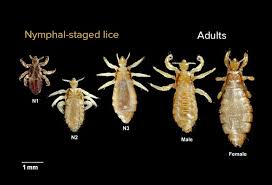
Lice eggs (nits)- Lice lay nits on the hair close to the scalp where the temperature is warmer. They look a lot like dandruff, however they are harder to remove from the hair. Normally nits are found in hair rather that live lice. The eggs hatch within 1-2 weeks of being laid. Once the lice have hatched, the egg shell is still on the hair. They can be easier to see due to the hair growth since the time of being laid.
Adult lice and nymphs (baby lice) - Nymphs are those that have just hatched and become adult lice about 1 to 2 weeks. Adults are somewhat bigger, however they are only the size of a sesame seed. Head lice must be treated otherwise the process of eggs being laid continues approximately every 3 weeks.

Retrieved from http://www.licebegone.net/all-about-head-lice/
Symptoms of Head Lice
A common thing for those that have Head Lice is having an itchy head. Students may describe this as a tickling feeling, this is caused by the lice moving around the head. Small sores can apear of the scalp from the lice sucking blood from the scalp.
Task
There are so many Myths associated with Head lice, view this clip before moving on- https://www.youtube.com/watch?v=zWCYXZHkdbs
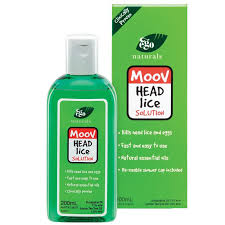
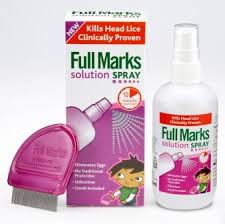
The important thing to remember about Head Lice in an education setting is the importane of taking on preventative measures. These can include pamphlets being sent home to provide parents with information on how to check childrens hair regularly and what to do if they come across nits or lice. It is also important to explain that young children should not use some of the treatments and they should use a more natural approach:
It may be an option for some schools to provide free lice combs to be sent home to allow parents to check childrens hair. Guving parents information about the types of head Lice treatment that is available and where they can find it (chemist/supermarket).
Sometimes it is left up to the school to treat the students at school, this needs to be done with parent concent. Check the Education Deparments policy for your state proior to this step.
Parents automatically think that if there child had Head Lice that they are unable to attend school for days, however they are allowed to attend school as long as their hair has been treated.
Classroom task
Health and Physical education curriculum links:
Foundation – Identify actions that promote health, safety and wellbeing (ACPPS006)
Years 1/2 - Explore actions that help make the classroom a healthy, safe and active place (ACPPS022)
Years 5/6 – Investigate the role of preventative health in promoting and maintaining health, safety and wellbeing (ACPPS058)
- View the clip that has been provided above.
- Discuss this in an age appropriate way.
- Working in pairs (Years 1/2 and 5/6) and individually (Foundation), students will develop a pamphlet about Head Lice. They will include things like life cycle, symptoms, preventative measures and how to treat. (The amount of detail expected depends on Year level).
- Photocopy the completed pamphlets, one can be sent home for students to show parents and it is also a good discussion starter about Head Lice. The other can be put on display in the classroom.
Process
The school will develop a letter to send home introducing the process of reducing Head Lice infestations within the school. Allow a tear off sections where parents can respond if they would like more information or if they would like to be contacted by a senior staff member to discuss further.
Produce a letter that is sent home if there is a Head Lice case within the classroom. This will provide a reminder to parents to check their child's hair and to inform them that they have been found within their child's classroom environment.

Evaluation
At the conclusion of each term, staff as a whole will meet again to determine if Head Lice infestations have decreased. Also they would discuss what other possible measures they could do to ensure the decrease of Head Lice in the school. For example, the school may approach the local chemist and organise an agreement between the school/pharmasist on a cheaper price for Head Lice treatment.

Conclusion
Head Lice is an ongoing issue within the school environment. It is recommended that the end of term process is continued and the overall school policy is revised on a regular basis.
Credits
References
Amy Chinian: Facts about Head Lice. (2014, April 28). Retrieved from https://www.youtube.com/watch?v=zWCYXZHkdbs
Australian Curriculum, Assessment and Reporting Authority (ACARA). (2016, April 13). F- 10 curriculum: Health and physical education (Version 8.1), all curriculum dimensions. Retrieved from http://www.australiancurriculum.edu.au/health-and-physical-education/curriculum/f-10?layout=1
Medicine Net. (2016). Head Lice. Retrieved from http://www.medicinenet.com/head_lice/article.htm
The Nemours Foundation. (2016). Head lice: Information sheet. Retrieved from http://kidshealth.org/en/parents/head-lice.html