
Introduction
Grade Levels: 6-9
Music Appreciation Classes
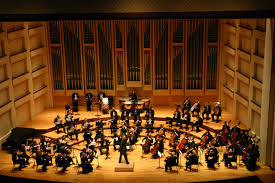
When listening to music, we can distinguish the different sounds we hear by giving them a quality, which is called timbre (pronounced as TAM-BER). When listening to your favorite music, can you hear a guitar, a drum, a singer, or other sounds? What instruments do you hear from your favorite music? How do you know? We are able to tell these apart because of the types of sounds they make. In this lesson, we will be exploring the timbre of orchestral instruments! (Only the wind instruments, no percussion)
Task
By the end of this lesson, students will be able to know the common instruments of an orchestra by their timbre (sound quality) and they will be able to properly describe their timbre with appropriate adjectives. This lesson will require group effort between students. The recommended group size is 2-3 students. At the end, each student will be given a listening test on all the instruments, which includes being able to label the instruments and describing their timbre with appropriate adjectives. 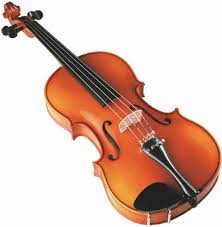
Process
Day 1
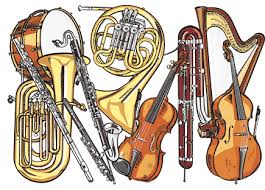
Today we will start with the following instruments below. Before doing groups, we will learn about the different instruments and what they sound like. The teacher will provide you with a list that will have blank spaces for each instrument in the Teacher's Page section. There are video recordings of each instrument and your objective is to:
- Listen to each instrument.
- Write down what the instrument’s name is on the Name line.
- With the three lines that are provided for each instrument, you will write down one descriptive word for the instrument’s RANGE (ex. high, low), one word for the instrument’s WEIGHT/TONE (ex. light, heavy, bright, dark), and one word of your own choosing.
Violin
[video:https://www.youtube.com/watch?v=stC11qWNUE8 width:100 height:100 align:center]
The violin is a stringed instrument that has the highest range of the stringed instruments. Many listeners enjoy its bright tone because it pierces through the orchestra. The light sound they are known for can be especially heard in its high range.
Viola
[video:https://www.youtube.com/watch?v=kl4evDsLMYY align:center]
Though it looks like a violin, it is a little bigger in size and the viola is capable of playing the notes in the middle of the range. It’s dark and heavy tone can play either happy music, or sad music,
Cello
[video:https://www.youtube.com/watch?v=PCicM6i59_I align:center]
Quite bigger than the violin and viola, the cello is known for its deep low notes and its ability to reach the middle range with its dark and heavy sound. Many find this instrument the most popular to play because of its sound quality!
Double Bass
[video:https://www.youtube.com/watch?v=jTFkwIQMwQc align:center]
This huge instrument, the double bass, can hit the lowest notes out of all the stringed instruments. The heavy and dark notes can sometimes be hard to hear, so some orchestras require many of them to bring the sound out.
Day 2
Trumpet
[video:https://www.youtube.com/watch?v=9AE1-ZssYt0 align:center]
Part of the brass family, the trumpet is one of the highest pitched brass instruments in its category. Fast runs or slow passages, the trumpet is capable of playing with a light and bright tone that can be heard from afar. Many fanfares are played with trumpets and they can represent royalty.
Trombone
[video:https://www.youtube.com/watch?v=HxKqMtr0MxE align:center]
Is it a plane? No, it’s a trombone! With its long slide, the trombone is capable of sliding between its low and high range. Itss low notes can be dark and heavy, but the high range can be light and bright. It can be powerful, but at the same time, soft and sweet. Many jazz bands use the trombone to give that jazzy feel a kick!
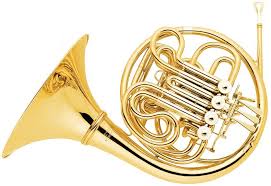
Horn
[video:https://www.youtube.com/watch?v=a_BrqWG-8-M align:center]
With all of its curves, the horn is known to be the most flexible instrument of all the brass instruments. Their royal sound can catch anyone’s attention, especially its mellow middle range and dark low notes. Many composers love the versatility of the horn, so many awesome parts are written for it and you can hear it very often in your favorite movie theme!
Tuba
[video:https://www.youtube.com/watch?v=BG36jeGmIPo align:center]
The tuba is the biggest of the brass family. With its size, it can play the lowest notes of the orchestra. The sound is very heavy and dark. Only the most skilled tuba players can play high notes on it, but many prefer the low range to give the orchestra an extra oomf to its sound!
Day 3
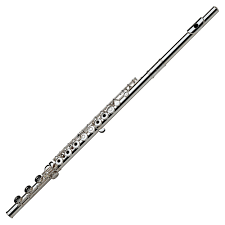
Flute
[video:https://www.youtube.com/watch?v=WFXLT-H5JNA align:center]
The highest pitched woodwind instrument is the flute. Its cousin is known as the piccolo and it plays even higher! The bright and light notes in the high range can pierce through the orchestra with ease. Give this instrument any fast parts and you will be amazed with the capability it has!
Clarinet
[video:https://www.youtube.com/watch?v=o8yhq6kT3PU align:center]
The clarinet can give an eerie sound with its middle to high range, but the low notes can do just the same if done correctly. The sweet, light sound is favored by composers and many write solos for the instrument. The bright sound is what is recognized by listeners.
Oboe
[video:https://www.youtube.com/watch?v=tlhTNOPZCsk align:center]
The oboe uses a double reed to make its bright and light sound on its high range. The instrument is very limited to its volume and it takes very special skill to be able to play the oboe at maximum volume. The tone can be differentiated from the other woodwinds due to its “duck-like” sound.
Bassoon
[video:https://www.youtube.com/watch?v=34z3_J6iSgI align:center]
The bassoon looks like a huge twig from afar, but the low sound is favored by many. It also uses a double reed, just like the oboe. The low notes can be dark and heavy, but its high range is light and bright.
Bass Clarinet
[video:https://www.youtube.com/watch?v=xqayB9-l6oo align:center]
Though not the lowest woodwind, the tone quality of this instrument sounds very dark and heavy. It has qualities that make it relatable to the clarinet family, in which it gives an eerie sound, but at a much lower octave.
Evaluation
The first part to the evaluation will require the groups to study the timbres of all the instruments. Each group is to have one student play a recording and ask their teammates what instrument is playing and what their timbre is. The students are to not use their activity sheets when answering questions and only the teammate playing the recordings can correct their teammates. Each student is to take turns playing the recordings and asking their teammates about the instrument that is playing.
The second part will consist of the teacher administering a test on all instruments’ timbres to each individual student. The teacher is to play all the recordings in random order and the students are to label what instrument is playing and write down the RANGE, the WEIGHT/TONE, and their own appropriate descriptive word of the instrument’s timbre.
Conclusion
After this lesson, you should be able to use your ability to recognize all of these instruments by their timbres! Being able to recognize an instrument by the way it sounds is a useful skill when picking out instruments in your favorite music. Timbre is the quality of the sound of an instrument and by learning what they sound like you have a greater chance at recognizing an instrument.
Teacher Page
Name_______________ Date_____________ Period______________
Watch Your Timbre!
Activity Sheet
Instrument__________________ Instrument___________________
Range __________________ Range ___________________
Weight/Tone________________ Weight/Tone_________________
Your Word_________________ Your Word__________________
Instrument__________________ Instrument___________________
Range __________________ Range ___________________
Weight/Tone________________ Weight/Tone_________________
Your Word_________________ Your Word__________________
Instrument__________________ Instrument___________________
Range __________________ Range ___________________
Weight/Tone________________ Weight/Tone_________________
Your Word_________________ Your Word__________________
Instrument__________________ Instrument___________________
Range __________________ Range ___________________
Weight/Tone________________ Weight/Tone_________________
Your Word_________________ Your Word__________________
Instrument__________________ Instrument___________________
Range __________________ Range ___________________
Weight/Tone________________ Weight/Tone_________________
Your Word_________________ Your Word__________________
Instrument__________________ Instrument___________________
Range __________________ Range ___________________
Weight/Tone________________ Weight/Tone_________________
Your Word_________________ Your Word__________________
Instrument__________________
Range __________________
Weight/Tone________________
Your Word_________________
Name_______________ Date_____________ Period______________
Watch Your Timbre!
Test
1. Instrument__________________ 2. Instrument___________________
Range __________________ Range ___________________
Weight/Tone________________ Weight/Tone_________________
Your Word_________________ Your Word__________________
3. Instrument__________________ 4. Instrument___________________
Range __________________ Range ___________________
Weight/Tone________________ Weight/Tone_________________
Your Word_________________ Your Word__________________
5. Instrument__________________ 6. Instrument___________________
Range __________________ Range ___________________
Weight/Tone________________ Weight/Tone_________________
Your Word_________________ Your Word__________________
7. Instrument__________________ 8. Instrument___________________
Range __________________ Range ___________________
Weight/Tone________________ Weight/Tone_________________
Your Word_________________ Your Word__________________
9. Instrument__________________ 10. Instrument___________________
Range __________________ Range ___________________
Weight/Tone________________ Weight/Tone_________________
Your Word_________________ Your Word__________________
11. Instrument__________________ 12. Instrument___________________
Range __________________ Range ___________________
Weight/Tone________________ Weight/Tone_________________
Your Word_________________ Your Word__________________
13. Instrument__________________
Range __________________
Weight/Tone________________
Your Word_________________