
Introduction
Madeline C. Hunter believed American Public schools needed an overhaul. In 1982 her methods were considered controversial. Today she is considered genius. Using her seven-step method Madeline believed she could transform the learning environment from stagnant to actively enga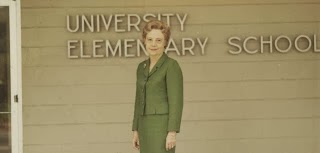 ging.
ging.
Task
The topic of this WebQuest is to learn about the biography of American Educational Psychologist Madeline Hunter and then create your own lesson plan.
This Webquest will take you through the steps of Madeline Hunter's lesson planning template. Step by step you will learn to create your own lesson plan using using seven simple steps designed by Madeline Hunter.

Start with this link:
Madeline Hunter's Lesson Plan Format
Next view this power point:
Lesson Planning and Execution:
Pick a subject you teach and follow the steps.

- Developing the objective
- Provide an anticipatory set
- State the objective to the student
- Provide input on the content
- Check for understanding
- Provided guided practice
- Assign independent practice
Process

Evaluation
Conclusion
Check these things out:
A Critique of Madeline Hunter's Lesson Plan from John Dewey's Perspectived
Cyndy and Teresa say you can accomplish the following in seven steps. As easy as 1,2,3,4,5,6, and 7. 
Oh! My goodness! What do I do now? Teaching a classroom with any number of students can be frightening for any teacher without a plan. The best plan is be prepared, know what you will teach in the classroom. Madeline Hunter is a woman who knows how to create a lesson plan to actively engage students in learning right from the get go. She says there are seven steps to designing the perfect lesson. What do you say, let us try out her method step-by-step.
Starting with the Anticipatory set - AKA "The Hook" – Let us call this the hook line, the opposite would be failure, thus “hook line or sinker” comes to mind. The objective here is to grab the attention of the audience which in this case is the students. Think about the lesson content, reflect on what you have done so far and what you can do next to capture the student’s interest. In other words think of an attention grabber and example would be relating to the topic to students interest make a connection to their lives.
Any good plan needs clear and obtainable objectives, step two and standards, step three to achieve. No explanation is really required for this part is easy to accomplish. Purpose however, requires some thought. The answer is in way shape or form is to do good on a test. The answer should be something like this…students need to learn this because it relates to their life or this is knowledge which is beneficial to their future. Instructional input, step four is an interesting term look at it this way…what goes in should hopefully be processed into knowledge. Knowledge and understand takes shape in many forms. Even a new vocabulary word learned is knowledge. There is no such thing as too much knowledge, but there is such a thing as too much knowledge to process at one time. Student’s brains work fast, but they are not computers to input, process and output results.
Now, relating to input in comes step five, checking for understanding. Just like computers, speed depends on many factors, type of computer, memory capacity, size of rams. Students are not computers but there are many different factors that affect learning (input). This can be cognitive abilities, interests, environment, and even nature and nurture affects student learning capabilities. So check for understanding frequently, by using a variety of assessments formative and summative are viable options.
Step six is closure. Closure as part of the seven steps is used in the positive sense, student reflection. Students reflect on their understanding of the concepts or knowledge taught. Simply asking students if they understood is not enough. This requires students understanding what they have learned, being able to explain or demonstrate exactly what they learned. Higher level thinking is an essential ingredient.
The final step is number seven, independent practice. Number seven is steps within steps. Teacher needs to reflect on student understanding. Think of it like this…can your students go out into the world with understanding? Can your students work independently to demonstrate understanding? Consider assessments, smart goals, long term and short term goals, reflect on test results, analyze data, and create an action plan based on the results. In some case depending on the results, reteaching is a worthwhile option. The Madeline Hunter lesson plan method is doable, sustainable, and practical. Just follow the seven steps…start at one and go, go, go, two, three, four, five, six, and seven. You did it!!! You have completed the webquest and created a lesson plan using Madeline Hunter’s seven steps.
Credits
Sources:
Hunter, Madeline. "What's Wrong With Madeline Hunter." Teaching and Supervising (1985): 57-60. Association for Supervision and Curriculum Development. Web. 12 Mar. 2016.
"Madeline Hunter Lesson Plan Template." Worksheets, Lesson Plans, Teacher Resources, and Rubrics from TeAch-nology.com. Teachnology, Inc., 1999-2011. Web. 12 Mar. 2016.
"Madeline Hunter's Lesson Plan." Madeline Hunter's Lesson Plan. N.p., n.d. Web. 12 Mar. 2016.
Teacher Page
Finished Lesson Plans:
Cyndy and Teresa's Social Studies Grade 6 SAMPLE
Madeline Hunter’s Lesson Plan
Example: Grade 6 Social Studies |
What is the lesson objective? (What will the students learn and/or demonstrate?) |
Alexander the Great built an empire that united much of Europe, Asia, and Egypt.
|
Standards addressed and expectations of students: |
Standard 6: (Government) Students will understand why societies create and adopt systems of governance and how they address human needs, rights, responsibilities and citizenship.
6.5.a Identify issues involving rights, roles and responsibilities of individuals in relation to broader society.
6.5.b Describe how political institutions meet needs and wants of individuals and society.
|
Anticipatory Set: (“The Hook” -- something to excite the student about the subject matter) |
Map: Show the vastness of Alexander the Great’s Empire, c. 323 BC
Tell the story of Alexander’s success as a teenager winning a bet against distinguished leaders for a horse named Bucephalis.
Preview Main Ideas, Big Idea, and Key Terms and People.
|
Teaching/Instructional Process: (Input, modeling, and checking for understanding) |
As students read, have them take notes about the important topics and key vocabulary words by making a bulleted list of phrases. Remind students that they do not have to write full sentences but rather key words and ideas that they think are important to remember. Remind students that the underlined words and phrases in the textbook are important to know, but that students should also include any other ideas they think might be important.
|
Guided practice and monitoring: (Monitor orally individually or together; monitor via written language or via a task performance; monitor via group sampling or visual answers, e.g., “thumbs” -- you monitor to know if students are learning and lesson objectives are being met) |
Ask students to discuss whether blended cultures, such as the Hellenistic cultures, are weaker or stronger than cultures with one source.
|
Closure: (Statements or actions by you that help students make sense out of what has just been taught, to help form a coherent picture, to eliminate confusion and frustration, and to reinforce major points to be learned) |
Make a floor map for your classroom. Hang a shower curtain liner on the wall and project an outline map of Alexander the Great’s empire using an overhead projector. Trace the outline onto the liner with a permanent marker. Label the map with the important places during his reign. Have students “conquer” different areas by walking on the map.
|
Independent Practice: (This can be a question or problem for students to ponder on their own or in small groups or pairs. The aim is to reinforce and extend the learning beyond the lesson and ideally into real world settings.) |
There have been novels, movies, and plays written about Alexander the Great. Have students try their hand at writing a script for a movie about the topic. Ask students choose a particular event and design a storyboard with several scenes that would appear in the movie. The students should include the characters, the setting, and sample dialogue for each scene. |