
Introduction
INTRODUCTION
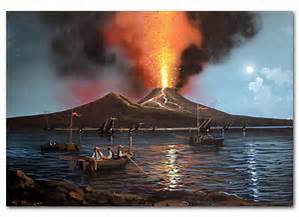
Volcanoes are very impressive landforms. For hundreds of years they have changed the way people live. Some cultures view them as gods because they are so destructive and powerful.
This was the view of the ancient Romans. Outside a large volcano, the city of Pompeii thrived. It was the crossroad among several major cities. Archeologists have discovered it was also the seat of many earthquakes and several volcanic eruptions.
This webquest is designed for students to gain knowledge about volcanoes and to use earth science concepts to explain how Mt. Vesuvius erupted in AD 79 even through the reading of Latin authors, mostly Pliny the Younger in his famous letters to Tacitus.
Students will study and demonstrate knowledge of the eruption features and its historical impact through a webquest on Pompeii.
Task
Your class has been chosen to go on a important mission appointed by the Campania Region to observe and monitor Mt. Vesuvius because it still represents a great danger to the cities that surround it, especially Naples.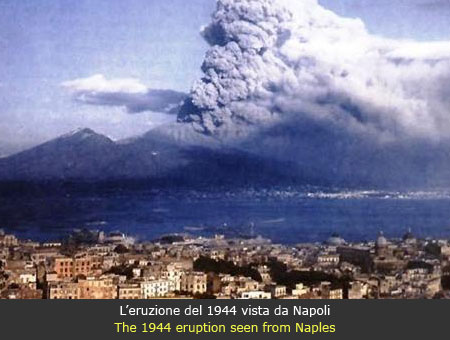
The group is divided into three research teams:
- the volcanologists,
- the historians,
- the members of the Civil Protection Commission.
Each team will be assigned specific duties: their mission is to conduct the research and elaborate a report.
They will create a PowerPoint Presentation with the results, to present to the Campania Deputy Assembly.
Process
THE VOLCANOLOGISTS
As the volcanogists of the research team, you are asked to provide this information:
-
What type of volcano is Mount Vesuvius ?
-
What is its height ?
-
What types of lava flow do these types of volcanoes form ?
-
What types of rocks and gases do these types of volcanoes usually produce ?
-
Is Mount Vesuvius extinct, dormant or active ?
-
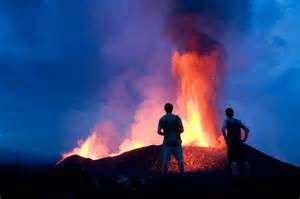
How does a Mount Vesuvius erupt ?
For your research, refer to the following sites:
https://en.wikipedia.org/wiki/Mount_Vesuvius
http://geology.com/volcanoes/vesuvius/
http://www.bbc.co.uk/schools/gcsebitesize/geography/natural_hazards/volcanoes_rev2.shtml
THE HISTORIANS
The assignment is to rediscover the events of 79 A.D. when Mount Vesuvius erupted. In your presentation don't forget to:
-
analyze the letter of Pliny the younger and other Latin authors who finding evidence of attitudes toward the eruption and the distruction that it caused .You have to consider:
-
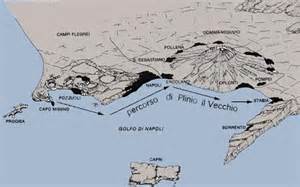
How did Pliny describe the eruption?
-
How did the people react to the eruption?
-
What is the attitude of Pliny the elder toward the eruption?
https://en.wikipedia.org/wiki/Pliny_the_Elder
https://en.wikipedia.org/wiki/Natural_History_(Pliny)
https://en.wikipedia.org/wiki/History_of_science_in_classical_antiquity
http://faculty.cua.edu/pennington/pompeii/plinyletters.htm
http://www.eyewitnesstohistory.com/pompeii.htm
THE CIVIL PROTECTION COMMISSION
your job is :
-
to determine what kind of damage the volcanic eruption can cause
-
to determine how they affect people and the economy
-
to gather up safety tips in order to help the group create a project plan
To help you focus on the important information, make sure that it answers the following questions:
-
What kinds of damage does this type of disaster cause?
-
How does this disaster affect people and/or the economy?
-
What are some important safety tips that your sources recommend?
Project Plan for Volcanic eruptions
-
What to do Before the Disaster
-
What to do During the Disaster
-
If you are in a building
-
If you are outside
Http://www.redcross.org/prepare/disaster/volcano
http://www.seismic.ca.gov/VolcanoWhat2Do.html
Evaluation
-
CRITERIA1
UNSATISFACTORY
2
ALMOST UNSATISFACTORY
3
SATISFACTORY
4
GOOD
5
EXCELLENT
SCORE
KNOWLEDGE OF MAIN MT. VESUVIUS FEATURES (CONTENT)
Hasn't acquired none of the basic concepts and principles of the topic.
Has acquired only a few basic concepts and principles of the topic.
Has acquired some basic concepts and principles of the topic.
Has acquired most of the basic concepts and principles of the topic.
Has acquired all of the basic concepts and principles of the topic.
UNDERSTANDING AND ILLUSTRATING OF THE TOPIC (CONTENT)
The explanation is severely deficient in terms of logical structuring and formulation; no personal evaluation.
The explanation shows major deficiencies in terms of logical structuring and formulation.
Sufficient explanation, with a limited number of errors; limited personal evaluation.
Generally well structured, correct and adequate explanation; good personal evaluation.
Well structured, correct and comprehensive explanation; excellent personal evaluation.
ACCURACY (LANGUAGE)The sistematic grammar mistakes and the narrow range of vocabulary make the message meaningless.
Sistematically makes mistakes in grammar and vocabulary use, but the message is generally clear.
A few mistakes in grammat and vocabulary use do not lead to misunderstanding.
Good grammatical control and generally appropriate use of vocabulary.
Consistent grammatical control and appropriate use of vocabulary.
FLUENCY AND INTERACTION (LANGUAGE)The commuication is totally dipendemt on repetition, rephrasing and repair.
Can manage the discourse and the interactio with effort and must be helped.
Can express him/herself and interact with a reasonable degree of fluency.
Can express him/herself and interact with a good degree of fluency.
Can express him/herself with a natural flow and interact with ease.
Conclusion

You have just finished your Mount Vesuvius webquest !
During your research you have learned:
about geography: volcanoes features, volcanic eruption phases, volcanic eruption effects in terms of pros and cons, what to do if a volcanic eruption occurs;
about Latin literature: Latin authors accounts about the 79 a.d. Mount Vesuvius eruption (and you discovered that they already knew quite a lot about volcanoes !);
about presentation skills: how to talk about what you've learnt: informally as a member of a group and formally as a presentation;
about digital skills: how to present information using digital tools, hyperlinks and visual aids;
about language skills: how to use the target language in the form of reading web pages, writing presentations, listening to peers's opinions, discussing and debating ideas and opinions;
about cross-curricular skills: to actively partecipate in group discussion when exploring an issue and to develop search skills when finding information from resources.
Whatever the result, be proud of your effort and keep improving !
Credits
This webquest has been realized using the precious tool available here:
Other web sources:
BBC gcsebitesize
Wikipedia
The California Seismic Safety Commission website
The Redcross website
The Catholic University of America website
and others.