
Introduction
The Five Flavors Profiles —Bitter, Salty, Sour, Sweet and Umami (Savory) are used to balance taste and round out the overall flavor of a dish. As a chef it is important to use the five flavor profiles when cooking, regardless of the recipe and technique, to achieve a balanced taste.
By working through this webquest you will be able to apply the Five Flavor Profiles in your own cooking to balance and maximize flavor. You will understand that flavors counteract, balance and enhance each other. Each flavor has a purpose.
By understanding the Five Flavor Profiles you will be able to identity…

- Which flavors balance and enhance each other.
- Ingredients to use to for each flavor.
- Foods that naturally taste like each flavor.
- History and culture of the Five Flavor Profiles.
By understanding the Five Flavor Profiles you will be skilled at…
- Refining recipes.
- Using new ingredients.
- Improvising ingredients.
- Applying the Five Flavors Profiles creatively.
- Using alternative ingredients of each flavor to create a healthier dish.
By working through this webquest you will be acheiving these important culinary and literacy standards.
American Culinary Federation (ACF) Standards
STANDARD 5: FOOD PREPARATION - To develop skills in knife, tool and equipment handling and apply principles of food preparation to produce a variety of foods. To operate equipment safely and correctly.
STANDARD 9: NUTRITION - To describe the characteristics, functions and food sources of major nutrients and how to maximize nutrient retention in food preparation and storage.
College and Career Readiness Anchor Standards for Writing:
7. Conduct short as well as more sustained research projects based on focused questions, demonstrating understanding of the subject under investigation.
9. Draw evidence from literacy or informational texts to support analysis, reflection and research.

Task
You are a Personal Chef and your high profile client needs you to make a 3-Course Dinner for four guests tonight. You have no time to buy ingredients and must use what foods are already in their pantry and kitchen. You will create a 3-course meal that will impress your client and their guest by improvising ingredients and applying the Five Flavors Profiles.
You will need to:
- Provide a menu with written descriptions for each course.
- Create and cook each dish using a mystery basket of ingredients that represent what your client has in their kitchen.
- Present your menu, finished dishes and describe what ingredients you used to improvise for other ingredients and their flavors.

Process
1. Do Research. 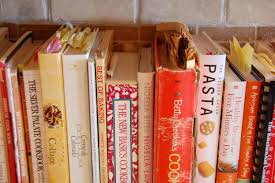
A great chef will know...
- Which flavors balance and enhance each other.
- Ingredients to use to for each flavor.
- Foods that naturally taste like each flavor.
- History/Culture behind each of the five flavors profiles.
2. Study and Understand the Five Flavor Profiles.
A chef is knowledgeable about their recipe, the combination of flavors and implementing a standard recipe or modifying an existing recipe to balance and maximize flavor.Be able to answer...
- What recipes will I experiment with now that I under stand this?
- How can this be used for diet and nutrition?
- How can I balance a dish that is…?
- What ingredient can I use in place of ____if I don’t have it on hand?
3. Production/Practice - Fix it ChallangeTake your knowledge of the Five Flavor Profiles and practice fixing (balancing) the flavors with five recipes. You will need to "fix"...
- Vinaigrette that is too sour
- Soup lacking depth of flavor
- Curry that is too spicy/hot
- Dessert that is overally sweet
- Bitter brussel sprout side dish
Use the below links to help you gain knowledge of the Five Flavor Profiles:Cooksmarts Study-Flavor-ProfilesDoctrine of Five FlavorsFlavor 101 The Five Basic Taste5 Taste-How to cook with themWhy Does Umami Confuse Us?
Evaluation
All parts of your tasks will be evaluated as followed:
SCORING RUBRIC FOR CULINARY ARTS PRACTICAL
|
Component |
Unacceptable (C) |
Acceptable (B- to B) |
Good (B+) |
Excellent (A- to A) |
|
Safety and Sanitation (i.e. Personal Hygiene/Professional attire, proper safety precaustions, ingredients stored properly, proper hand washing/glove use, etc.) |
Poor hygiene- unshaven, unkempt hair, visiable dirt under nails, unclean and wrinkled uniform and missing items, no observation of proper hand washing or glove use, no oberservation of safety precaustions- not holdind knife down at side, not saying "behind you or hot" |
Moderate hygiene-kempt hair, clean nails, somewhat clean uniform, have most pieces, most basic safety precaustions observed, ususally hand washes and properlly uses gloves. |
Good personal hygiene and clean uniform with all items, all proper safety techniques oberved, most often uses proper hand washing and glove use. |
Excellent personal hygiene, clean and pressed uniform with all items. All safety precaustions observed and taught to others, always uses proper hand washing and glove use. |
|
Organizations Skills (Written plan, mise en place, organized station/clean lab, proper utilization of ingredients, timing of service) |
No written plan, very poor mise en place, unorganized and messy station, inaccurate utilization of ingredients, poor time management |
Loosely followed written plan, basic mise en place, some organized and acceptably clean station, acceptable utilization of ingredients, good time management |
Consistantly followed written plan, good mise en place, organized and clean station, great utilization of ingredients, great time management |
Consistantly followed written plan, execellent mise en place, organized and clean station, great utilization of ingredients, great time management |
|
Culinary Skills & Techniques (Proper cooking techniques culinary skills and fundamentals, craftsmanship/knife skills, portion size) |
Poor execution of proper cooking techniques, poor basic culinary skills and fundamentals, observed poor craftsmanship and knife skills, inconsistant portion size |
Good execution of proper cooking techniques, basic culinary skills and fundamentals observed , basic craftsmanship and knife skills, some consistency with proper portion size |
Great execution of proper cooking techniques, great culinary skills and fundamentals observed , great craftsmanship and knife skills, consistant proper portion size |
Excellent execution of proper cooking techniques, excellent culinary skills and fundamentals observed , great craftsmanship and knife skills, consistant proper portion size |
|
Taste & Presenation (Flavor/taste, texture and doneness, presentation) |
Poor flavor/taste, poor texture and doneness, very basic and poor presentation |
Acceptable flavor/taste good texture and doneness, acceptable basic presentation |
Great flavor/taste, great texture and doneness, great presentation |
Excellent flavor/taste, excellent texture and doneness, excellent presentation |
|
Other (Quality of written work, creativity, depth of thought and level of effort, presentation and communication skills) |
Poor quality of written work, lack of creativity, very little depth of thought and effort shown, poor presentation and communication |
Good quality of written work, some creativity shown, depth of thought and effort shown, good presentation and communication |
Great quality of work and creativity, evident depth of thought and effort shown. Excellent presentation and communication skills
|
Excellent quality of work and creativity, pronounced depth of thought and effort shown. Outstanding presentation and communication skills |
Conclusion
Bon Appetit!
You now can enjoy your knowledge and skills of using the Five Flavor Profiles.
Understanding the Five Flavor Profiles is a valuable skill to add to your Culinary Tool Box!
As a Chef the Five Flavor Profiles will always play a role in continuing your culinary knowlege, skills, technique and refinement in flavors.
Credits
Works Cited
J. (2014, October 6). Cooksmart Guide To Flavor Profile. Retrieved February 11, 2016, from http://www.cooksmarts.com/articles/study-flavor-profiles/Mcquaid, J. (2015, May 15). Flavor 101: The Five Basic Tastes. Retrieved February 10, 2016, from http://parade.com/396983/johnmcquaid/flavor-101-the-five-basic-tastes/
Oakes, K. (2015, March 11). The 5 Taste & How To Cook With Them. Retrieved February 11, 2016, from http://food52.com/blog/12326-the-5-tastes-how-to-cook-with-them/Sexena, J. (2016, February 17). Why Does Umami Confuse Us? Retrieved February 23, 2016, from http://firstwefeast.com/eat/why-does-umami-confuse-us/Wertz, S. K. (2008, Winter). Doctrine of the Five Flavors. Retrieved February 9, 2016, from http://www.flavorandfortune.com/dataaccess/article.php?ID=689/