
Introduction
This lesson was developed as an educational resource for Learning Disabilities.
Students will research various disabilities and determine if thse disabilties that occur in a child are affected by other children in general and what accomadations and inclusive ideas are made in particular.
Learners
The lesson is targeted toward secondary students studying education and Special needs children. You may want to have your students view the Learning Disabilities Video. https://www.youtube.com/watch?v=_3ONz6TaKIk
Prior to beginning this lesson, students should have basic skill in word processing and in navigating the Internet. Curriculum Standards
Education Grades 9-12
Learning Disabilities in Students and children :
Research and Technology (Language Arts)
- 1.3 Use clear research questions and suitable research methods (e.g., library, electronic media, personal interview) to elicit and present evidence from primary and secondary sources.
- 1.5 Synthesize information from multiple sources and identify complexities and discrepancies in the information and the different perspectives found in each medium.
Resources Needed
To implement this WebQuest you will need:
- Computers with Internet access
- Word processing program
- Brainstorm Disabilities worksheet
- A presentation software would be helpful
- Rubric for assessing the final presentation.
Task
Each team member will research information to determine what these disabilities occurring in children have to do with one another. You will each become an expert on one of these disabilities, its causes/impacts and Assisted Technology/ Inclusion ideas. Then you will come together as a team to compare/contrast the disabilities and determine what if any impact one has upon the other.
Phase One: As a Team Spend some time together exploring, create some brainstore ideas of learning disabilties and what you previously know about disabilities.

Process
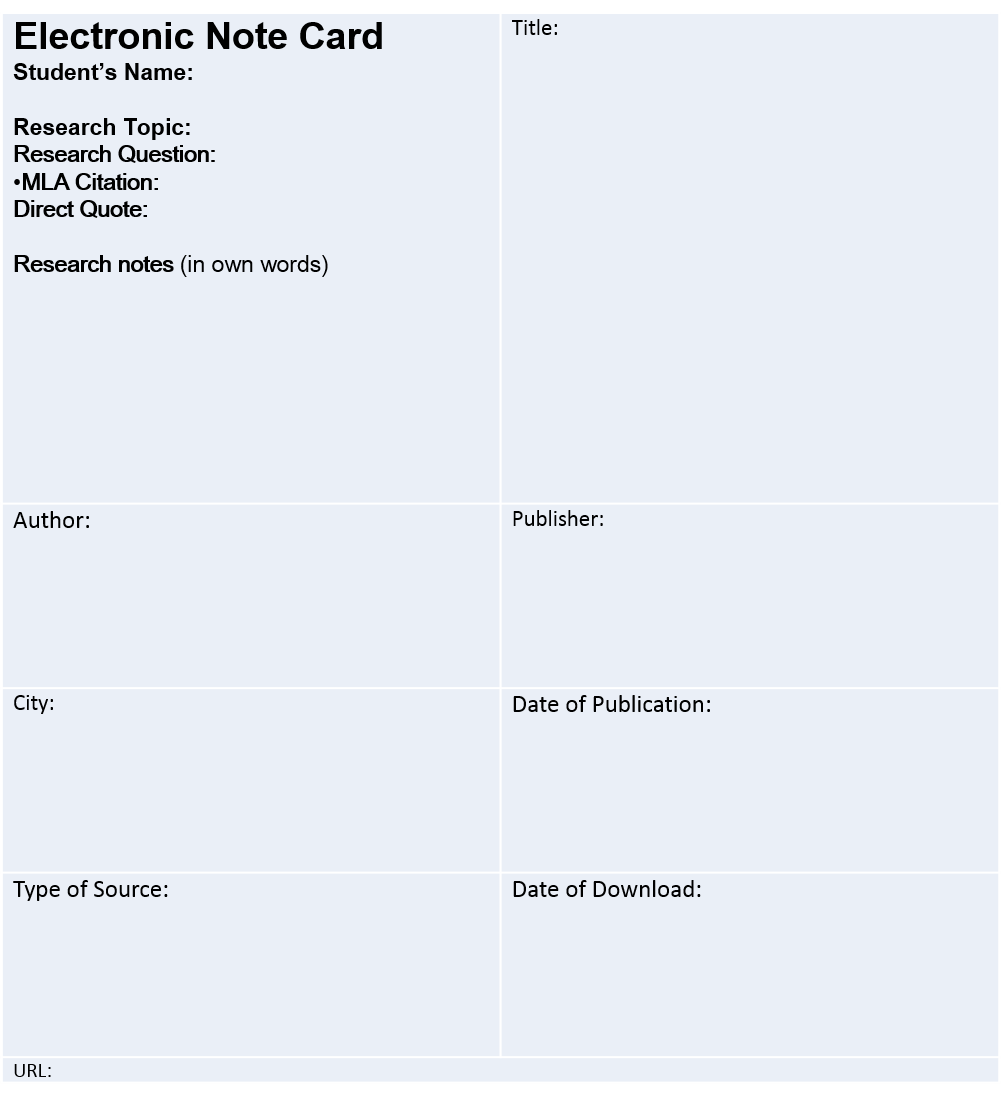
Phase 1: As a team, make a list of questions that need to be answered to lead you to the answer to the big question,"What disabilties affect children's learning and how do students adapt with technology and inclusion?" Use the Enotes to plan your research. Be sure to manage your time so that you are able to meet your deadlines for completion of your research.
Phase 2:
Each member of your team will select a learning disabilitiy that occurs in children to research. You may use the resources to help find answers to your questions. Describe all the attributes of your disability.
Phase 3:
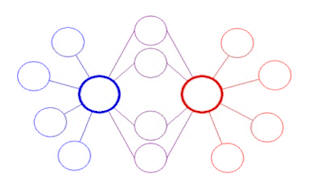
Once you have researched your disability to answer the questions your team listed, you will come back together as a team to compare and contrast your disability with other disabilities that your team members selected..
Phase Four:
Use the information that you gathered and your thinking maps to prepare your final team presentation. Be sure to answer each of your team questions as well as the big question,
Evaluation
Group Planning
Plan your research project as a team before you begin. Your research plan will be evaluated based upon this Rubric.
|
CATEGORY |
4 = exceeds the standard |
3 = meets the standard |
2 = partially meets the standard |
1= does not meet standard |
|
Ideas/Research Questions |
Researchers independently identify at least 4 reasonable, insightful, creative ideas/questions to pursue when doing the research. |
Researchers independently identify at least 4 reasonable ideas/questions to pursue when doing the research. |
Researchers identify, with some adult help, at least 4 reasonable ideas/questions to pursue when doing the research. |
Researchers identify, with considerable adult help, 4 reasonable ideas/questions to pursue when doing the research. |
|
Group Timeline |
Group independently develops a reasonable, complete timeline describing when different parts of the work (e.g., planning, research, first draft, final draft) will be done. All students in group can independently describe the high points of the timeline. |
Group independently develops a timeline describing when most parts of the work will be done. All students in group can independently describe the high points of the timeline. |
Group independently develops a timeline describing when most parts of the work will be done. Most students can independently describe the high points of the timeline. |
Group needs adult help to develop a timeline AND/OR several students in the group cannot independently describe the high points of the timeline. |
|
Delegation of Responsibility |
Each student in the group can clearly explain what information is needed by the group, what information s/he is responsible for locating, and when the information is needed. |
Each student in the group can clearly explain what information s/he is responsible for locating. |
Each student in the group can, with minimal prompting from peers, clearly explain what information s/he is responsible for locating. |
One or more students in the group cannot clearly explain what information they are responsible for locating. |
|
Plan for Organizing Information |
Students have developed a clear plan for organizing the information as it is gathered and in the final research product. All students can independently explain the planned organization of the research findings. |
Students have developed a clear plan for organizing the information in the final research product. All students can independently explain this plan. |
Students have developed a clear plan for organizing the information as it is gathered. All students can independently explain most of this plan. |
Students have no clear plan for organizing the information AND/OR students in the group cannot explain their organizational plan. |
|
Quality of Sources |
Researchers independently locate at least 2 reliable, interesting information sources for EACH of their ideas or questions. |
Researchers independently locate at least 2 reliable information sources for EACH of their ideas or questions. |
Researchers, with some adult help, locate at least 2 reliable information sources for EACH of their ideas or questions. |
Researchers, with extensive adult help, locate at least 2 reliable information sources for EACH of their ideas or questions. |
Research Report As a team you will use your best judgment based upon the information you gather to answer the question above. You will prepare a presentation of your conclusions. Your team research report will be evaluated based upon this Rubric.
|
CATEGORY |
4 = exceeds the standard |
3 = meets the standard |
2 = partially meets the standard |
1= does not meet standard |
|
Overarching QuestionIntegrating Learning Disabilities |
Information clearly answers the overarching question; a strong logical argument presents a clear connection (or lack of thereof) between disabilities; includes several supporting details and/or examples. |
Information clearly answers the overarching question; a logical argument presents a clear connection (or lack of thereof) between disabilities; provides 1-2 supporting details and/or examples. |
Information addresses the overarching question; however no details and/or examples are given to support arguments. |
Overarching question is not answered. |
|
Application of Thinking Maps |
Thinking Maps illustrate a clear thought process appropriately supporting the group's argument. Illustrations add to the reader's understanding of the topic. |
Thinking Maps appropriately support group's argument leading to the conclusion and add to the reader's understanding of the topic. |
Thinking Maps somewhat support group's argument and sometimes add to the reader's understanding of the topic. |
Thinking Maps are not applied appropriately or are not used. . |
|
Organization |
Information is very organized with well-constructed paragraphs and subheadings. |
Information is organized with well-constructed paragraphs. |
Information is organized, but paragraphs are not well-constructed. |
The information appears to be disorganized. |
|
Mechanics |
No grammatical, spelling or punctuation errors. |
Almost no grammatical, spelling or punctuation errors |
A few grammatical spelling, or punctuation errors. |
Many grammatical, spelling, or punctuation errors. |
|
Sources |
All sources (information and graphics) are accurately documented in the desired format. |
All sources (information and graphics) are accurately documented, but a few are not in the desired format. |
All sources (information and graphics) are accurately documented, but many are not in the desired format. |
Some sources are not accurately documented |
Conclusion
Regardless of whether or not disabilties are related, they nevertheless do occur. No one chooses to experience a disability. But when we do, we are able to draw upon our collective strength and survive as a species despite the struggles of learning. Although we cannot stop disabilities from striking, we can prepare ourselves by having a plan to deal with the inevitable.
Resources: These will help you with starting on the disability you want to reasearch, technology in the classroom, and inclusion! These are some resources, these are not what you are limited to.
http://www.disabled-world.com/disability/types/
http://www.liberateyourself.co.uk/disabled-students/defining-disability/types-of-disability/
https://en.wikipedia.org/wiki/Disability
http://www.readingrockets.org/article/assistive-technology-kids-learning-disabilities-overview
Credits
This WebQuest was developed by Lindsay Hillsgrove as an educational resource for students learning educational disabilities.