
Introduction
Introduction
Your Mission!
Animal adaptations in animals refers to the way they can adjust or change to be able to live where and how they do. "Adaptations are any behavioral or physical characteristics of an animal that help it to survive in its environment. These characteristics fall into three main categories: body parts, body coverings, and behaviors" (Zoo society, 2015)

You will be an ecologist detective working in a small group. Your group will visit the Smithsonian National Zoo park among other places. A habitat will be assigned to you for this mission. With your group, you will investigate animals from around the world. Your mission today is to look at the diverse forms, structures, functions, and habitats of animals. When you look at these animals, what are some of the characteristics that tell you where you may or may not be able to find them and why? Could they survive in your chosen habitat? Could they survive where you live now?
Task
Your Tasks
Your group of ecologists will research characteristics of your habitat. You will then choose 5 animals to research, specifically looking at their adaptations. Your task is to decide whether your chosen animals could or could not survive in the habitat you researched and explain why.
You will show your detective work through a brochure, diorama, skit, poster, power point, or other choice that has been approved by the teacher.
Science Standard
There is one main standard that will be used for all of the exhibits. Below the standard, benchmark and objectives are listed.
Standard II (Life Science): Understand the properties, structures, and processes of living things and the interdependence of living things and their environments.
Benchmark I: Know that living things have diverse forms, structures, functions, and habitats.
1. Know that an adaptation in physical structure or behavior can improve an organism’s chance for survival (e.g., horned toads, chameleons, cacti, mushrooms).
- Observe that plants and animals have structures that serve different functions (e.g., shape of animals’ teeth).
- Classify common animals according to their observable characteristics (e.g., body coverings, structure).
(New Mexico State Department of Education, 2015).
Process
Process
1. Research materials
Detectives, you will need the following resources on your mission. Please make sure that you have a copy of the following document.
Adaptations worksheet
(Please see theTeacher's page for an example of this. You will get a copy of this in class.)
2. Habitat
Using your assigned habitat, research it and answer the questions using the websites below.
- What part of the world do you find your habitat?
- What is the temperature rage?
- How much does it rain? What is the average rainfall?
- What are the characteristics of the soil?
- Identify 3-5 nonliving things in your habitat?
- Identify 3-5 interesting facts that you found about your habitat?
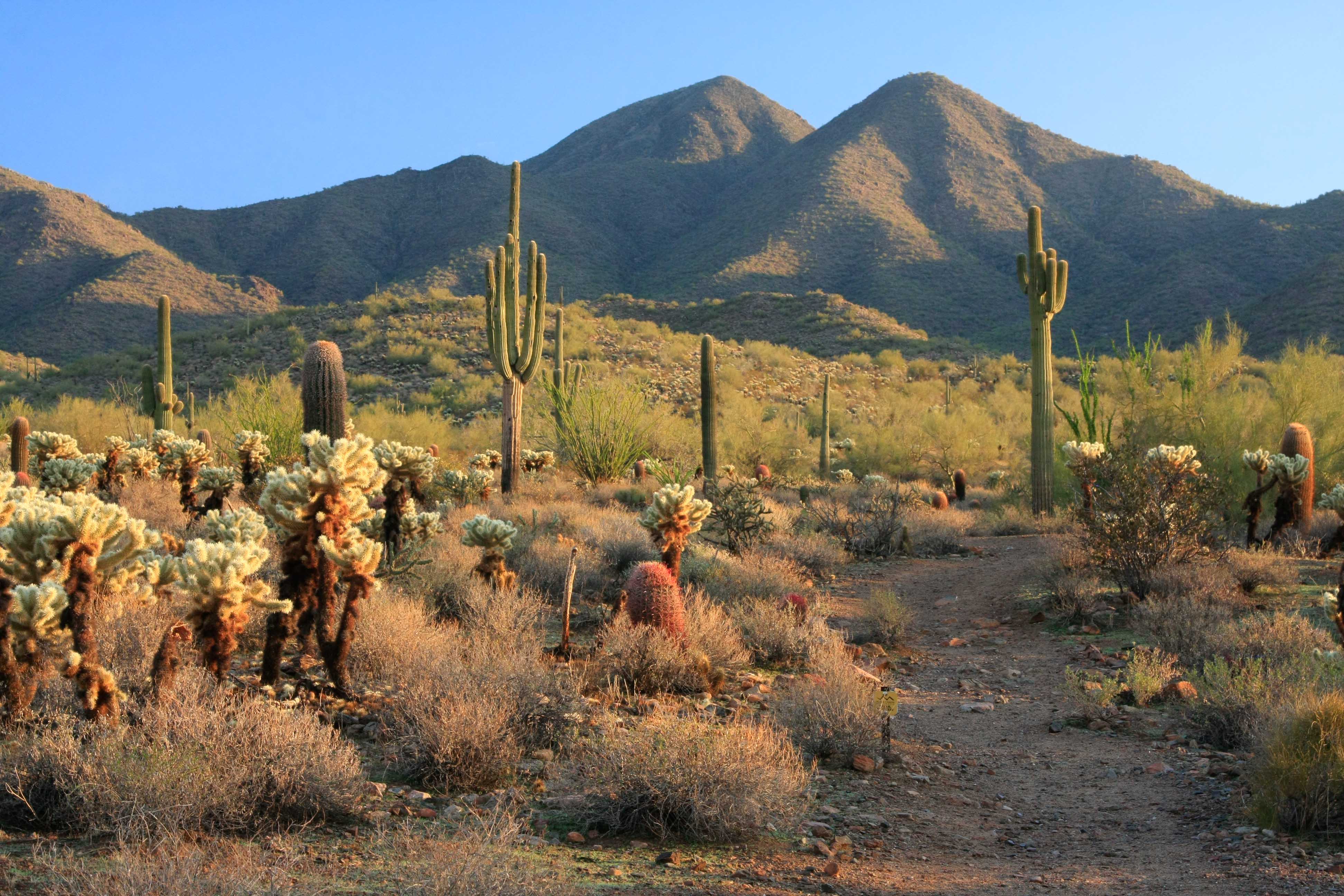
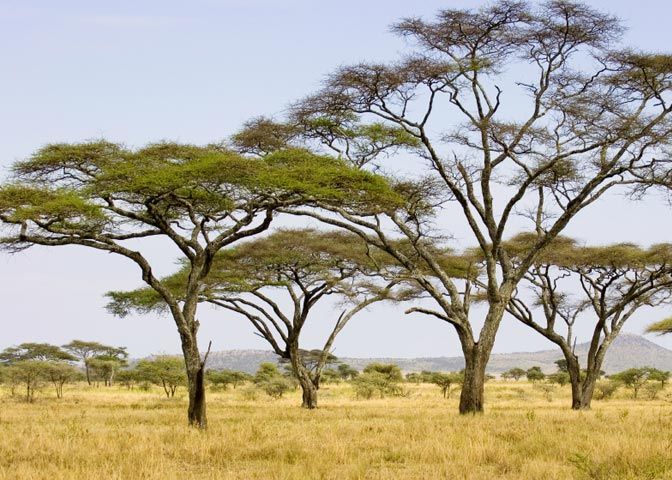
Desert Tropical Rainforest Savannah grassland
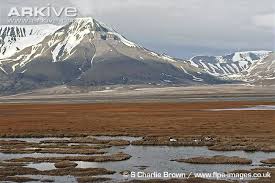
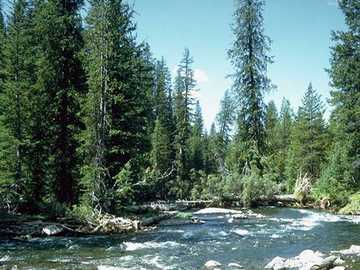
Innertidal zone Tundra1 Tundra2 Deciduous forest
3. Animals
Your team of ecologists will go on an adventure to the Smithsonian National Zoo park, Enchanted learning sight and Tundra.
Your team will choose 5 animals total: Your team needs to choose 1 animal from the Tundra sight (located in the habitat section) and 4 animals from the Smithsonian sight.
First choose your animals from the appropriate sight.
Next go to the Smithsonian and Tundra sights and gather information. If you need further data, you may use information that is found on the Enchanted learning sight that you visited when researching your habitat.
Complete the adaptations worksheet when gathering data about your animal.
Smithsonian National Zoo
You will go to the sights and Choose your animal from the page or list at the bottom
Amazonia Small mammals Reptiles and Amphibians Birds Invertebrates Cheetah Conservation
4.
Think about the habitat and animals that you researched. Decide if each of the animals could survive in your habitat. Show and explain why the animals could or could not survive there. You may do this through a brochure, diorama, skit, poster, power point, or other choice that has been approved by the teacher.
Evaluation
Evaluation
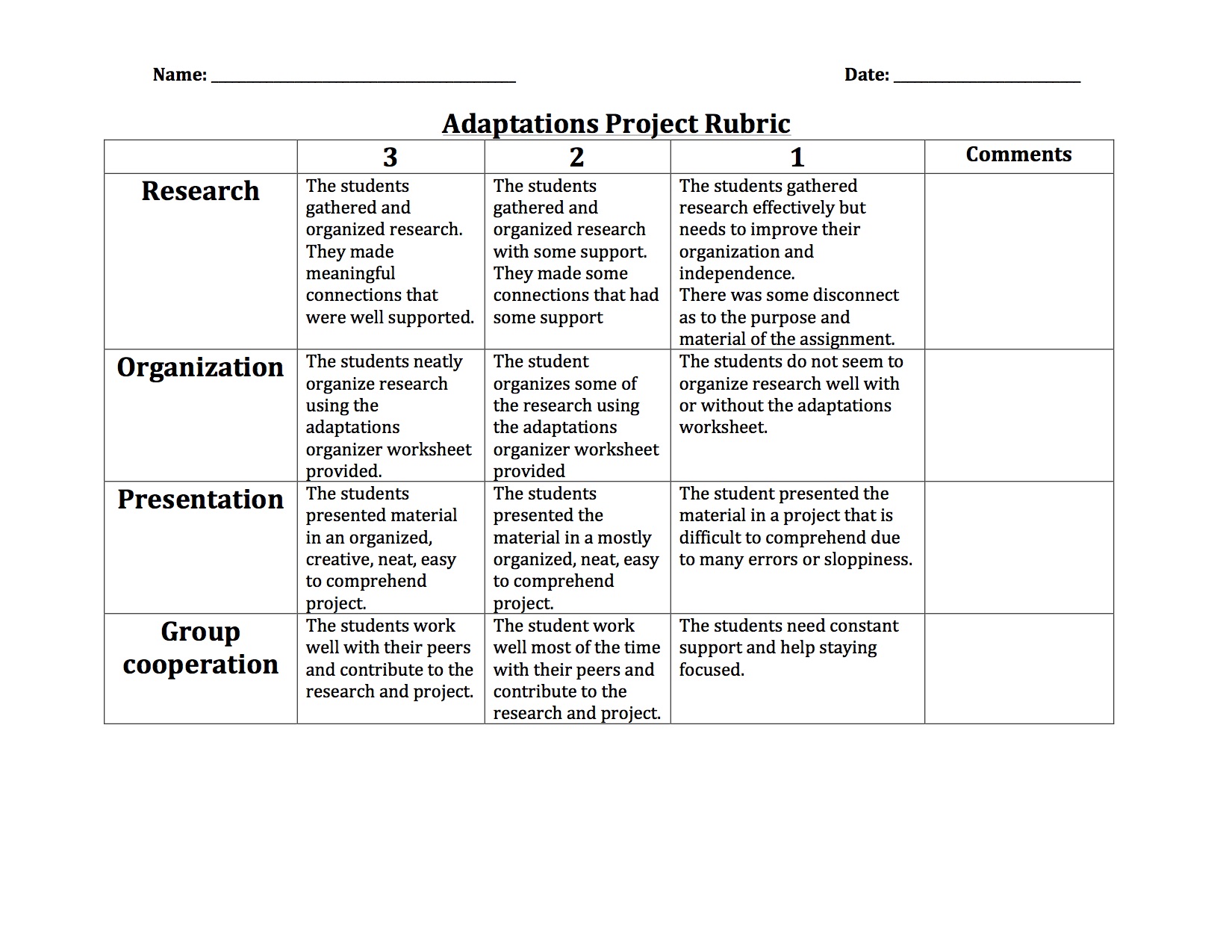
Ecologists, your work during this investigation will be graded using the following rubric.
Conclusion
Conclusion
Congratulations!
Your hard work has paid off. You have made sure that only animals that are able to survive in your habitat are there! You have also taught many other ecologists about your habitat and animals that live there.
Can you think of some animals that live in your habitat?
What habitats could you live in?
Credits
References
Etlin, R. (2015). A zoo is a great educational tool. Retrieved fromhttp://clearingmagazine.org
N.a. (2015). Enchanted Learning. Retrieved from http://www.enchantedlearning.com/Home.html
New Mexico State Department of Education. (2015). New Mexico 3rd grade science standards. Retrieved from
http://www.ped.state.nm.us/mathscience/dl08/Standards/G3ScienceStandards.pdf
Smithsonian National Zoo Park. (2015). Animals. Retrieved from https://nationalzoo.si.edu/Animals/
The animal spot (2008). Tundra animals. Retrieved from http://www.tundraanimals.net
Teacher Page
Animal adaptations organizer:
[img_assist|nid=30191|title=Adaptatons organizer|desc=|link=none|align=left|width=581|height=402]