
Introduction
View and read through your assigned section with your group.
You should spend at least 30 seconds to a minute viewing and analyzing each picture.
You will be presenting the information with the rest of the class.
Process
Railway Workers:
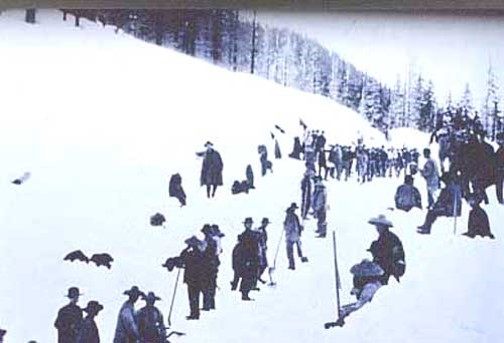
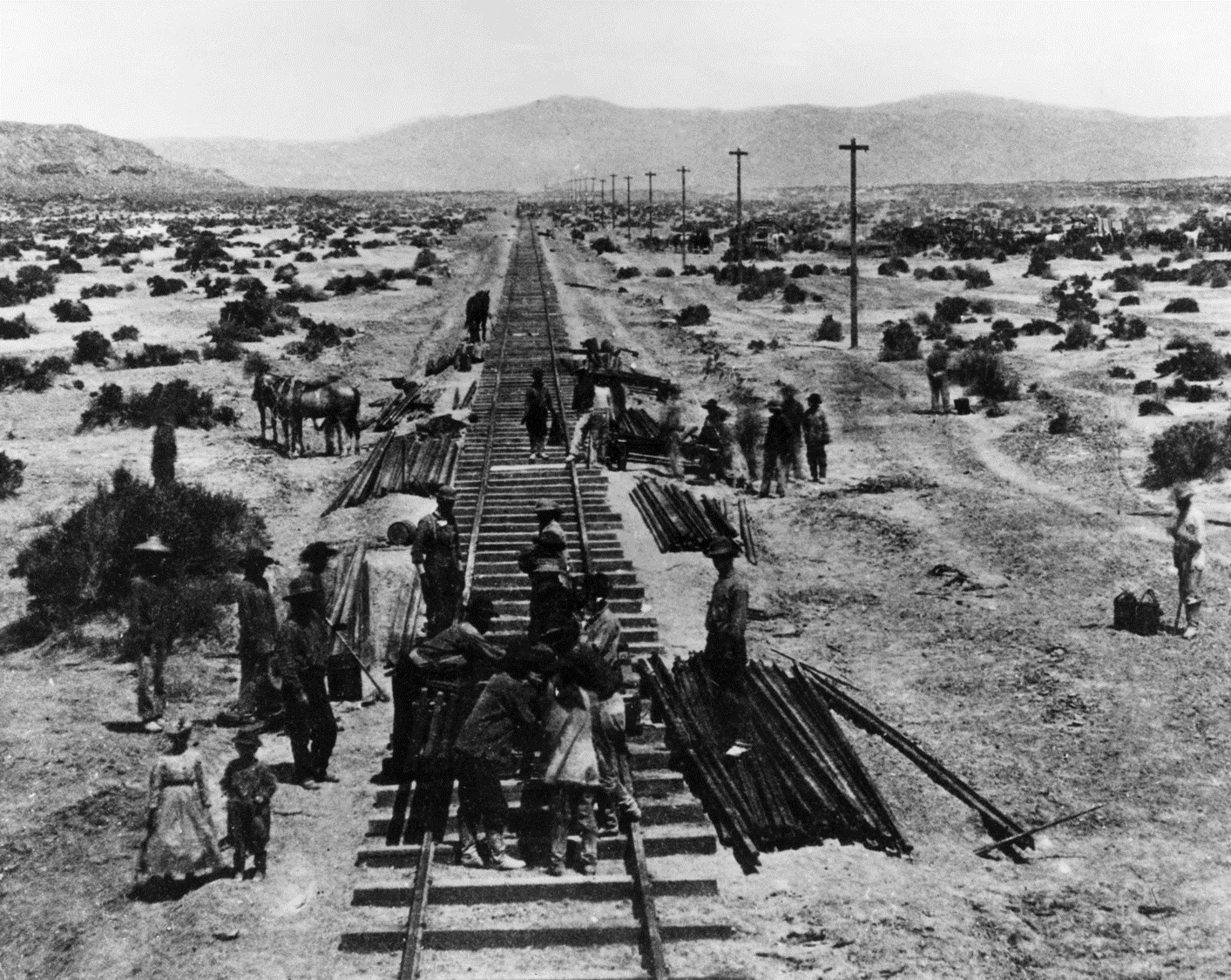
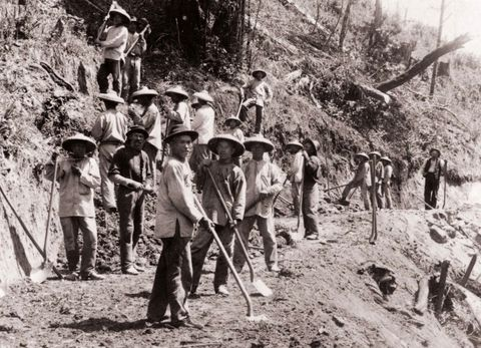
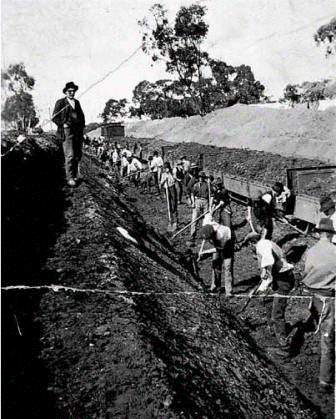
60 hour work week on average
Between 1880-1900, 35,000 workers killed per year and 500,000 injured
Loss of limbs & appendages
1/150 rail workers died each year
|
Directions: Read the following account and take notes on working conditions, problems experienced in their workplace, anything that people should know and understand about your occupation. Be prepared to share this information! |
“The Greatest Tyrant in the State of Pennsylvania”: A Late Nineteenth-Century Rail Worker Describes Management
Joseph P. Cahill, a worker in the freight department of the Philadelphia and Reading Railroad Company, described the petty tyrannies inflicted on workingmen by the company dispatcher.
Q. What is your age? - A. Thirty-one years.
Q. Are you a native of this State? - A. Yes, Sir.
Q. What has been your occupation? - A. I have been in the employ of the Philadelphia and Reading Railroad Company for the past ten years.
Q. In what capacities? - A. In the freight department.
Q. During the past three or four years what positions have you occupied? - A. In the delivery department.
Q. Please explain the problems railroad workers faced. - A. We told our boss that thieves who worked for our company would collect fares and tickets and not submit the money. This was money out of out pockets sir. We opened the case, and, as I said, we had these witnesses.
Q. How long a time did you spend in this investigation? - A. I think about seven or eight days.
Q. Well, go on. - A. We also had one man by the name of Rauk, his house is at the foot of this town. His father was blown up by an explosion on a train and the body went in the air about 50 feet. His body was taken to the roundhouse, and his son was working when he saw his father being killed. He went to the roundhouse and sent for an undertaker, and because he had refused to report to work on the day of his father’s death, he was fired.
Q. Can you give any other instances? - A. Mr. Dotts had both his legs cut off. It is a rule of our company in case of an accident that two men would go with the person home or at least to bring them to the hospital. The doctors did not deem it advisable to move this man, who died. This same man was not paid for the work he did that day…because he died. It was such an inhuman act.
Q. What else? - A. Our boss was a member of two or three churches here in Pottsville. If his employees owed any member of his church money for bills, they had to pay that money immediately or be suspended a week or ten days, no matter how unjust or small the bill was. They had to pay that money immediately. On the other hand we showed how well he used to pay his own bills. We talked to a man named Mr. Klein. He was undertaker in Palo Alto who produced his books and showed our boss, while he was a church member, had never paid his bill of $40 for a coffin for his own child’s body.
Q. What else did your boss do? - A. He would yell and scream at the men, and he would fire a man if he looked at him.
Q. Why not find another job? - A. There is nothing else in this country to do except work on the railroad or in the mines.
Mining
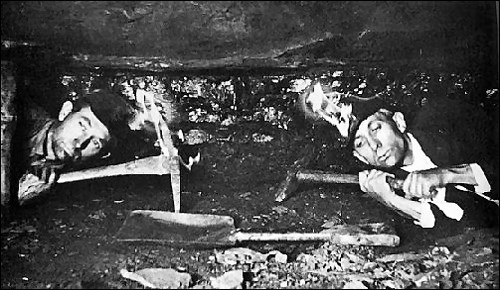
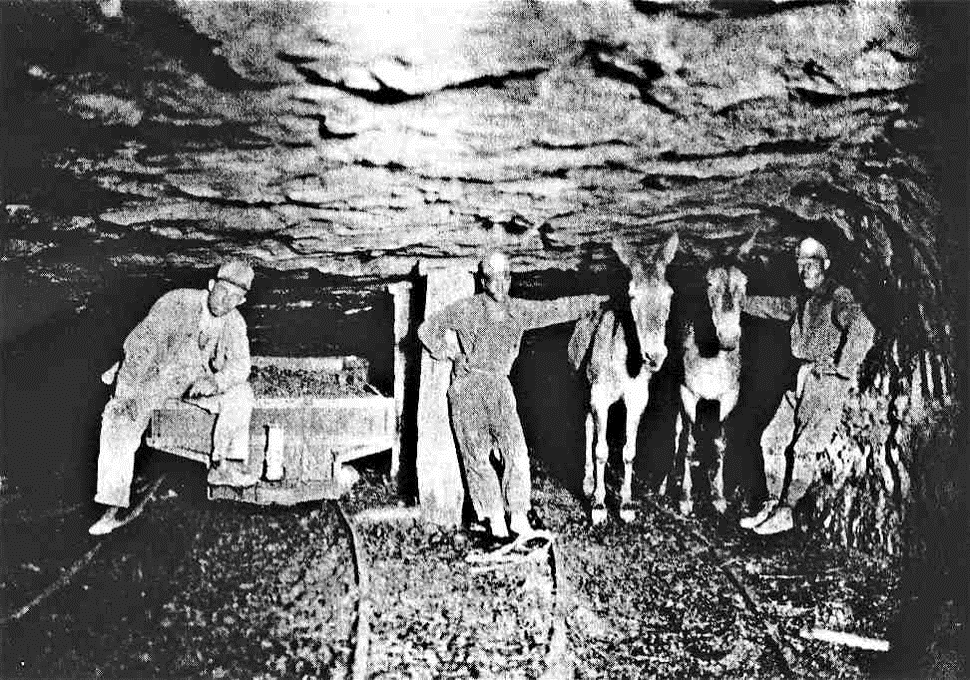
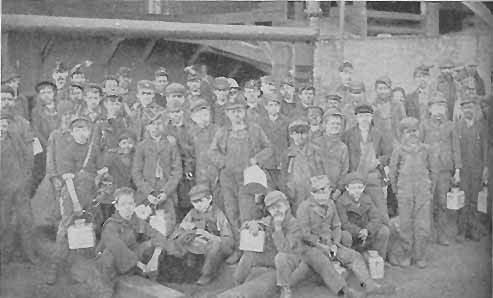
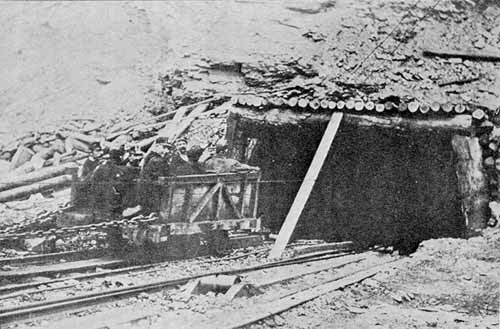
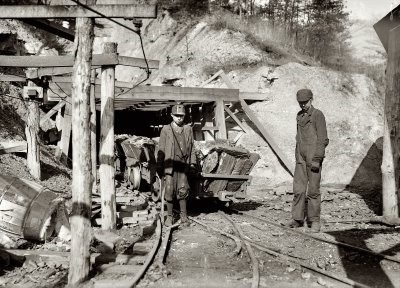
60 hour avg work week on
“Black lung” disease
Cave-ins
Gas explosions
Company towns/ Company Script/Company stores
No pensions/health insurance/unemployment insurance/sick leave
|
Directions: Read the following account and take notes on working conditions, problems experiences in their workplace, anything that people should know and understand about your occupation. Be prepared to share this information! |
Our Daily Life Is Not a Pleasant One," 1902
I am thirty-five years old, married, the father of four children, and have lived in the coal region all my life. Twenty-three of these years have been spent working in and around the mines. My father was a miner. He died ten years ago from "miners’ asthma."
Three of my brothers are miners; none of us had any opportunities to acquire an education. We were sent to school (such a school as there was in those days) until we were about twelve years of age, and then we were put into the screen room of a breaker to pick slate. From there we went inside the mines as driver boys. As we grew stronger we were taken on as laborers, where we served until able to call ourselves miners. We were given work in the breasts and gangways. There were five of us boys. One lies in the cemetery—fifty tons of top rock dropped on him. He was killed three weeks after he got his job as a miner—a month before he was to be married.
In the fifteen years I have worked as a miner I have earned the average rate of wages any of us coal heavers get. To-day I am little better off than when I started to do for myself. I have $100 on hand; I am not in debt; I hope to be able to weather the strike without going hungry….
…Our daily life is not a pleasant one. When we put on our oil soaked suit in the morning we can’t guess all the dangers which threaten our lives. We walk sometimes miles to the place-to the man way or traveling way, or to the mouth of the shaft on top of the slope. And then we enter the darkened chambers of the mines. On our right and on our left we see the logs that keep up the top and support the sides which may crush us into shapeless masses, as they have done to many of our comrades.
We get old quickly. Powder, smoke, after-damp, bad air-all combine to bring furrows to our faces and asthma to our lungs….
…I have had fairly good work since I was married. I made the average of what we contract miners are paid; but, as I said before, I am not much better off than when I started.
In 1896 my wife was sick eleven weeks. The doctor came to my house almost every day. He charged me $20 for his services. There was medicine to buy. I paid the drug store $18 in that time. Her mother nursed her, and we kept a girl in the kitchen at $1.50 a week, which cost me $15 for ten weeks, besides the additional living expenses.
In 1897, just a year afterward, I had a severer trial. And mind, in those years, we were only working about half time. But in the fall of that year one of my brothers struck a gas feeder. There was a terrible explosion. He was hurled downward in the breast and covered with the rush of coal and rock. I was working only three breasts away from him and for a moment was unable to realize what had occurred. Myself and a hundred others were soon at work, however, and in a short while we found him, horribly burned over his whole body, his laborer dead alongside of him.
He was my brother. He was single and had been boarding. He had no home of his own. I didn’t want him taken to the hospital, so I directed the driver of the ambulance to take him to my house. Besides being burned, his right arm and left leg were broken, and he was hurt internally. The doctors-there were two at the house when we got there-said he would die. But he didn’t. He is living and a miner today. But he lay in bed just fourteen weeks, and was unable to work for seven weeks after he got out of bed. He had no money when he was hurt except the amount represented by his pay. All of the expenses for doctors, medicine, extra help and his living were borne by me, except $25, which another brother gave me. The last one had none to give. Poor work, low wages and a sickly woman for a wife had kept him scratching for his own family.
It is nonsense to say I was not compelled to keep him, that I could have sent him to a hospital or the almshouse. We are American citizens and we don’t go to hospitals and poorhouses....
Meat Packing
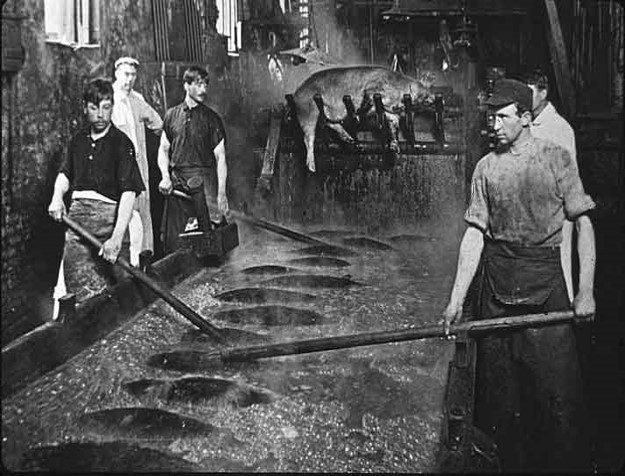
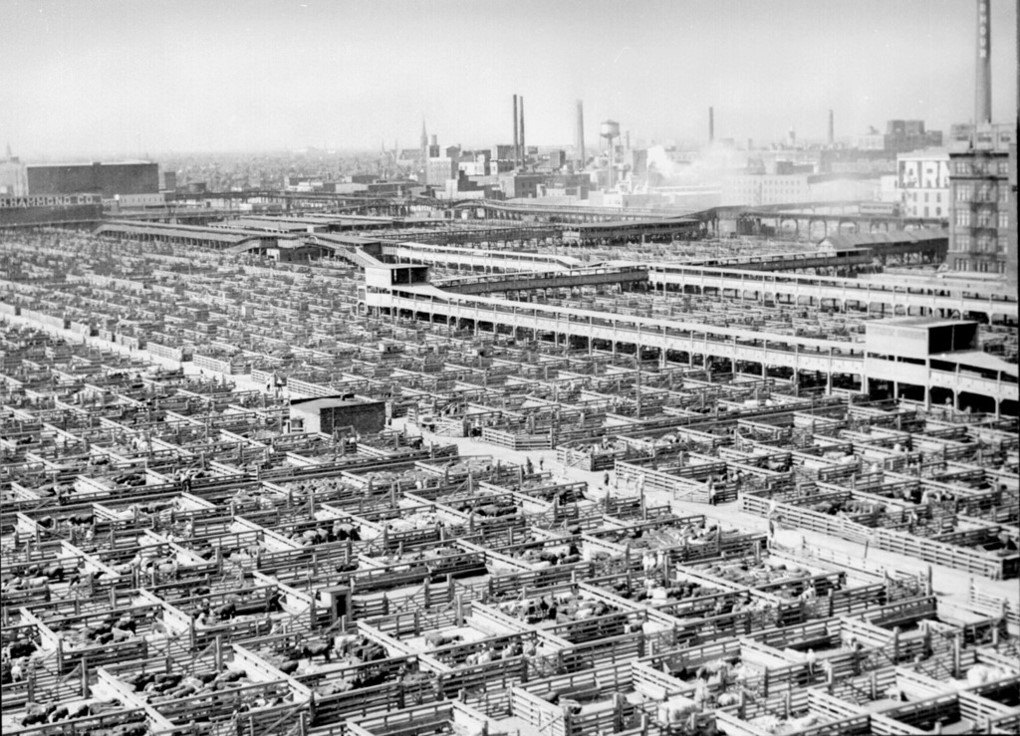
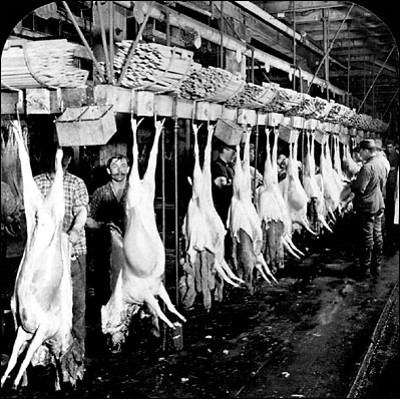
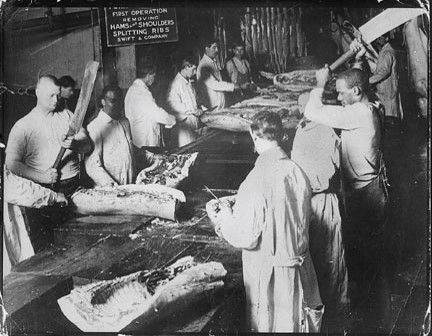
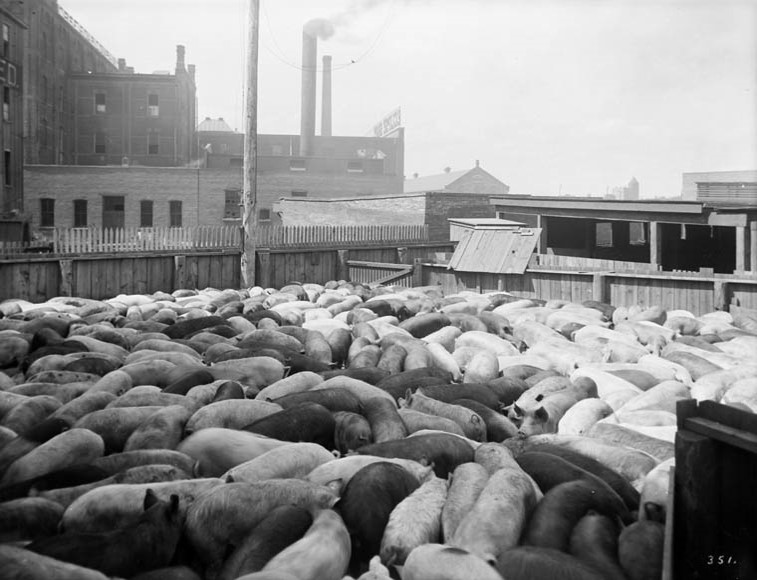
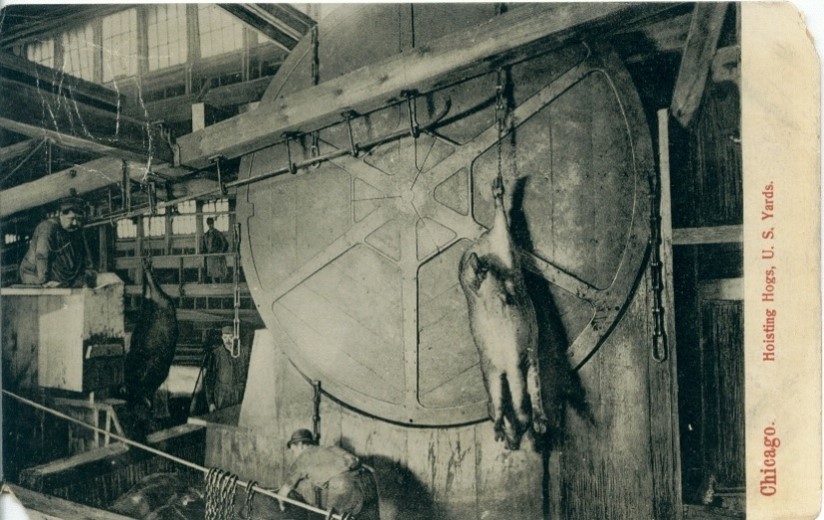
Hog Wheel
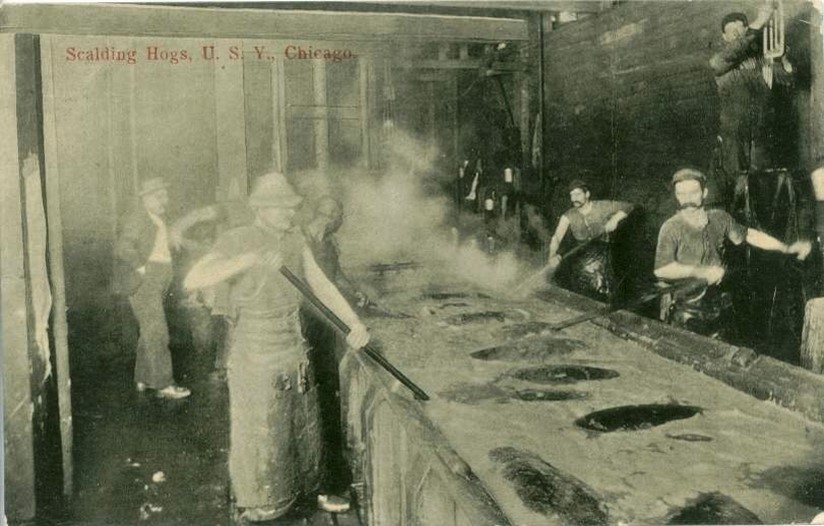
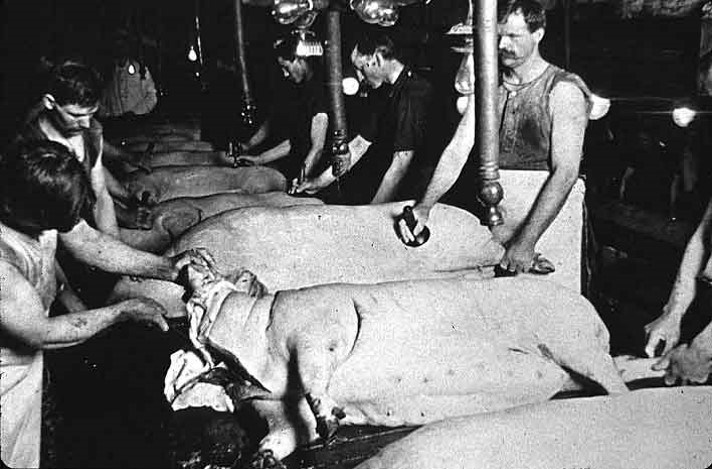
Meat packing plants
60 hour avg work week
Loss of limb/appendage
“Speeding up” the pace of the line
Deskilling
No pensions/health insurance/unemployment insurance/sick leave
•Company towns/ Company Script/Company store
|
Directions: Read the following account and take notes on working conditions, problems experienced in their workplace, anything that people should know and understand about your occupation. Be prepared to share this information! |
There were the men in the pickle rooms, for instance, where old Antanas (a worker) had died. If a man so much had scraped his finger pushing a truck in the pickle rooms, he might have a sore that would get so infected with puss and bile it would kill him. All the joints in his fingers might be eaten by the acid, one by one. Of the butchers and workers who used knives, you could scarcely find a person who had the use of his thumb; time and time again the base of it had been slashed off. Eventually your thumb was a mere lump of flesh against which you pressed the knife to hold it. The hands of these men would be criss-crossed with cuts, until you could no longer pretend to count them. They had no fingernails, usually torn off pulling hides; their knuckles were swollen so that their fingers spread out like a fan.
There were men who worked in the cooking rooms, in steam and sickening odors. These rooms were full of disease and the germs might live for two years. There were the beef-luggers, who carried two-hundred-pound pieces of meat into the refrigerators; a fearful kind of work, that began at four o'clock in the morning, and that wore out the most powerful men in a few years. There were the wool-pluckers, whose hands fell to pieces even sooner than the hands of the pickle men; for the pelts of the sheep had to be painted with acid to loosen the wool, and then the pluckers had to pull out this wool with their bare hands, until the acid eventually ate their fingers off.
There were those who made the tins for the canned meat; and their hands, too, were a maze of cuts, and each cut represented a chance for blood poisoning. Some worked at the stamping machines, and it was very seldom that one could work long there at the pace that was set and not have a part of his hand chopped off or crushed by the machine. Worst of any, however, were the fertilizer men, and those who served in the cooking rooms. These people could not be shown to the visitor, the odor of a fertilizer man would scare any ordinary visitor at a hundred yards. These men worked in tank rooms full of hot steam, and in some of cases there were open vats near the level of the floor. Some of these men fell into the steam vats and when they were pulled out, there was never enough of the actual person to be able to identify them. Sometimes they would be overlooked for days, when they were fished out all that was left was liquid and bones.
Whenever meat was so spoiled that it could not be used for anything else the company would chop it up into sausage or hot dogs. The spoiled rotten meat would often be rubbed with soda to take away the smell, and sell it to be eaten on free-lunch counters to the poor. There would be ham so spoiled they had an odor so bad that a man could hardly bear to be in the room with it. Formerly these had been sold as "Number Three Grade," but later on some genius person would pull out the bone, which smelled the worst, and insert a white-hot iron into the whole to burn it a little. The packers were always originating such schemes – they had what they called "boneless hams," which were all the odds and ends of pork stuffed into casings; and "California hams," which were the shoulders, with big knuckle joints, and nearly all the meat cut out.
It was only when the whole ham was spoiled that it was cut up and mixed with half a ton of other meat. There was never the least attention paid to what was cut up for sausage. Sometimes old sausage would come back from Europe and was moldy and white. It would be covered with chemicals and resold to Americans. There would be meat that had tumbled out on the floor, in the dirt and sawdust, where the workers had tramped and spit. There would be meat stored in great piles in rooms; and the water from leaky roofs would drip over it, and thousands of rats would race about on it. It was too dark in these storage places to see well, but a man could run his hand over these piles of meat and sweep off handfuls of rat poop. These rats were pests so the workers would put poisoned bread out for them. The rats would die, and then rats, bread, and meat would go into the sausage together.
Under the economy which the packers enforced, there were some jobs that only paid to do once in a long time, and among these was the cleaning out of the waste barrels. Every spring they did it; and in the barrels would be dirt and rust and old nails and stale water – and cartload after cartload of it would be taken up and dumped into the hoppers with fresh meat, and sent out to the public's breakfast. Some of it they would make into "smoked" sausage. All of their sausage came out of the same bowl, but when they came to wrap it they would stamp some of it "special," and for this they would charge two cents more a pound.
Textile Mills
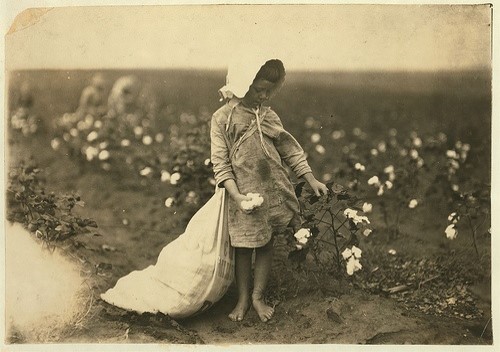
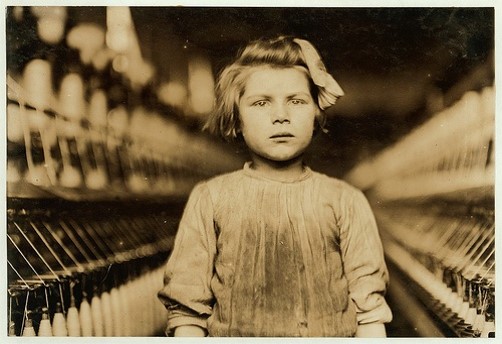
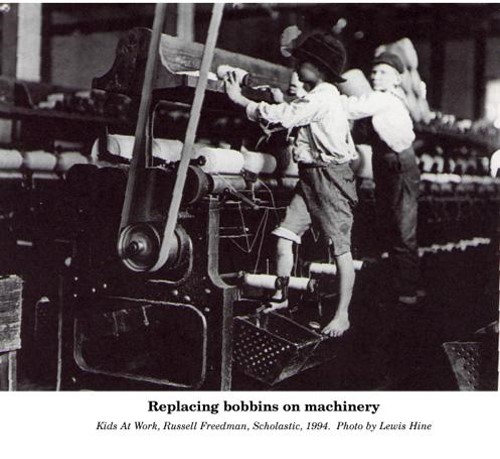
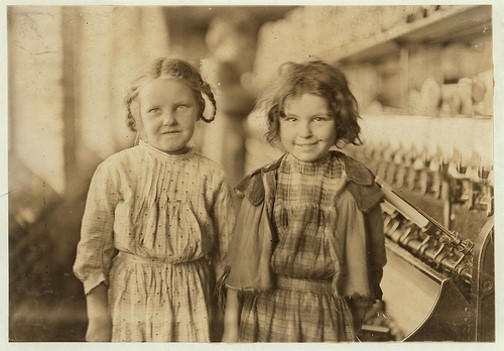
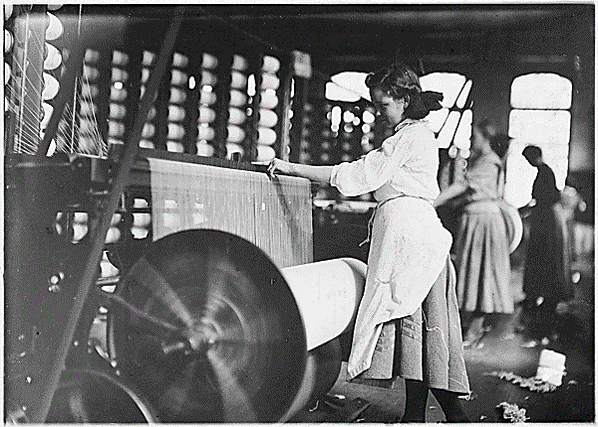
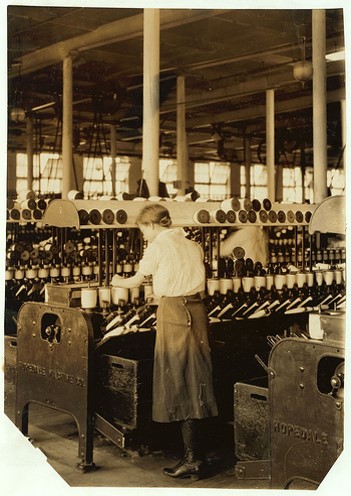
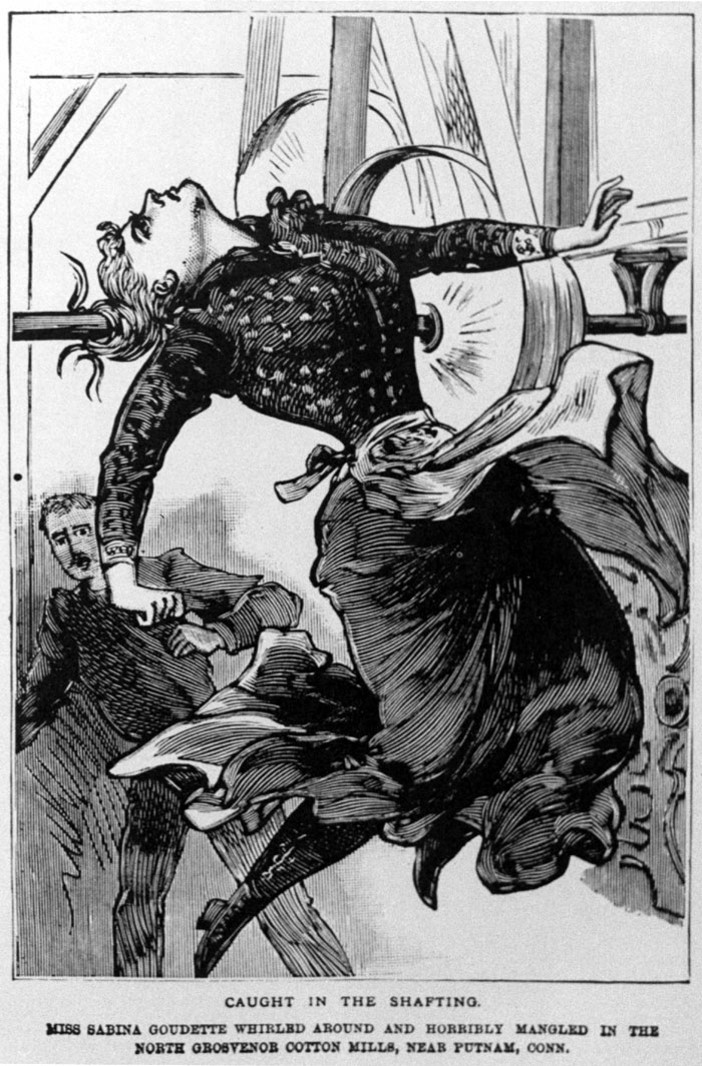
60 hour work week on average
Brown lung disease
“Speeding up” the rate of the mill
Lost limbs/appendages
Deskilling
No pensions/health insurance/unemployment insurance/sick leave
|
Directions: Read the following account and take notes on working conditions, problems experienced in their workplace, anything that people should know and understand about your occupation. Be prepared to share this information! |
Source: The Story of My Cotton Dress: Scanned from The Child Labor Bulletin, August, 1914.
I HAVE HAD another accident! A big tear in my pretty new dress. This time I want to mend it. When we went to Atlanta Georgia, a few weeks ago, and saw the beautiful white cotton fields, mother told me how little boys and girls must help make most of the stuff used for our dresses. I used to think all other children had good times, and that going to school was very hard. Now I know better. I appreciate my dresses more since I know that from the very beginning when the cotton is ripe in the hot sun, little boys and girls must pick it for my dresses, while their backs grow tired and their heads ache.
Mother also took me to a cotton mill, on that trip. I saw how the cotton bolls arc brought to the mill and the fluffy soft white mass is combed and then spun from on bobbin another, until it is the finest thread like the ravelings from the tear in my new dress. The bobbins whirl around on large frames in the spinning room.
Little girl "spinners" walk up and down the long aisles, between the frames, watching the bobbins closely. When a thread breaks, the spinner must quickly tie the two ends together. Some people think that only children can do this quickly enough, but that is not so, for in a great many mills only grown-ups work. Mary is one of the spinners. She was very sad. Standing all day long, she said, had broken down the arch of her foot and made her flatfooted, which is very painful.
Some people say it is good for the girls and boys to work—that all children should be industrious But they do not stop to think that there is a right and a wrong kind of work for little girls and boys. Spinning for a little while a day could be made the right kind, but work in a spinning room from 7 o'clock in the morning until 6 o'clock at night is the wrong kind. It keeps the children out of school, it gives them no chance to play, and they cannot grow strong.
Many spinning rooms have their windows closed all day because the rooms must be kept damp or the threads will break. Now, like growing plants, growing girls and boys need fresh air as well as light and sunshine. But there are more than a million children in this country who do not have fresh air, or play, or school because they are working. And of these there are enough in the cotton mills to make a big city full.
When a bobbin is filled, the "doffer boy" comes along, takes it off the spinning frame and puts an empty bobbin in its place. Many doffer boys and girl spinners grow up without learning to read or write, and without even hearing of George Washington. Sometimes the machine is so high and the boys are so little, they have to climb up to reach the bobbins. If they slip they can hurt themselves badly.
"Not long ago I read the story about Rose, nine years old. who sews buttons on little girls' dresses. Her mother used to make dolls dresses, and Rose had to snip them apart. She grew so tired of doing this for dolls for other little girls to play with, when she had no doll herself and when she wanted to read fairy stories, that what do you think she did? She snipped into the dolls' dresses with the scissors! So now her mother makes big dresses, for little girls, and Rose cannot use the scissors, but must work with a needle. She sews on 36 buttons to earn 4 cents."
"The scallops of the embroidery trimming little girls like so well for their dresses," mother continued, "are cut out by children in tenement houses. These little girls generally go to school, but often fall asleep over their lessons because they worked long after bedtime the night before, and an hour or two before school in the morning.
"The pretty ribbon trimmings are pulled through the dresses by children in still other tenement homes. You see, their mothers do not mean to be cruel, but they must pay rent and buy coal and bread and shoes with the money the children can earn. More cruel than these poor mothers were the people who, when the fathers were little boys, made them do work that taught them nothing; for now the fathers do not know how to earn enough money, and they are idle while the children work.
"If only everybody cared, and would not buy things that children make, the factory men would give the work to the fathers and not to the children."
Child Labor
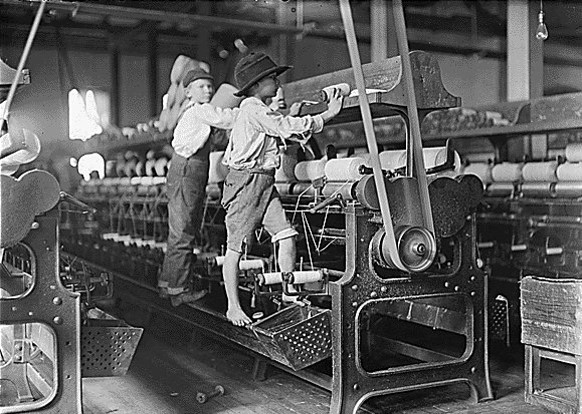
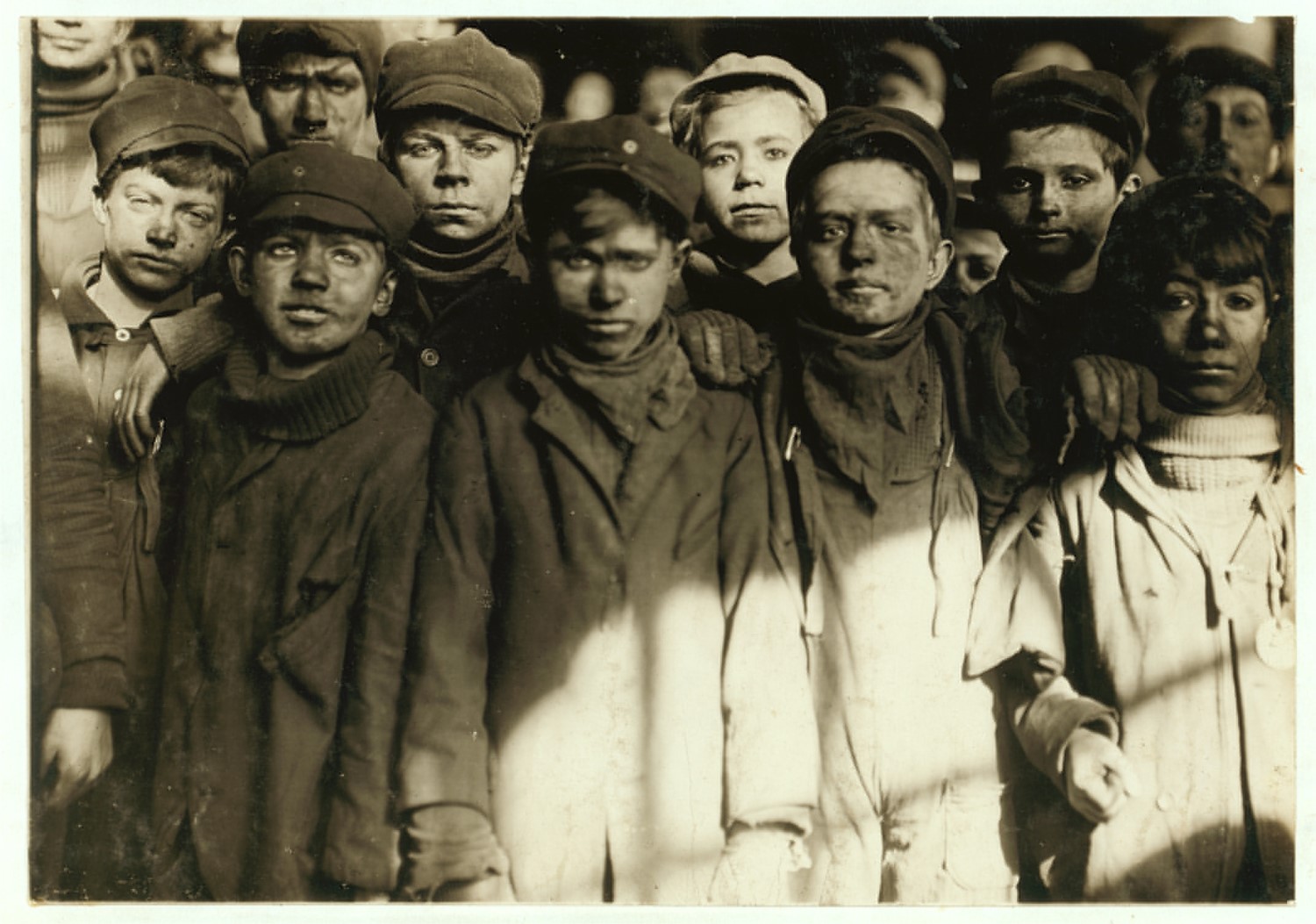
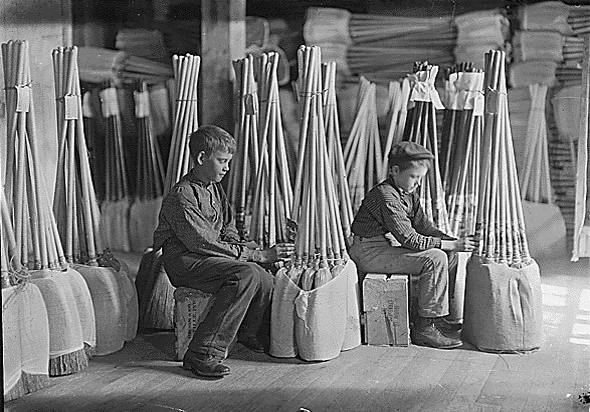
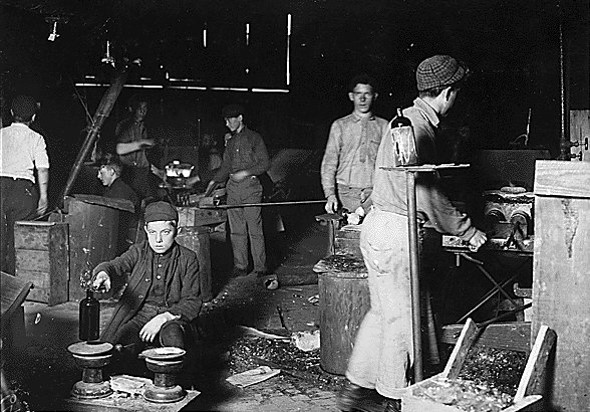
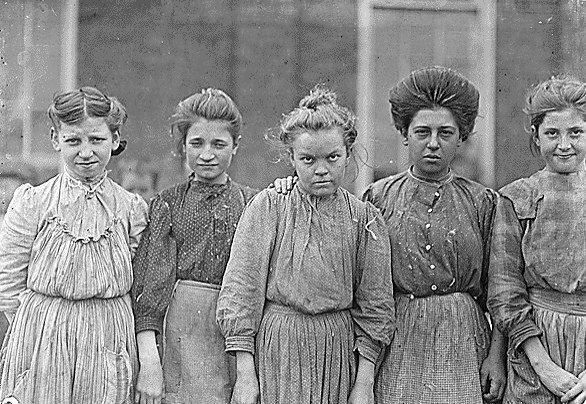
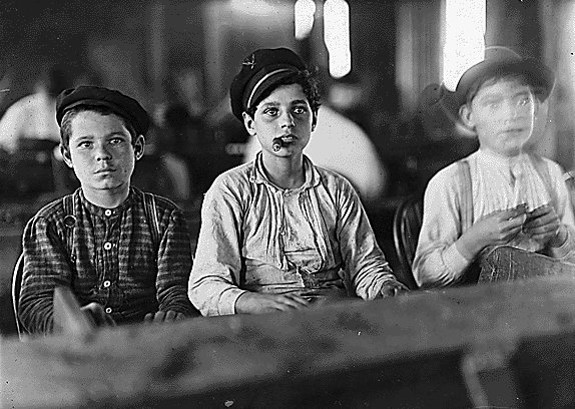
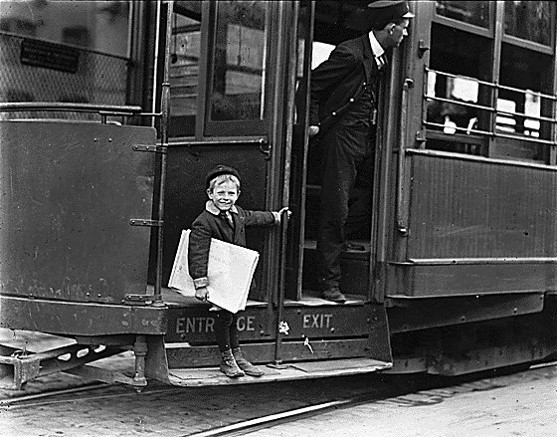
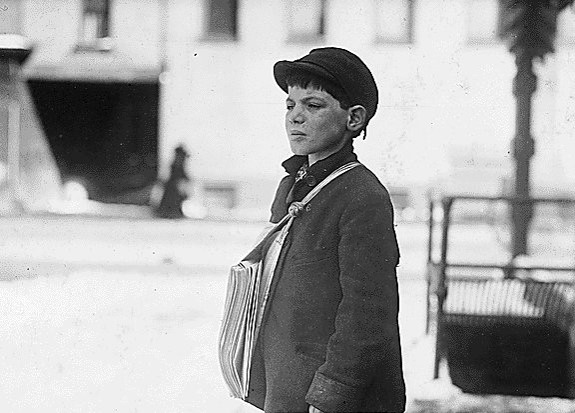
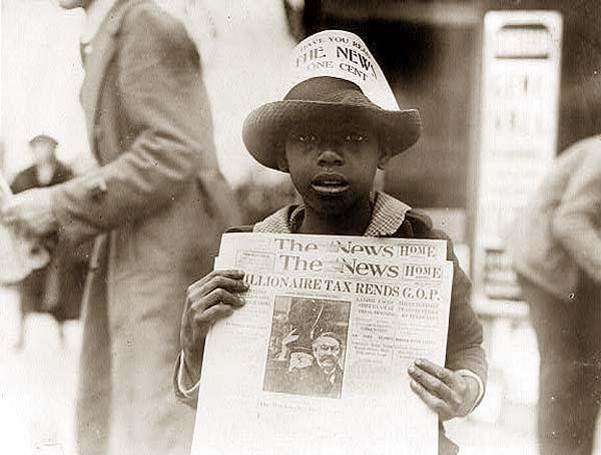
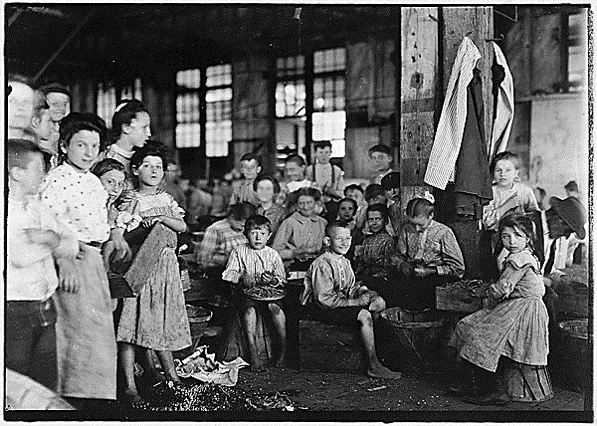
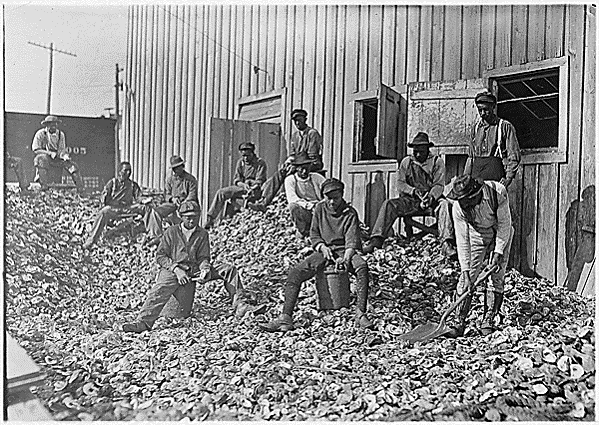
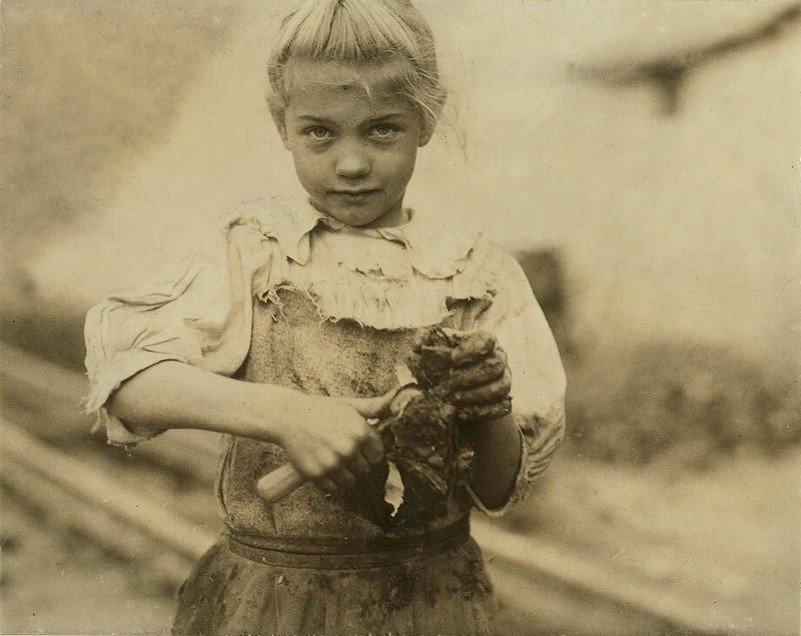
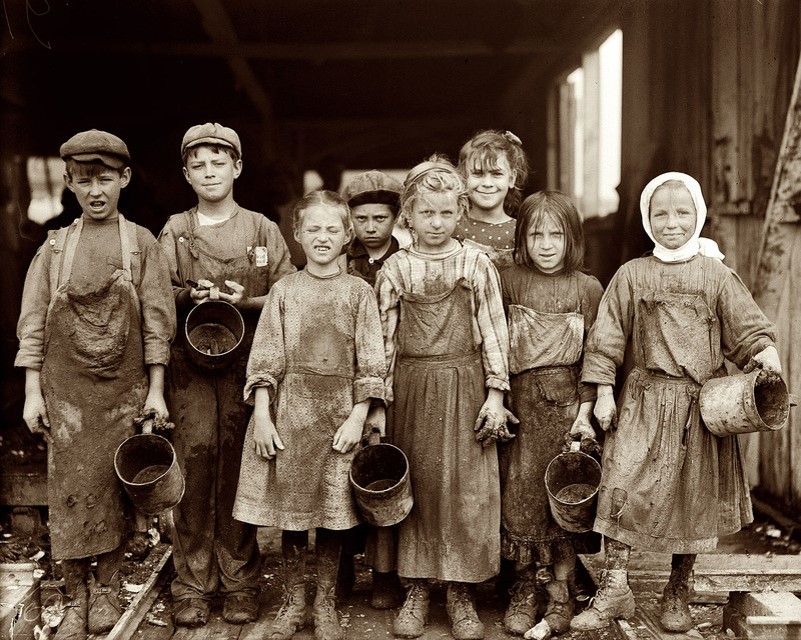
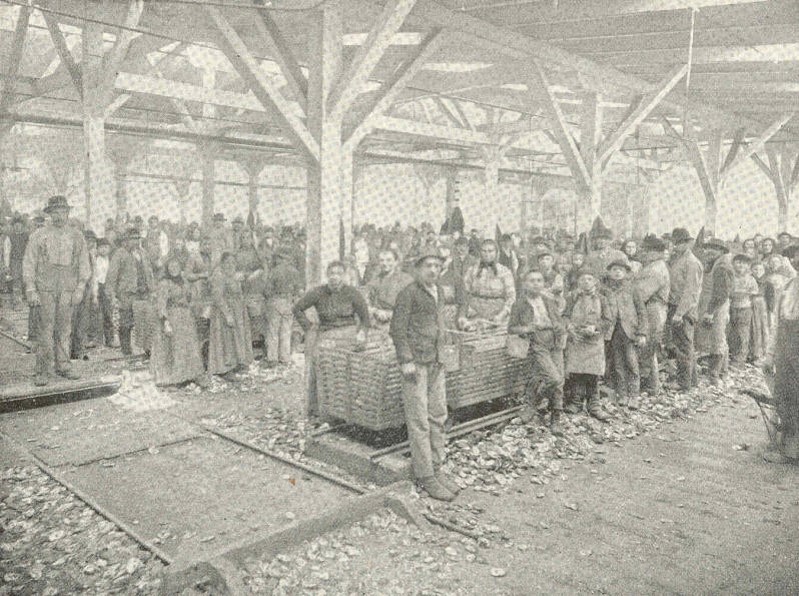
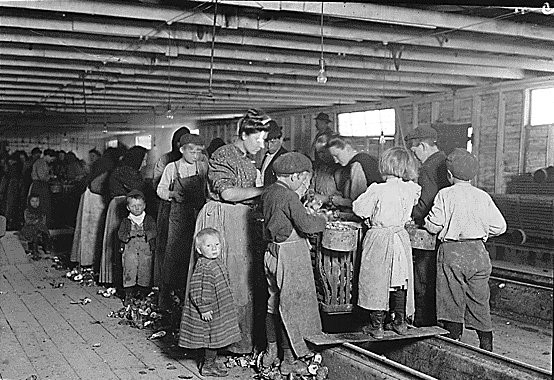
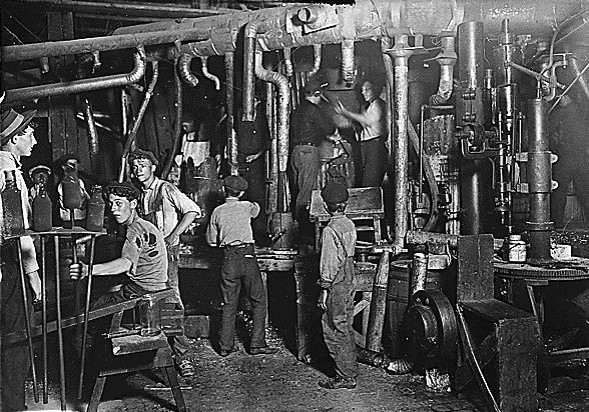
•The 1900 census counted 1.75 million individuals aged 10 to 15 who were gainful workers; about 6% of the labor force.
•The accident rates of children were believed to be at least twice as high as those of adults.
•Children under 12 could work only work 10 hours per dayRead the following on Sweat Shops:
|
Directions: Read the following account and take notes on working conditions, problems experiences in their workplace, anything that people should know and understand about your occupation. Be prepared to share this information! |
Life in the Shop” by Clara Lemlich
First let me tell you something about the way we work and what we are paid. There are two kinds of work—regular, that is salary work, and piecework. The regular work pays about $6 a week and the girls have to be at their machines at 7 o'clock in the morning and they stay at them until 8 o'clock at night, with just one-half hour for lunch in that time.
The shops. Well, there is just one row of machines that the daylight ever gets to—that is the front row, nearest the window. The girls at all the other rows of machines back in the shops have to work by gaslight, by day as well as by night. Oh, yes, the shops keep the work going at night, too.
The bosses in the shops are hardly what you would call educated men, and the girls to them are part of the machines they are running. They yell at the girls and they "call them down" even worse than I imagine the Negro slaves were in the South.
There are no dressing rooms for the girls in the shops. They have to hang up their hats and coats—such as they are—on hooks along the walls. Sometimes a girl has a new hat. It never is much to look at because it never costs more than 50 cents, that means that we have gone for weeks on two-cent lunches—dry cake and nothing else.
The shops are unsanitary—that's the word that is generally used, but there ought to be a worse one used. Whenever we tear or damage any of the goods we sew on, or whenever it is found damaged after we are through with it, whether we have done it or not, we are charged for the piece and sometimes for a whole yard of the material.
At the beginning of every slow season, $2 is deducted from our salaries. We have never been able to find out what this is for.
“Among The Poor Girls” by Wirt Sikes
And this is the story--a true one: Susie L_____ was a beautiful girl of seventeen, the daughter of a farmer in western New York. Her eyes were black and brilliant; her lips were red with rich life-blood of health; her complexion was pure pink and white, with such a lustrous, blooming freshness as is seldom seen, even among farmers; girls. Susie was a superior seamstress; her fingers were nimble, and her work always beautiful. Especially was she skillful in embroidery work; and in the old farm-house you may still see specimens of her handiwork, the pride of her mother and the wonder of the farmers' wives for miles about.
She came to New York to work and it was not long before she found employment in the shop last named above. The prices there paid are of the best that are paid in the city; Susie received a dollar a day. That she should get rich very soon, the girl felt sure; and it does not take much money to make a simple farmer's girl feel rich. It was two miles from her boarding-place to the shop; but such was her high health and strength, that she made nothing of walking this distance, morning and night.
Three months had not passed before she found her strength unequal to the task, and thereafter she rode to and fro in the streetcars. Dark lines had come under her eyes; her complexion was losing its color, her form its roundness and its springy life. In a word, the poison had entered her system, and was killing her by degrees. Still, in her pride, her anxiety to make the "old folks" happy--she had sent home to her father more than one welcome bank note--she concealed her sufferings, and struggled on.
One day she dropped from her chair heavily upon the floor of the dark, noisome apartment--was conveyed to her sister's home--and, when she left it again, a hearse stood at the door, and she was borne to her grave. She had not been one year absent from her country.