
Introduction
This webquest is designed to help you prepare for your study of The Book Thief by Markus Zusak. You will research historical events that surround the novel and become better prepared for understanding the circumstances of the characters.
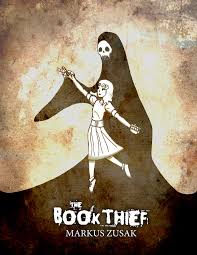
Outcome: Students will analyze the significance of the novel, The Book Thief, by researching specific events in history.
Task
Outcome: Students will analyze the significance of the novel, The Book Thief, by researching specific events in history.
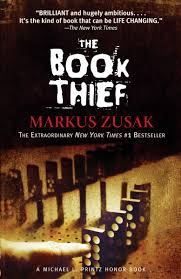
You will act as a museum curator for the day. Your job is to research the given topics surrounding the Holocaust and create an interactive timeline with each topic represented. This task will involve all your research and creative ability to complete.
Use this tool to create your timeline:
Process
Each topic should be represented in your timeline. You will also want to include multimedia elements to make your timeline unique.
Book Burning in Nazi Germany
Check out the link about a book burning that occurred on May 10, 1933 in Nazi Germany. Then, answer the questions.
1. Why were the books burned?
2. Name two authors who were targets of the book burning?
3. Why is it ironic that one hundred years earlier the German poet, Heinrich Heine had said, “Where books are burned, human beings are destined to be burned too.”?
Holocaust History
In order to understand the context of the novel, it is necessary for you to understand the Holocaust. Check out the links, and then answer the questions.
4. What does the term holocaust mean?
5. With this in mind, why do you think the systematic slaughter of the Jews is called the Holocaust?
It would be difficult to understand what was going on in Germany without looking at their leader. Check out the link about a Adolf Hitler and then answer the questions.
6. What did Hitler want to be at age 16?
7. Who was the anti-semitic (against Jews) influence on his life?
8. What happened to Hitler after the Beer Hall Putsch?
9. What’s the name of his book? What does it mean?
10. Why do you think the Germans believed Hitler was a good leader?
11. What started World War II in Europe?
The Nuremburg Race Laws were very important. Click on the link to examine why, and then, you guessed it, answer the question.
12. What was the purpose of the Nuremburg Race Laws?
Kristallnacht was a turning point in Germany's history. Click on the link to discover why, and then answer the questions.
13. What does “kristallnacht” mean?
14. When did it happen?
15. What was it?
Click on the link to learn more and then, answer the questions.
16. What did the term ghetto mean for Jews during WWII?
17. How many types of ghettos were there?
18. Where was the largest?
19. Where was the biggest revolt against the ghettos?
The camps were an integral part of Hiltler's plan. Click on the link to learn more, and then, answer the questions.
20. How many camps were there?
21. Who were the prisoners in these camps?
22. What were concentration camps?
23. What were extermination camps?
You may want to read personal stories of arrival at the camps.
Liesel and Rudy’s Daily Life
In the book, you will learn that Liesel and Rudy must attend Hitler Youth. Even though they may not like it, it is something that they must do. Click on the link to learn more about being an adolescent during Hitler’s rise to power. Then...answer the questions.
23. What profession joined the Nazi party in the greatest numbers?
24. What was the purpose of Hitler Youth?
25. What were some typical activities for the League of German Girls?
Jessie Owens
Rudy is a fan of the American athlete, Jessie Owens.
26. List 3 facts about Jesse Owens.
Communism
Liesel mentions the word Kommunist several times at the beginning of the novel. Soon, you learn that her father was a communist. Find out what communism means and how communist were punished by Hitler.
27. In your own words, what is communism?
28. Why would Hitler be opposed to it?
29. Why did Hitler hate the communists?
Evaluation
Conclusion
“First they came for the Communists but I was not a Communist so I did not speak out;
Then they came for the Socialists and the Trade Unionists but I was not one of them, so I did not speak out;
Then they came for the Jews but I was not Jewish so I did not speak out.
And when they came for me, there was no one left to speak out for me.”
Martin Niemoller, 1892-1984