
Introduction
Fish, Amphibians, and Reptiles are all animals that are closely related. They are all examples of chordates and vertebrates. What are some characteristics that prove they are related?
They all have an internal notochord, postanal tail, a nerve cord and they all had pharyngeal pouches at some point in development. These animals also all have a backbone showing they are vertebrates.
With so much in common how can these different groups of animals be so different?
In this webquest we will explore and discover some of the differences between fish, amphibians, and reptiles and learn to distinguish between these groups of animals.

Task
During our research and exploration we will:
- Learn characteristics of fish, reptiles, and amphibians
- List species examples in each animal group.
- Explore how each group reproduce and breath.
- Expain how some species are biological indicators.
We will gather information from our textbook and notes.
We will research several differenct sources on the internet.
We will create a presentation with powerpoing, keynote, or prezi showcasing interesting facts and pictures.
Process
Task 1. Answer the following questions with complete sentences, using the Life Science Textbook.
1. Describe the 3 classes of fish and give an example of each.
2. Explain how fish obtain oxygen.
3. Explain how fish reproduce.
4. Explain how amphibians reproduce.
5. Describe how amphibians develop.
6. Explain how amphibians and reptiles are biological indicators.
7. List examples of amphibian species.
8. List the characteristics of reptiles and give some examples.
9. Determine how reptile adaptations enable them to live on land.
10. Explain the importance of the amniotic egg.
11. How is venom used in modern day medicine?
Task 2. Use the website http://kidzone.ws/animals/fish1.htm to answer the following questions.
1. List some characteristics of fish.
2. List some species of fish.
3. What is the largest species of fish?
4. What are shark skeletons made of?
Use the following website for the next set of questions. http://kids.sandiegozoo.org/animals/amphibians
1. Describe an amphibian.
2. Describe an amphibians skin.
3. List the 3 groups of amphibians?
4. What does ectothermic mean?
5. Describe metamorphosis of an amphibian.
Use the following website for the next set of questions. http://kids.sandiegozoo.org/animals/reptiles
1. List the 4 main groups of reptiles.
2. Where can you find reptiles?
3. Compare and Contrast how amphibians and reptiles breathe.
4. Compare and contrast the skin of amphibians and reptiles.
Task 3.
Using Keynote or PowerPoint, develop a presentation with 6-8 slides. On the slides you will show examples of fish, reptiles, and amphibians as well as list some of the interesting characteristis you discovered while answering the above questions.
Use clear pictures, appropriate font and font color, and correct grammar.
Evaluation
| RUBRIC: FISH, AMPHIBIAN, AND REPTILE WEBQUEST: QUESTIONS & PRESENTATION | |||
| Low Level | Mid Level | High Level | |
| 4 | 7 | 10 | |
| Use of Technology | The need for consistent help. Lacking basic computer or technology skills. | Needed some help throughout study, but confident with computer skills. | Little to no assistance needed. Worked independently and may have assisted others. |
| Quality of Work | Very sloppy, writing poor, no pictures. Incomplete. | Quality fair, work completed but with mistakes. Paper crumbled and work is basic. | Consistent neat and quality work throughout the entire project. Work exceeds expectations. |
| Correct Grammar Skills | Few complete sentences, spelling not corrected, and messy. Grammatical rules not followed. | Mostly completed sentences, few spelling and grammatical errors. Fair on neatness. | NO spelling or grammatical errors. Presentation and questions neat with complete sentences. Easy to read and follow. |
| Knowledge of Study | Did not retain animal facts and did not complete work correctly. Presentation hard to follow and incorrect. | Information retained. Over 2/3 questions correct. Most facts correct on presentation. | Information retained and answers are correct. Presentation neat and correct. Presentation good. |
| TOTAL SCORE ___/40 |
Conclusion
WAY TO GO 7TH GRADERS!!!! YOU ARE CLOSER TO BECOMING EXPERTS IN THE AREAS OF FISH, AMPHIBIANS, AND REPTILES!!!!
YOU KNOW UNDERSTAND HOW FISH BREATHE UNDERWATER, HOW TO TELL THE DIFFERENCE BETWEEN AMPHIBIANS AND REPTILES, AND HOW EACH OF THESE DIFFERENT ANIMALS REPRODUCE AND LIVE IN THEIR ENVIRONMENTS.
Please complete the following survey to let Mrs. Smith know how she is doing!
Credits
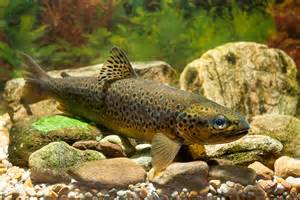
ANNELIDIA PHOTO RETRIEVED FROM jpegimgarcade.com
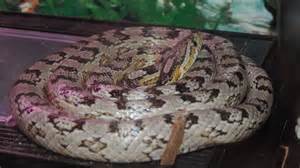
REPTILE PHOTO RETRIEVED FROM http://animals-images.blogspot.com
AMPHIBIAN PHOTO RETRIVED FROM http://www.whateats.com
Teacher Page
This lesson is a part of the Animal Diversity Unit from the Life Science Book published by Glencoe.
During this individual chapter be begin with a review of Chordates and Vertebrates. Quickly we move into the study of fish, amphibians, and reptiles. With the study of these we also completed dissections of fish specimens and a frog.