
Introduction

Karen Dew
SPED2000
September 14, 2015
What is Visual Impairment?
Visual impairment is defined by Project Ideal as "any visual condition that impacts an individual's ability to successfully complete the activities of everyday life".
https://arksped.k12.ar.us/.../L.%20VIsual%20IMPAIRMENT%20INCLU
Task
Characteristics of Visual Impairment
Not always easy to recognize
Sometimes NOT detected until after starting school
Physical Signs
Crossed eyes
Eyes that turn out
Eyes-flutter from side to side
Eyes- do not seem to focus
Cluminess
Constantly running into things or falling down
Trouble judging distance
Behavior
Short attention span
Blink frequently, squint
Light sensitivity
Sit close to T.V., hold book close
Poor eye-hand coordination
Trouble throwing/catching a ball, tying shoes,
copying work from board
Poor Handwriting
Poor Academic Performance
May not read well, use finger to follow so not to lose place
Trouble retaining what was read
Trouble writing, problems with math and other subjects
http://www.livestrong.com/article/126096-characteristics-visually-impaired-child./
Process
Causal Factors
5 Leading Causes of Visual Impairments in Children in the US
1. Cortical Visual Impairment (CVI)
Nerurological disorder, results in unique visual responses to people, educational
materials and the environment.
2. Retinopathy (ROP)
Eye disorder effecting premature babies.
Effects immature blood vessels of the retina.
Occurs weeks after birth
Once blood vessel development is complete, no longer a disorder.
3. Optic Nerve Hypoplasia (ONH)
Underdevelopment of the optic nerve during pregnancy.
Not inherited, not progressive, and cannot be cured.
4. Albinism
Absent or reduced pigment in eyes, skin, or hair.
Inherited genes - do not make usual amounts of melanin, which
is essential for retina development.
Lack of melanin in retina development is the primarey cause of impairment.
5. Optic Nerve Atrophy (ONA)
Permanent, visual impairment, damage to optic nerve.
Can affect one or both eyes.
May be progressive, depending on the cause.
http://www.vabri.org/five-leading-causes-of-visual-impairments-in-children-in-the-usa/
Evaluation
Instructional Implications
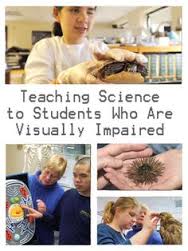
Students with a visual impairment have a limited ability to learn incidentally from their environment.
Visually impaired children must compensate for this impairment by using other skills and adaptive techniques to learn other than through sight.
A reduction in vision can cause those impaired to be less motivated to explore things, initiate social interactions and manipulate objects. The lack of motivation may lead to poor motor development, lessened social skills which often leads to low self-esteem.
Specialized instruction is needed for those visually impaired outside the core curriculum which includes independent living skills, use of assistive technology, and recreation and leisure skills. Providing these additional skills impacts them for life.
Visually impaired students can learn at the same rate, they just require adaptations and interventions to develop the necessary skills.
http://www.projectidealonline.org/v/visual-impairments/
Assistive Technology
Students with visual impairments have to be trained to use adaptive resources to improve learning skills, increase their independence, and reach their individual potential.
Computer Adaptations
Braille translation software and equipment: converts print to braille and vice versa
Braille printer: computer connected which embosses braille to paper
Screen reader: converts computer screen text to audible speech
Screen enlargement software: increases computer screen texts and images
Refreshable braille display: converts computer text to braille by computer connected output device
Adaptive Devices
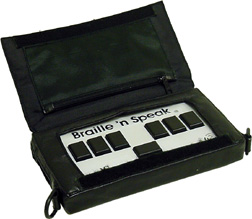
Braille notetakers: lightweight electronic note-taking device; connects to printer or braille embosser
which produces printed or braille copy
Optical character reader: converts printed texts into computer files; translated into audible speech or
braille with appropriate equipment
Electronic braillewriter: produces braille, translates braille into text or synthetic speech
Talking calculators: voice output calculations
Optical Devices
Closed circuit television (CCTV): enlarges image and projects onto screen
Magnifiers: enlarges images
Telescopes: used to view distant objects
Specially trained teachers will assist visually impaired students with these devices and necessary
training
http://www.teachingvisuallyimpaired.com/assistive-technology.html
Conclusion
Accomodations and Modifications
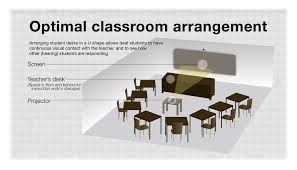
Classroom accomodations need to be suited accordingly to the individual needs of the student.
Consideration should be taken in accomodating students to obtain their personal potential and gain their individual indepedence. This should be one of the teacher's upmost priorities in encouraging the students' independence so they do not become a victim of "learned helplessness".
Adapting the classroom helps in the visually impaired student gaining confidence and independence. These adaptations are pretty easy and extremely beneficial to the student. Pushing chairs under when not in use and closing cabinet doors are two simple things to do that can help the student's ease of navigation.
One key accomodation to assisting visually impaired students is to maintain the placement of their media materials in the same location as other students. This gives them the sense of being just like everyone else and is less stigmatizing as well. This in turn helps in building their confidence while teaching them their independence.
http://www.teachingvisuallyimpaired.com/accomodations.html
Resources for Teachers and Parents
American Council for the Blind (ACB): Strive to improve the lives of the blind and visually impaired
Serve as a representative national organization of blind
Elevate social, economic, and cultural levels
Improving educational and rehabilitation facilities and opportunities
Cooperating with public and private institutions and organizations
Encouraging and assisting blind to develop abilities and conducting public education programs
to promote better understanding and the capabilities of the blind
American Foundation for the Blind (AFB)
Broaden access to technology
Elevating quality of information and tools for professionals who serve visually impaired
Promoting independent and healthy living for visually impaired; providing them and family
appropriate resources
Parent Resources
A Parent's Guide to Special Education for Children with Visual Impairments
Association for Education and Rehabilitation of the Blind and Visually Impaired
Blind Children's Center
Alliance for Parental Involvement in Education
National Association for Parents of Children with Visual Impairments
Credits
Credits
https://arksped.k12.ar.us/.../L.%20VIsual%20IMPAIRMENT%20INCLU
http://www.livestrong.com/article/126096-characteristics-visually-impaired-child./
http://www.vabri.org/five-leading-causes-of-visual-impairments-in-children-in-the-usa/
http://www.teachingvisuallyimpaired.com/assistive-technology.html
http://www.teachingvisuallyimpaired.com/accomodations.html